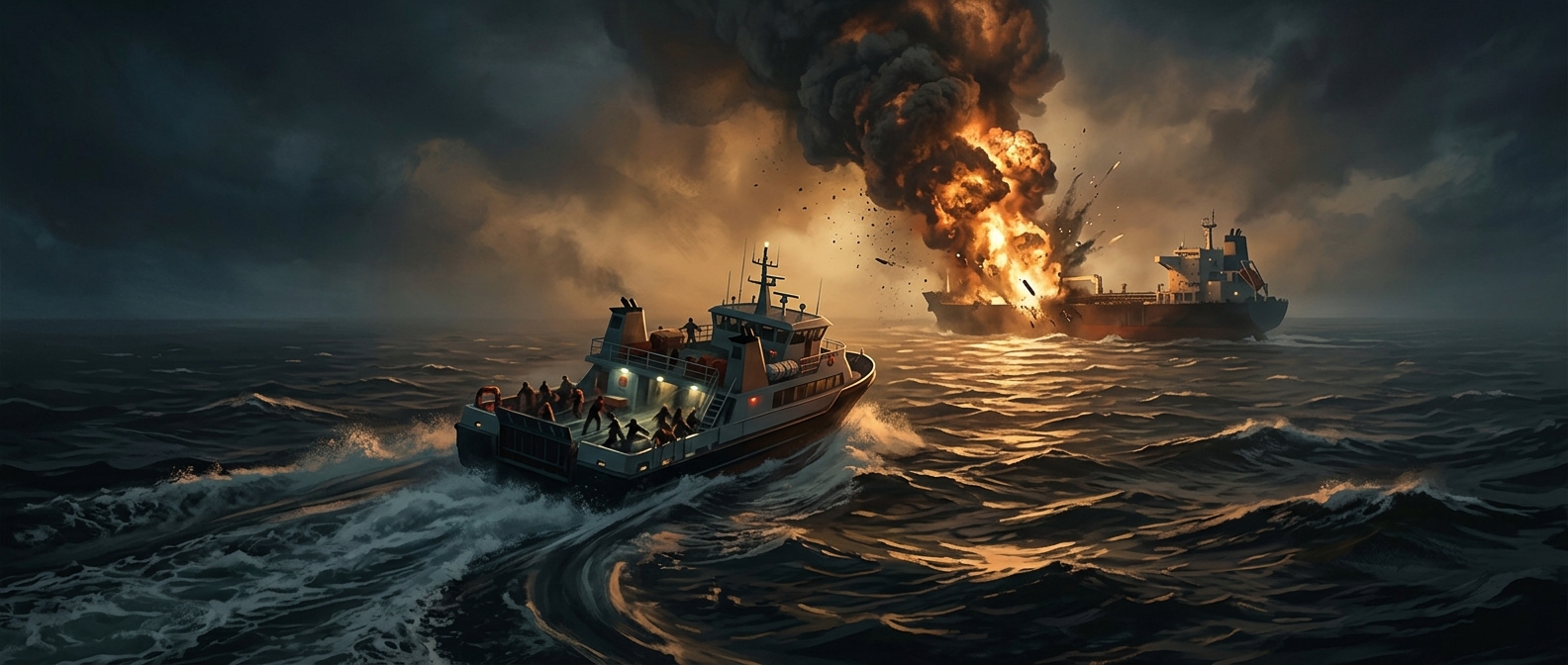
Why fishing boats can become emergency transport
A fishing boat is built to work close to shore, where deeper vessels may be unable to go. Its shallow draft—the depth of water it needs beneath its hull—lets it approach beaches, riverbanks, and other landing spots that lack a proper dock. After an explosion damages roads, that flexibility can turn an everyday workboat into a route around the disruption.
Water can offer a route when roads cannot
Road damage does more than slow cars: it can cut off whole neighborhoods from rescue teams and supplies. A boat can bypass a blocked stretch of land entirely, carrying people between accessible points on the water. Fishing crews may also know nearby channels and landing places from daily work, making their boats useful where formal ferry service is unavailable or interrupted.
The boat’s shallow hull is especially valuable in this improvised role. It can reach closer to shore, reducing the distance people must travel through the water or over damaged ground to board. That can make a short crossing possible even when a port or landing facility is unusable.
A practical rescue craft, not a substitute for the system
Fishing boats are not designed as ambulances or passenger ferries. Their capacity, safety equipment, and ability to operate in rough conditions vary. But in an emergency, a working boat and a reachable shoreline can provide something roads cannot: a way to move people while the land network is being restored.
The striking change is one of purpose, not machinery. A boat that usually carries a catch can become a lifeline simply because water remains passable where the road has failed.