A loading bay that sinks beneath the cargo
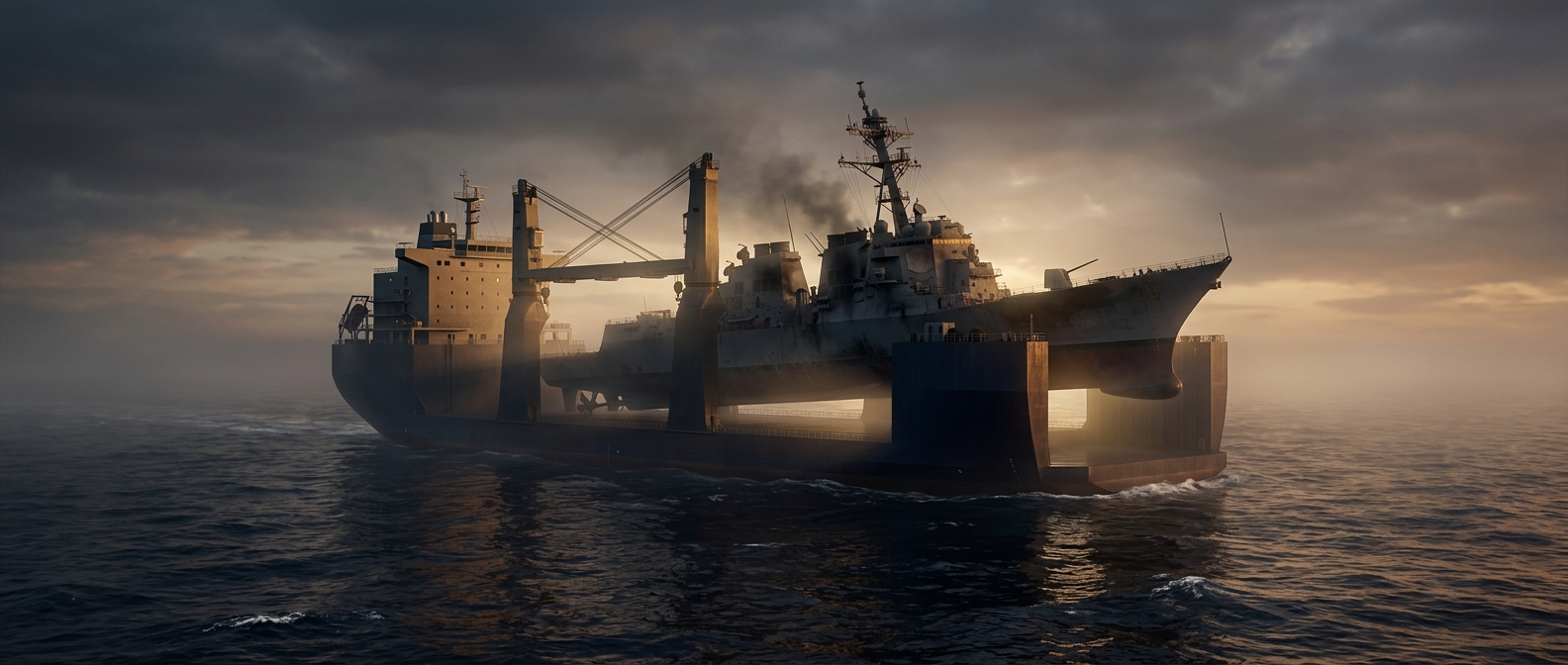
A float-on/float-off carrier does not lift a ship with a crane. Instead, it uses ballast tanks—compartments that can be filled with or emptied of seawater—to change how deeply the carrier sits in the water. Taking on ballast lowers its broad cargo deck below the surface, creating space for another vessel to be floated into place.
The operation depends on careful alignment. The cargo ship must be guided over the submerged deck, where supports are positioned to take its weight once the water is pumped out. As the carrier removes ballast, it rises and the cargo settles onto those supports. The load is then secured against movement before the carrier sails.
Why float a ship instead of hoisting it?
Ships can be too large, too heavy, or too awkwardly shaped for ordinary cranes and docks. Floating them aboard avoids lifting their full weight through the air and can move vessels that cannot travel under their own power. The same method can carry other oversized loads, such as offshore structures or floating equipment.
But the cargo and carrier have to fit the operation. The carrier needs enough deck space and lifting capacity, and the cargo must be able to enter the loading area and rest securely on its supports. Ballast must also be adjusted in a controlled way: uneven loading can affect the carrier’s balance as it rises.
Once loaded, the cargo is no longer floating freely. It rides as a heavy, fixed load, so securing it and managing the combined vessels’ stability matter throughout the voyage. The clever part is not simply making a ship sink; it is turning the surrounding sea into a temporary ramp and then raising that ramp under the cargo.