A motorcycle’s controls, redesigned for water
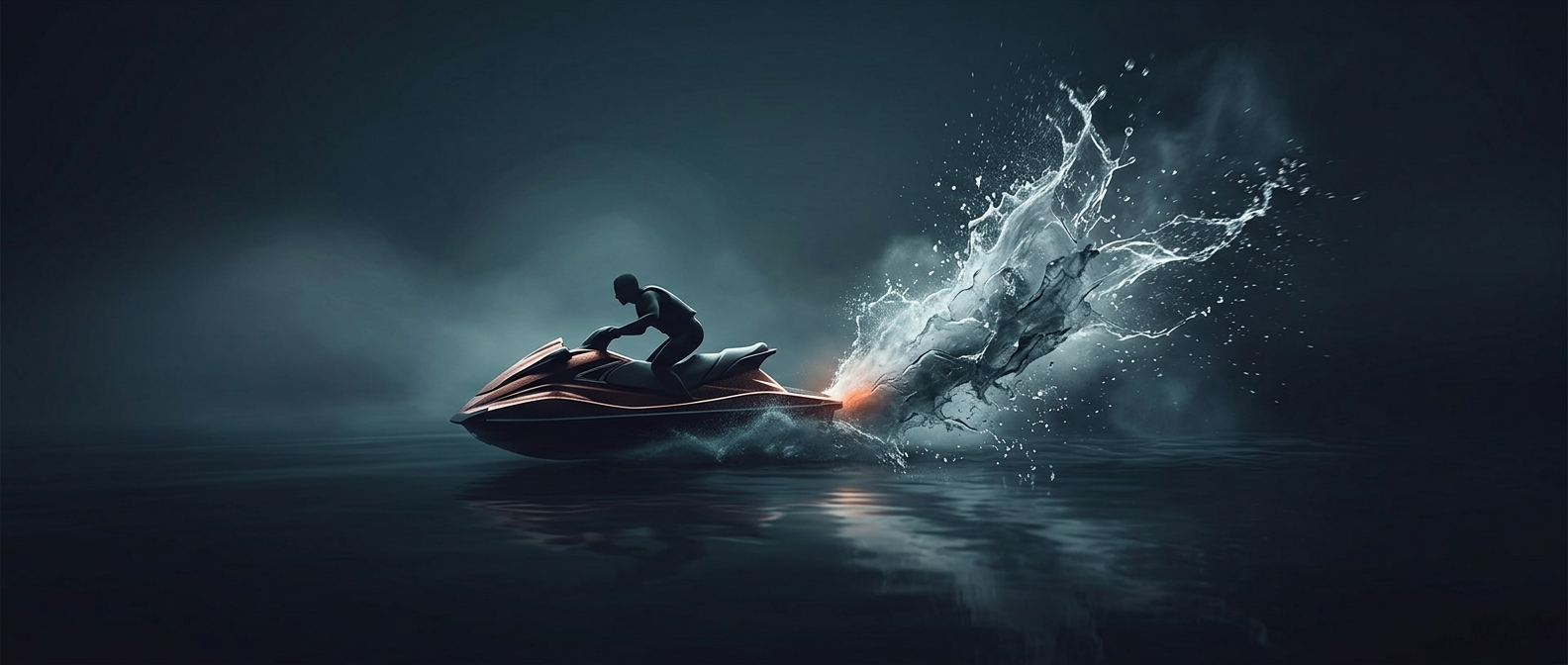
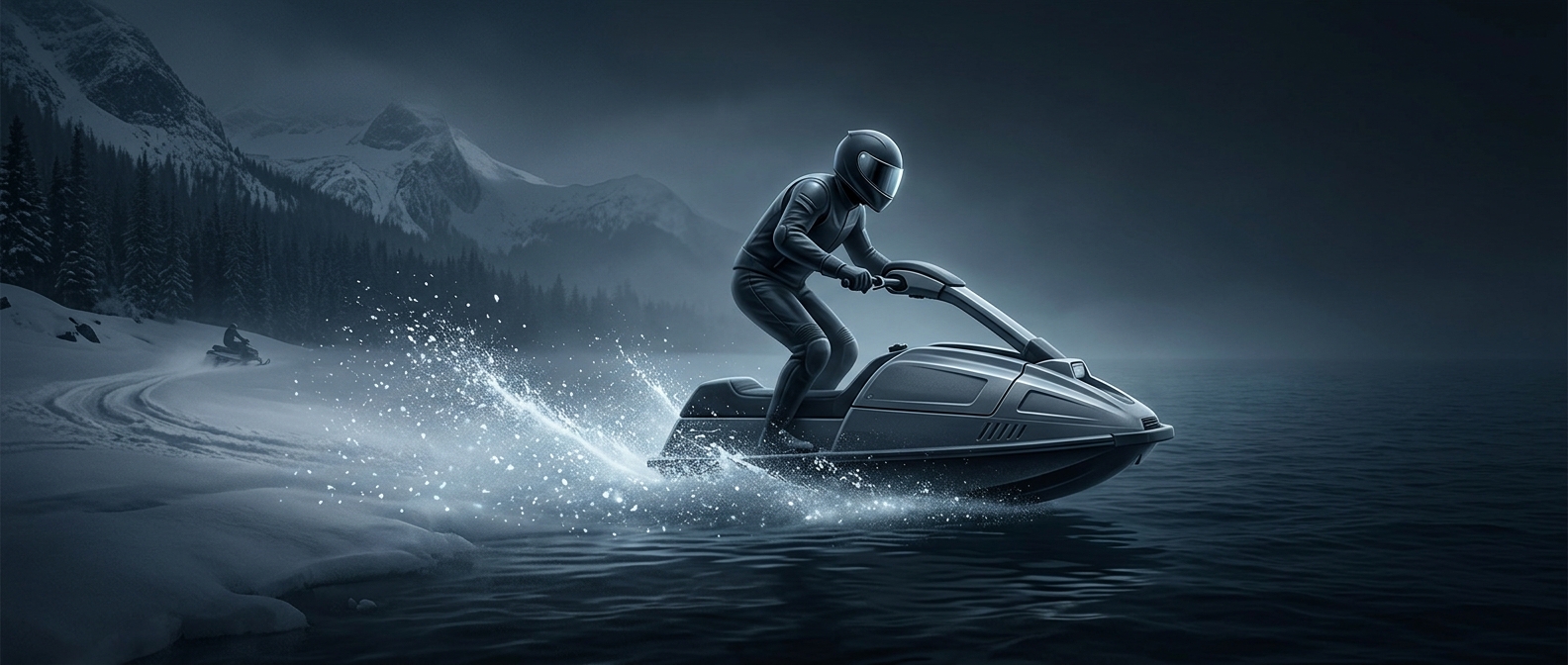
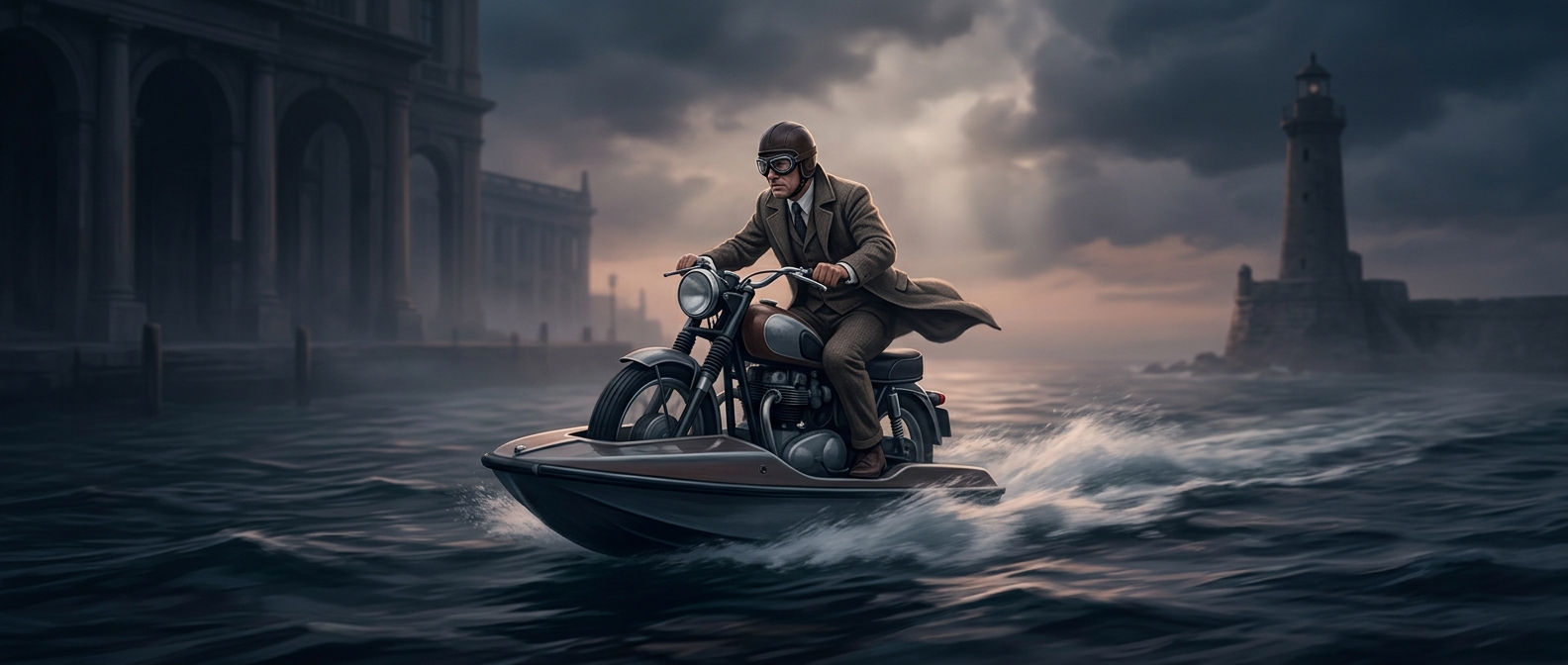
Clayton Jacobson II’s key idea was not simply to put a motor on a small boat. He wanted a rider to control a compact craft with the direct, body-led feel of a motorcycle. On a stand-up personal watercraft, the rider shifts weight to help balance and steer, while the handlebars turn a nozzle that directs the craft’s thrust.
How the water becomes propulsion
An engine spins an impeller—a rotating device inside a pump. The pump draws water in beneath the hull and forces it out through a rear-facing nozzle. That stream pushes water backward; the craft moves forward in response. Turning the nozzle redirects the stream, changing the craft’s direction.
This arrangement avoids a conventional exposed propeller, but it also makes handling depend on the water jet. The rider needs some thrust to steer effectively, so easing off the throttle is not quite like coasting on a bicycle. On a stand-up model, the rider’s balance adds another layer: the craft is something to actively manage, not just sit in.
From a personal design to a product
Jacobson’s concept became the basis for Kawasaki’s Jet Ski, which helped establish the stand-up personal watercraft as a new kind of recreational machine. The motorcycle comparison captured its appeal, but the engineering translated that familiar layout into a different environment: handlebars aimed a water jet, and the rider’s body helped keep a narrow hull upright.
That combination made a small craft feel responsive without putting wheels on the water. The road had been replaced not just by a lake, but by a surface that constantly shifted beneath the rider.