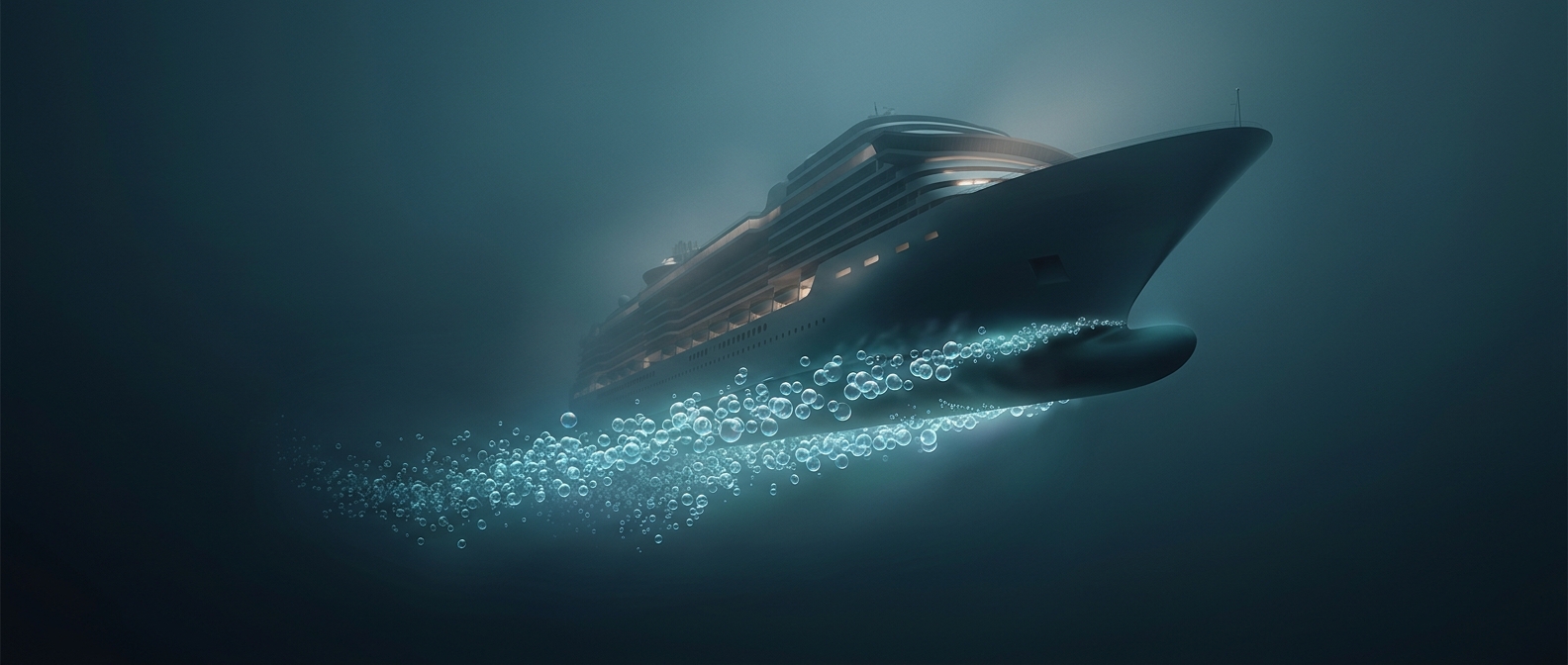
How a carpet of bubbles cuts resistance
A ship moving through water has to push the surrounding water out of its way. Some of that resistance comes from friction along the hull: water clings to the ship’s surface and is dragged along as the vessel passes. The faster the ship moves, the more energy this interaction can consume.
An air-lubrication system sends compressed air through outlets in the bottom of the hull. The bubbles spread across parts of the underside, creating a thin, shifting boundary between steel and water. Because air is much less resistant to motion than water, this layer can reduce the friction acting on the covered surfaces.
The engineering tradeoff
The bubbles do not lift the ship or replace the water supporting it. The hull remains immersed, and the system is not a literal cushion that carries the vessel. Its benefit comes from changing what flows directly over the hull, so the engines need less power to overcome friction under suitable operating conditions.
The effect depends on keeping air distributed where it helps. Bubbles can escape, break apart, or be swept away by the ship’s movement, while producing and delivering compressed air also uses energy. Designers therefore have to weigh the reduced hull drag against the power and equipment required to maintain the layer. The system can complement other efficiency measures, but it does not eliminate the resistance caused by the ship’s shape or the waves it makes.
The practical idea is simple but consequential: rather than changing the ocean or making the ship glide above it, the vessel alters the thin boundary at its own surface—where a small change in friction can matter across a vast hull.