How a Camel Ride Fit Inside Titanic’s Gym
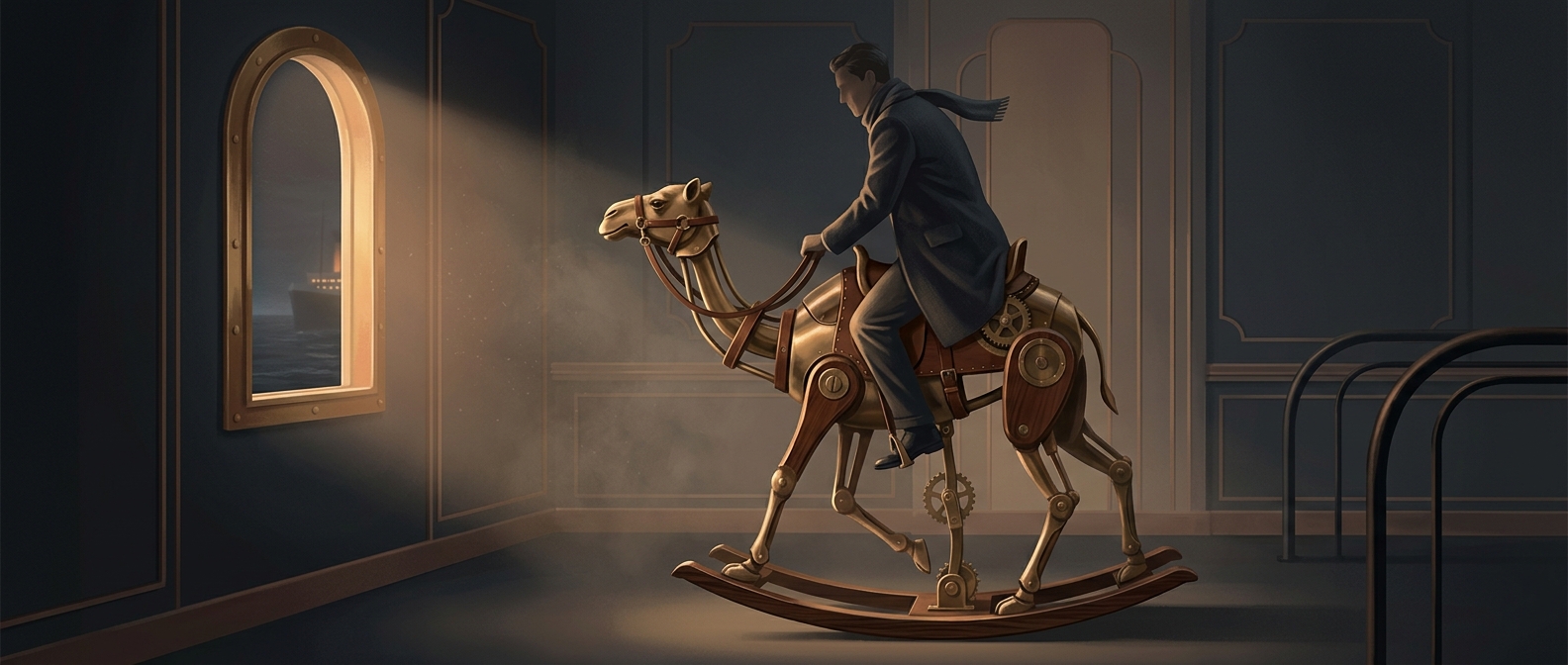
Titanic’s first-class gymnasium offered passengers a way to exercise without going out on deck. Among its equipment was a motor-driven “mechanical camel”: a rider sat astride the machine as it rocked to imitate the rolling motion of a camel’s gait. It was not a transport device or a novelty ride in the modern amusement-park sense, but exercise equipment built around movement.
A Shipboard Answer to a Shipboard Problem
On an ocean liner, walking space was limited, and weather or rough seas could make outdoor activity inconvenient. A gym gave passengers a sheltered place to move, while powered equipment could create motion without requiring a large track or open area. The camel machine turned that practical aim into an unusual experience: rather than simply lifting weights or pedaling, a passenger exercised by keeping balance as the seat shifted beneath them.
The device belonged to a broader idea of luxury aboard a long voyage. First-class passengers could spend days at sea, so the ship offered facilities that made the crossing feel less like time spent waiting. Exercise became part of the onboard routine—and, in this case, part of the spectacle.
The Luxury Was the Experience
The camel’s appeal lay in the contrast: a machine designed to mimic travel on a desert animal sat inside a ship crossing the Atlantic. It brought a small, controlled approximation of a very different kind of journey into the liner’s gym. Titanic’s passengers could cross an ocean without leaving the ship—and, for a moment, ride a mechanical camel while doing it.