How a Rope Turned Ship Speed Into “Knots”
Before modern instruments, sailors could estimate a ship’s speed with a chip log: a small wooden board attached to a long line. The board was shaped and weighted to drag in the water and stay roughly in place as the ship moved away from it. A sailor dropped it over the stern—the back of the vessel—and let the line run out.
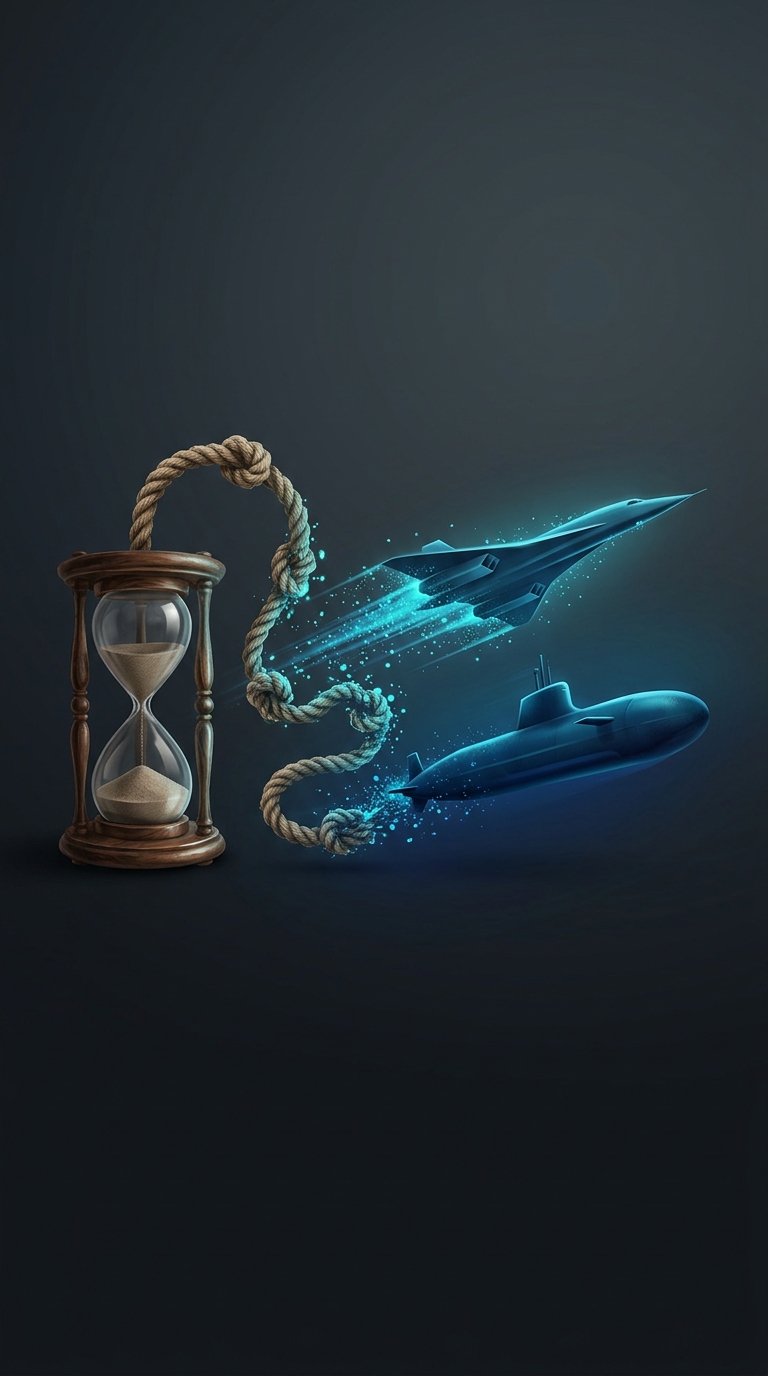
The line had knots tied at regular intervals. As a sandglass measured a fixed span of time, another sailor counted how many knots passed through their hands. More knots in that interval meant the ship had traveled farther through the water, so it was moving faster.
Why the Rope’s Knots Could Measure Speed
The method worked because the line served as a simple measuring scale. Its tied intervals represented known distances, while the timed glass supplied the time component. Counting the intervals that ran out gave sailors an estimate of distance covered per unit of time—the basic definition of speed.
The result was not a reading from a dial. It depended on a steady timing interval, careful counting, and the board’s ability to resist being pulled along by the ship. Waves and handling could make the measurement less precise, but the procedure gave crews a practical way to compare how fast a vessel was sailing.
From Shipboard Tool to Standard Language
The name knot came from the visible markers on the log line, not from a knot-shaped unit or a nautical superstition. The same idea survives in the modern unit: one knot means one nautical mile per hour. Sailors no longer need a wooden board and a wet rope to read their speed, but the old counting method left its measuring marks behind in the language of navigation.