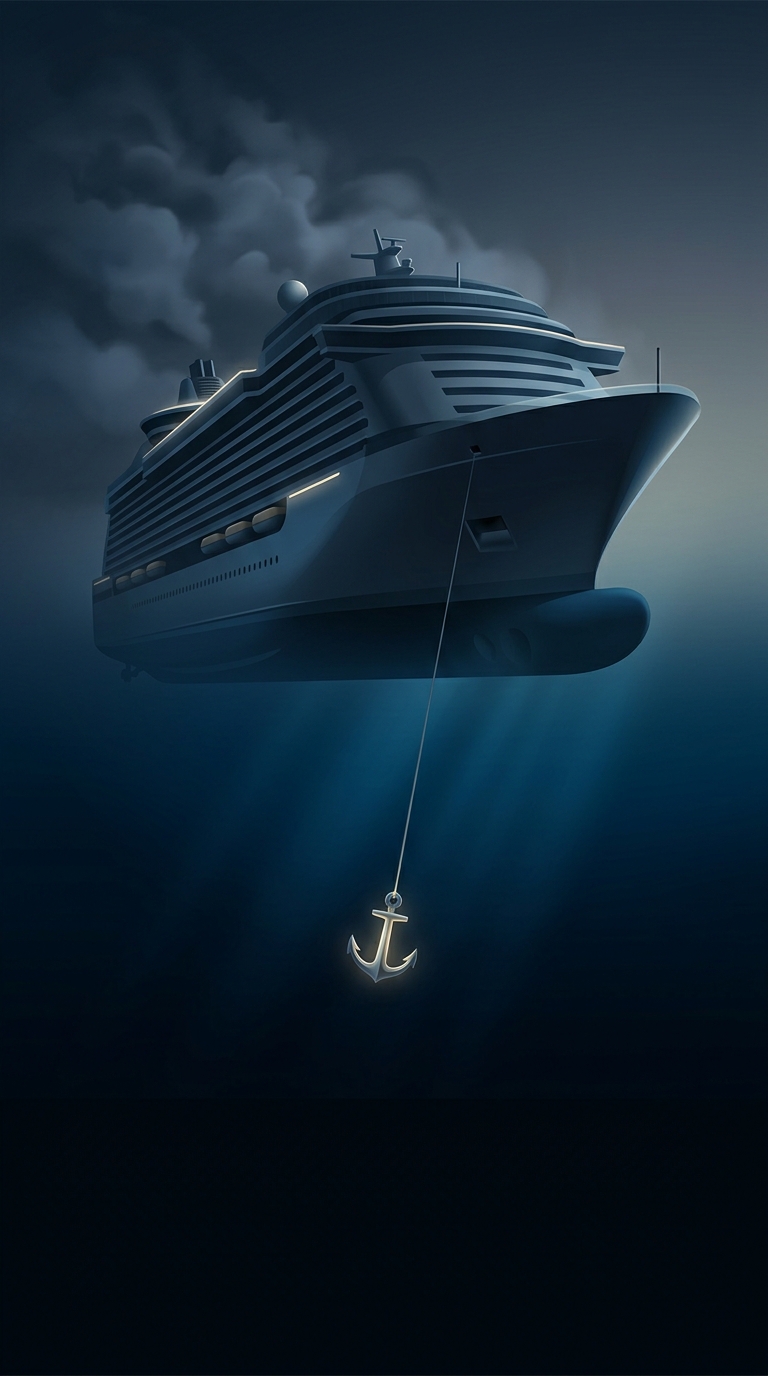
Why the underwater hull is often red
The color is a by-product of a practical defense: keeping marine life from colonizing the ship. Barnacles, algae, and other organisms can cling to a hull, adding roughness and resistance as it moves through the water. The ship then needs more power—and fuel—to maintain speed.
For centuries, sailors also had to contend with shipworms, which bore into wooden hulls. One effective response was to cover the underwater surface with copper or copper-containing material. Copper discourages many organisms from settling, and it became a key ingredient in later antifouling coatings—paints designed to limit marine growth.
The pigment behind the tradition
A common copper compound used in these coatings is cuprous oxide. It has a reddish color, so paint made with it often looks red. The familiar band of red below the waterline is therefore not simply a decorative maritime tradition: it reflects the chemistry of a coating meant to protect the hull and help it move efficiently.
Modern antifouling products vary, and not every ship uses the same formulation or color. But the old connection between copper-based protection and red paint remains easy to see: beneath the water, the color marks the part of the ship doing battle with the sea’s living surfaces.