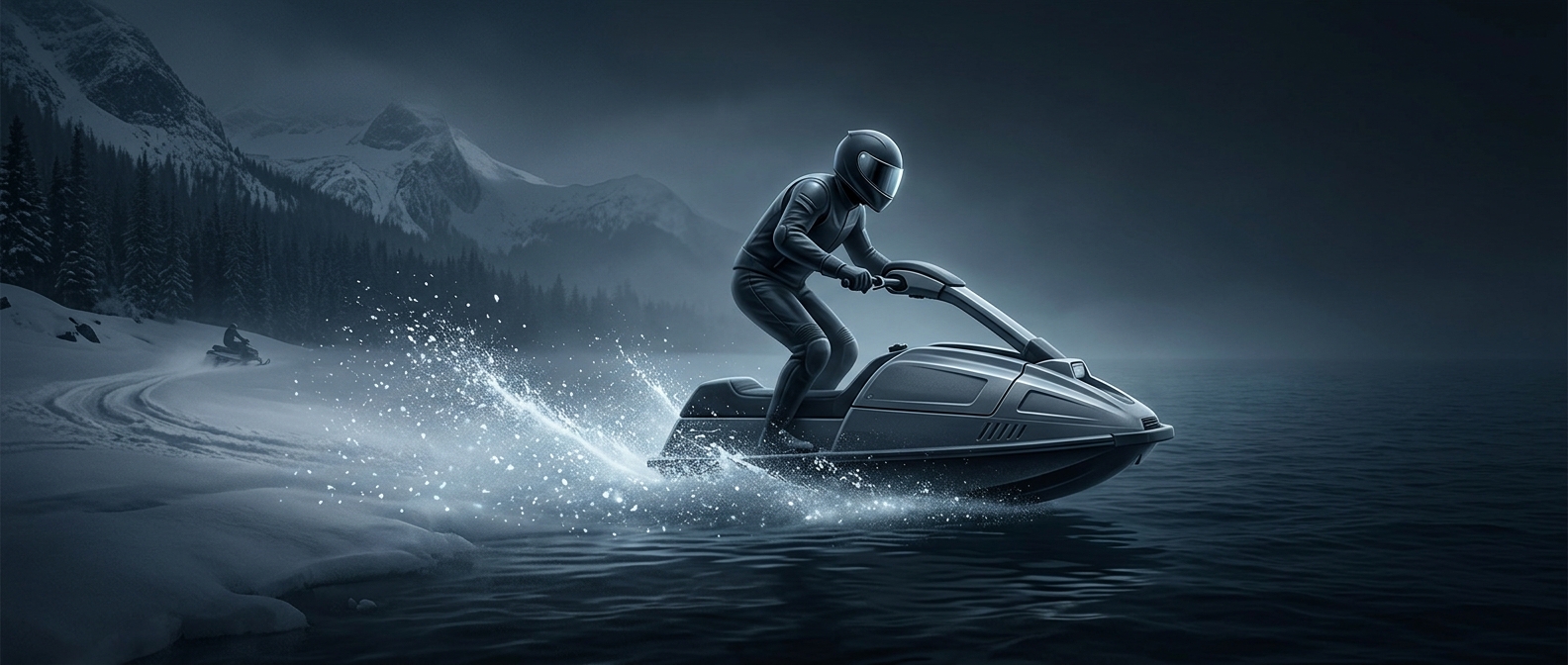
The snowmobile idea that could leave the shore
Clayton Jacobson’s key insight was that a compact motor vehicle did not need wheels to feel familiar to its rider. Snowmobiles already paired a small engine with handlebars, letting a rider steer by turning the front end. Jacobson adapted that basic arrangement for water: keep the engine and hand-controlled steering, but replace the snowmobile’s drive track with a jet pump.
How a jet pump turns water into thrust
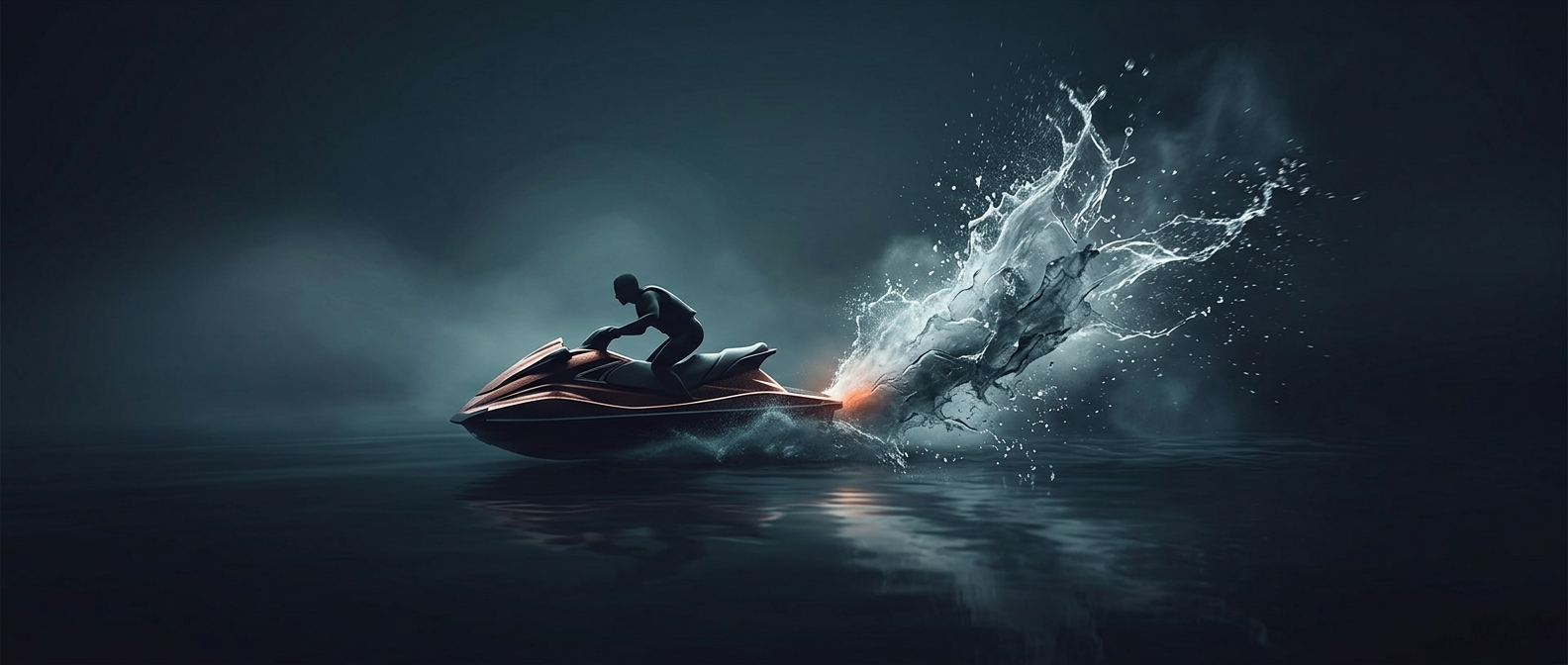
The pump draws water in through an opening beneath the craft, then forces it out through a nozzle at the rear. That fast-moving stream pushes backward; the equal, opposite force propels the craft forward. Turning the handlebars redirects the nozzle, changing the direction of the water jet and therefore the direction of the craft.
Unlike a propeller spinning in open water, the pump’s impeller—the rotating part that accelerates the water—sits inside the hull. That design helps make a small personal craft practical, though it also means the pump needs a clear flow of water to work effectively.
A familiar control, a different machine
The snowmobile offered more than a convenient parts list. Its handlebars gave riders an intuitive way to control a compact vehicle, while the jet pump solved the central problem of moving it across water without a snow track. The result carried a recognizable motor-sport layout into a setting where the surface itself had to become part of the propulsion system: the craft moves by grabbing water, throwing it backward, and steering that stream.