The pump is the engine’s underwater partner
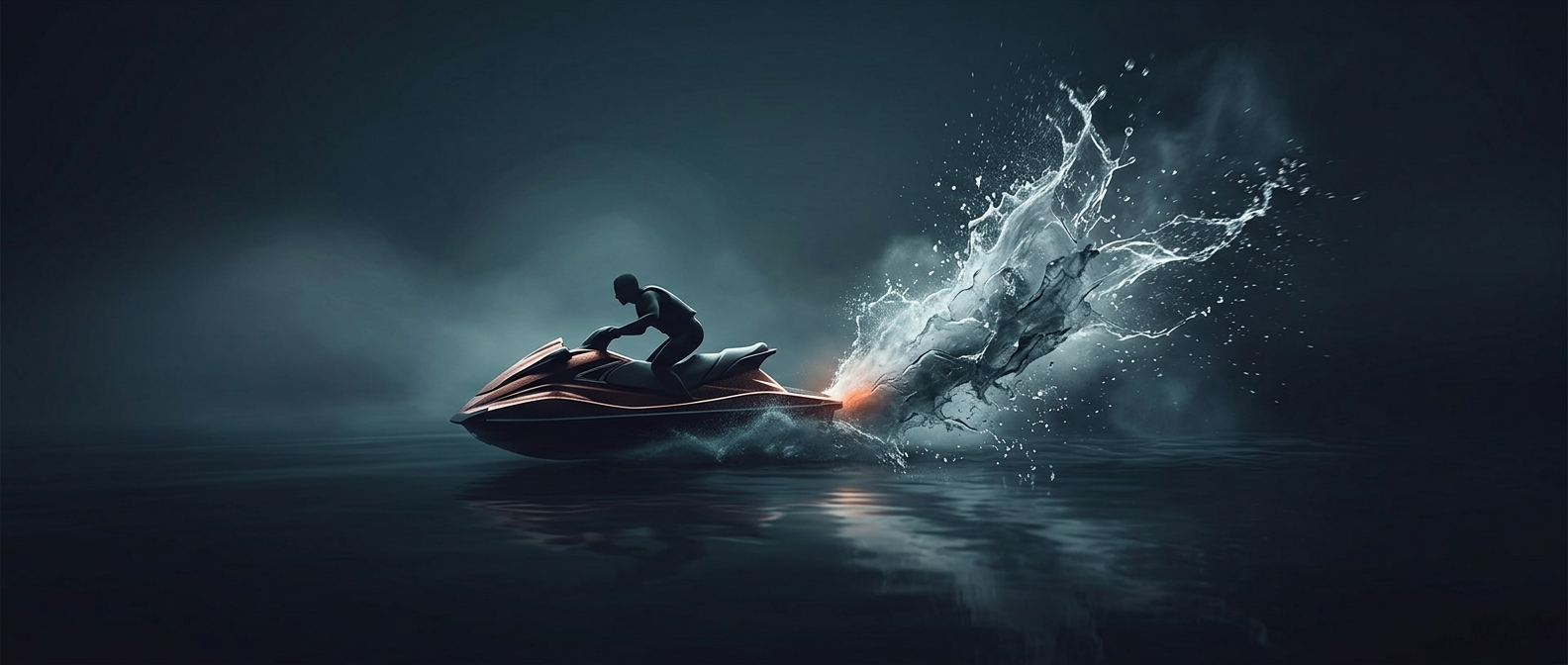
A jet ski’s engine does not push directly against the water. It turns an impeller—a rotor with curved blades—inside a pump. Water entering beneath the hull is guided into the pump, where the impeller accelerates it and raises its pressure. The resulting stream exits through a narrow nozzle at the stern.
The craft moves because that stream carries water backward; an equal-and-opposite force pushes the hull forward. The engine supplies the energy, while the pump and nozzle turn it into a directed flow. The pump’s tight channel also helps keep the moving blades enclosed rather than hanging an open propeller beneath the craft.
Steering depends on the stream
Turning the handlebars swivels the outlet nozzle. The jet then leaves at an angle, pushing the stern the other way and swinging the bow into a turn. This is why the steering system works by redirecting thrust, not by turning a separate rudder through the water.
That design has a practical consequence: steering authority depends on water moving through the nozzle. At very low power, the jet is weaker, so the craft may respond less sharply than a driver expects. Some models use a reverse gate to redirect the stream forward for slowing or backing up; it changes where the water goes rather than reversing the engine.
The exposed-propeller problem is reduced, not every water hazard eliminated. The intake still draws water into a powerful pump, so weeds or debris can disrupt propulsion. The same compact water flow that makes the craft maneuverable is also the part that must stay clear.