How a Jet Pump Turns Water Into Thrust
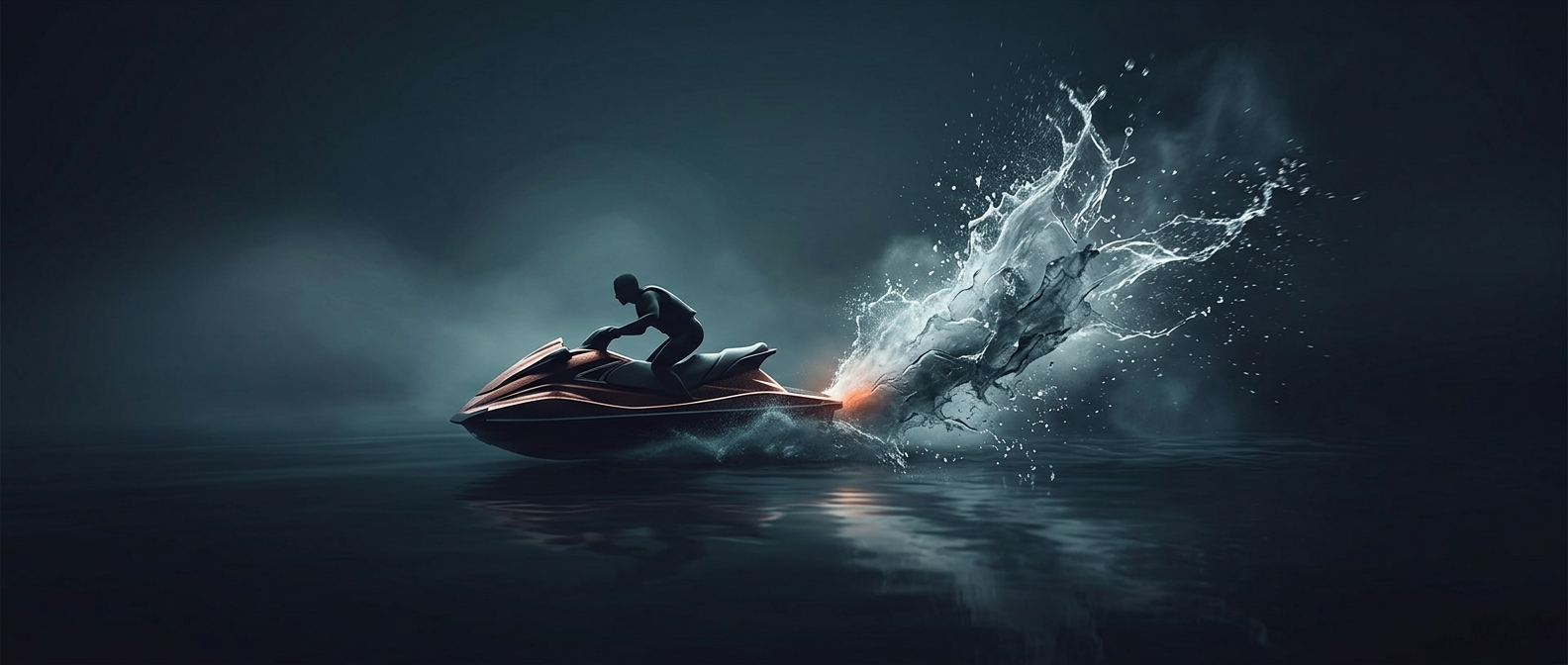
A personal watercraft does not push against the lake with an exposed propeller. Instead, its engine drives an impeller—a spinning rotor inside the hull—that draws water through an intake underneath the craft. The impeller accelerates that water and forces it through a narrower outlet at the rear.
The redirected stream carries momentum backward. In response, the craft gains forward momentum: the same action-and-reaction principle that propels a rocket, though here the pump uses surrounding water rather than burning and expelling fuel.
Why Steering Depends on the Water Stream
The rear nozzle can swivel from side to side. When the rider turns the handlebars, the nozzle redirects the outgoing jet, and the craft changes direction. Steering therefore relies on a strong flow of water from the pump. On many personal watercraft, letting off the throttle sharply reduces that flow, so the craft may not turn as responsively as a car or bicycle that can steer while coasting.
That connection between power and steering is a practical consequence of the design: the engine is not just providing speed; its water stream is also what lets the rider aim the craft.
The Tradeoff Beneath the Hull
With no exposed propeller, the drive system is enclosed within the craft, but it still depends on an unobstructed intake. Weeds or other debris drawn against the intake can disrupt the flow the impeller needs. The basic bargain is simple: the craft moves by accelerating water backward, and its handling depends on keeping that water moving through the pump.