How a Paddlewheel Turns Water Into Thrust
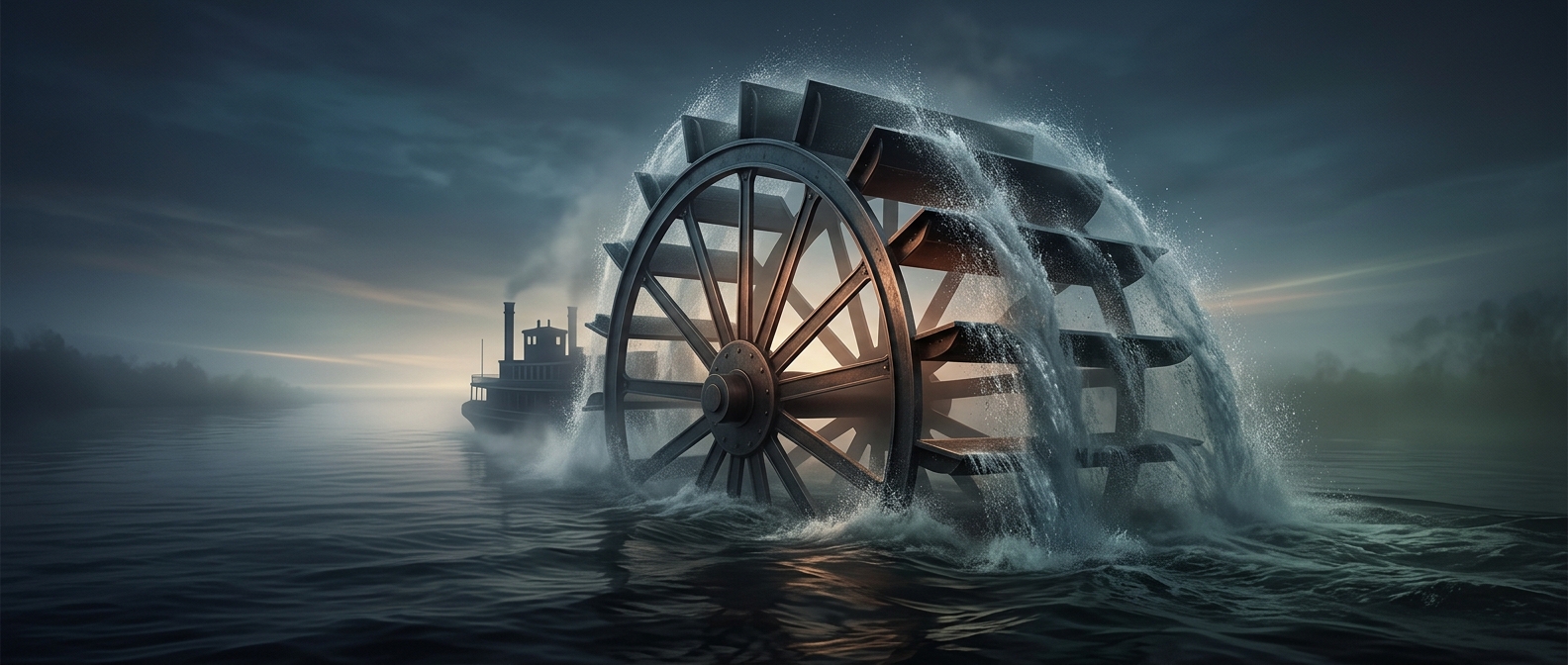
A paddlewheel works by giving water a backward shove. As the wheel rotates, each blade enters the water, pushes a mass of it toward the rear, then rises clear. The water gains backward motion; an equal reaction pushes the wheel—and the boat attached to it—forward. The wheel does not need to “grab” a solid surface: moving water is enough to create thrust.
Why Shape and Timing Matter
A plain paddle can strike the water and slip through it, wasting some of the wheel’s motion in splashing. Bucket-shaped blades partly contain and guide the water as they sweep through, helping the paddle keep pushing instead of immediately spilling water around its edges. The buckets still have to leave the water each turn, so their shape cannot eliminate losses; it can make the push more controlled.
The wheel also has to sit at the right depth. If too little of each blade enters the water, it has little water to move. If too much is submerged, the wheel drags through the water on its way around. Changes in the boat’s load or the water’s surface can therefore affect how steadily the wheel works.
A Tradeoff Built Into the Design
Because the wheel is exposed, its paddles can be affected by waves and uneven water in ways a submerged propeller is not. But its action is easy to see and understand: rotating blades repeatedly redirect water backward. A bucket wheel’s distinctive scoop-like paddles are an attempt to make that brief contact count—one backward-moving parcel of water at a time.