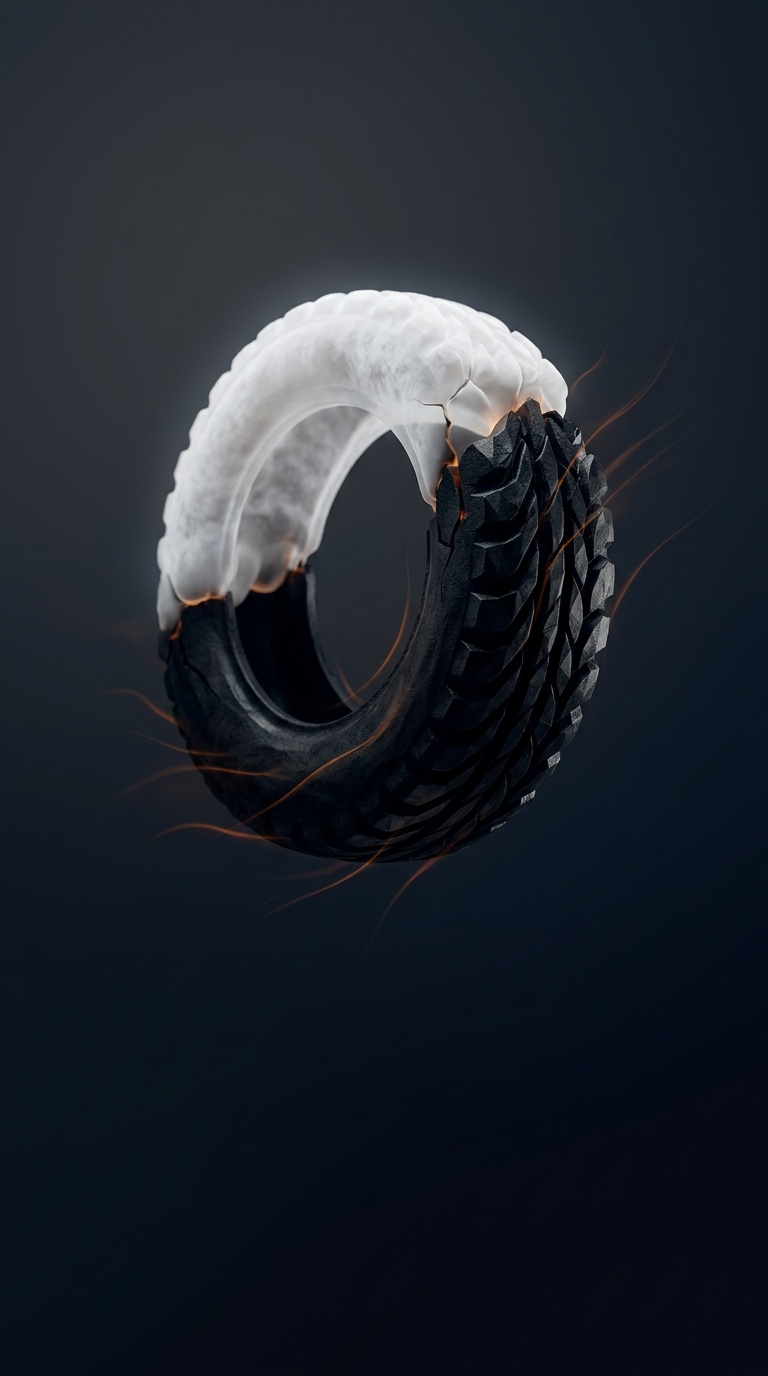
The propellant is already inside the engine
A solid rocket motor is not fed fuel through a pipe. Its propellant is packed inside the motor as a shaped block called a grain. Fuel and oxidizer—the ingredient that lets fuel burn without drawing oxygen from the air—are mixed throughout that block.
When an igniter starts combustion, the exposed surface of the grain burns. Hot gas builds pressure inside the casing and escapes through a nozzle, producing thrust. As the surface burns inward, more propellant is consumed. There is no separate fuel supply to shut off: the reaction is happening across the propellant already loaded into the motor.
Why the burn cannot simply be stopped
A liquid rocket can stop producing thrust by closing valves that feed its fuel and oxidizer into the chamber. In a solid motor, closing a valve would not help because the fuel and oxidizer are together, already burning inside the chamber. The motor’s casing and nozzle direct the resulting gas; they do not provide a tap for the propellant.
Engineers can shape a grain to influence how much burning surface is exposed over time, and thus how thrust changes during a planned burn. But that is a design choice made before launch, not an in-flight throttle. Once the grain is ignited, the motor is intended to keep burning until its usable propellant is spent.
The tradeoff is built into the launch
That commitment affects how a rocket is designed and operated. Solid boosters can be prepared in advance and deliver a large push, but they cannot be paused while a vehicle waits for better conditions or adjusted like a controllable engine. The rocket must account for their fixed burn in its flight plan—and, when a solid booster has finished its job, separate it rather than command it to switch off.