How a ship became a plug in the canal
The Ever Given was traveling through the Suez Canal, a narrow passage where a very large vessel has little room to maneuver. Its stacked containers presented a broad surface to the wind. Gusts can push on that surface like a sail, nudging a ship off its intended line; in a confined channel, even a modest sideways shift can leave too little room to correct course.
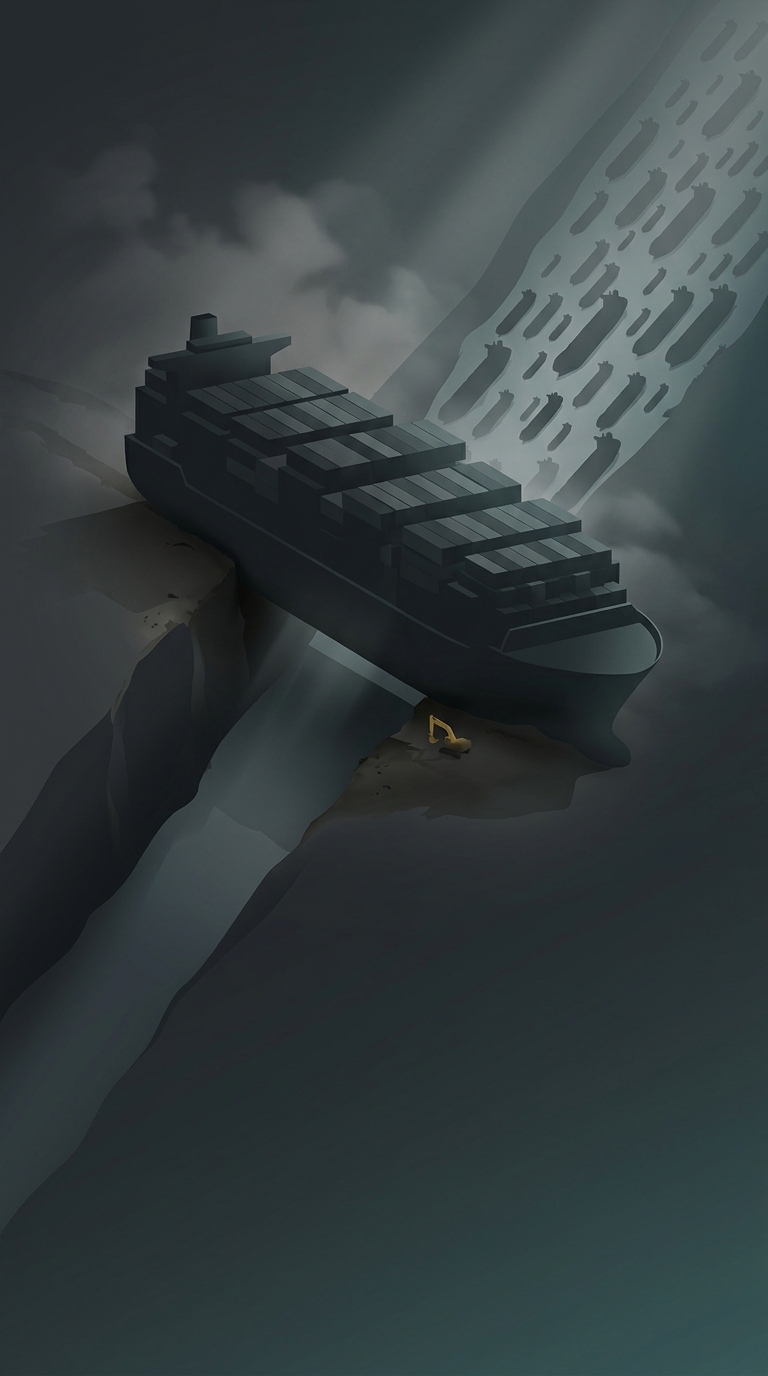
The ship ran aground and turned across the canal. Because other vessels could not pass the obstruction, traffic backed up on both sides. The canal did not stop all world trade, but its closure interrupted an important route between Europe and Asia and delayed ships and cargo moving through it.
Why freeing it took more than a tug
A grounded ship is not simply a heavy object that can be pulled loose. The hull may be pressed into sand, and pulling hard before reducing that resistance can be ineffective. Rescuers first used dredging equipment to remove material from around the bow and stern, giving the vessel room to move. Tugboats then applied force from different directions as water levels and conditions allowed.
This was a coordinated effort, not a contest between one ship and one excavator. The small yellow machine made a memorable image, but it could not shift the vessel by itself: its job was to remove sand at the point where the hull was stuck, while larger equipment and tugs did the rest.
The vulnerability was in the route
Modern shipping depends on vessels carrying enormous volumes through a limited number of narrow passages. Detailed schedules and logistics systems can coordinate ships and cargo, but they cannot make a blocked channel usable. When one route closes, ships may have to wait or take longer alternatives, disrupting plans well beyond the canal itself.
The Ever Given was freed after nearly a week. The striking lesson was not that global trade nearly collapsed, but that a highly connected system can still be delayed by a physical bottleneck—and that clearing it may require patient digging and carefully directed pulls, not just better planning.