Why pushing gives a towboat more control
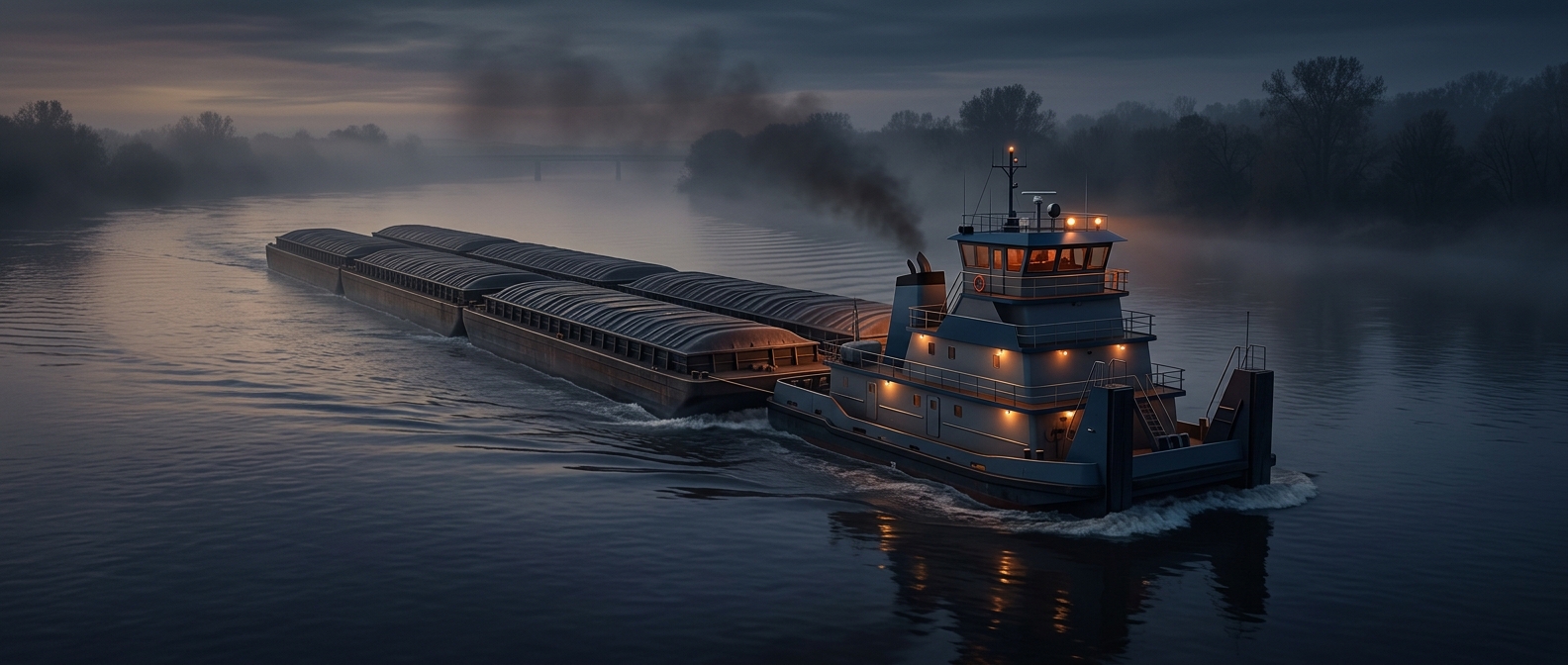
A barge may be much wider and longer than the towboat that moves it. Instead of pulling each barge on a separate line, a river towboat typically fits snugly against the back of a group of barges and pushes them as one unit. The barges are tied together into a tow, a compact formation whose shape the boat can help control.
The key is where the force is applied. When the towboat pushes from behind, its rudders and propellers steer the boat, and the boat’s bow presses against the rear of the formation. That pressure helps turn the whole group in the same direction. With barges connected in a long, flexible line, a tug pulling from the front would have less direct control over the far end: the trailing barges could swing wide or lag behind as the line bends.
A fleet that turns as a unit
River bends make this difference practical. A towboat can adjust its thrust and steering to guide the barge formation through a curve, while the barges’ broad faces respond to the water and to one another. The crew can also work with the arrangement of the tow, joining barges side by side and end to end to create a shape suited to the river and the load.
Pushing is not effortless. A large tow has substantial momentum, so it cannot pivot or stop like a small boat; the towboat has to anticipate turns and manage speed well before reaching them. But keeping the barges grouped directly in front of the boat avoids the loose, stretched-out geometry of a long trailing line. It lets a comparatively small vessel guide a broad floating load through a narrow channel as one steerable formation.