Why a Crossing Had to Feel Like an Occasion
An ocean liner had two jobs: carry passengers across the Atlantic on a schedule and persuade them to choose one company over another. Speed mattered, but it was not the whole product. A wealthy traveler spending days at sea could compare ships by what life aboard felt like—how comfortably they could eat, socialize, exercise, and be seen.
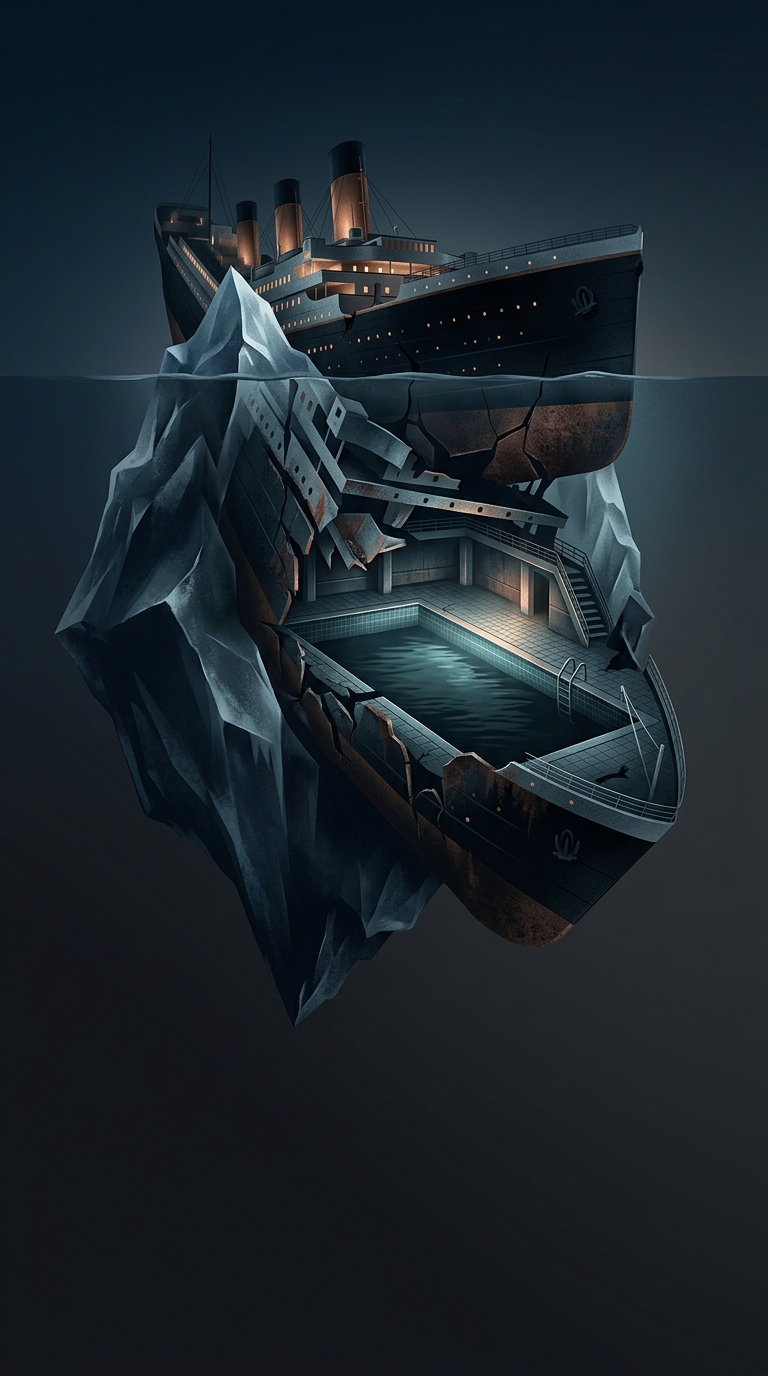
That made the ship’s interiors part of its commercial strategy. A grand dining room was not just somewhere to have dinner; it turned a routine meal into a public display of refinement. Lounges and promenades gave passengers places to mingle, while pools and other leisure facilities offered ways to fill long hours between ports. The appeal was both private comfort and social visibility: an amenity mattered partly because other passengers could notice it.
Luxury Had to Fit Inside a Working Ship
These were not floating hotels unconstrained by engineering. A liner needed space for engines, fuel, cargo, crew, and passenger accommodation, all within a hull designed for rough water and long-distance travel. Every room devoted to leisure competed, in some way, with the ship’s other uses. Its designers therefore had to make luxury work within a vessel that still had to cross an ocean reliably.
That constraint helped make the surroundings themselves part of the attraction. Carefully arranged public rooms could create a sense of spaciousness and ceremony without changing the basic fact that passengers were living aboard a moving ship. The contrast—formal dining and elegant interiors set against the open sea—made the journey feel like an event rather than mere transportation.
Selling More Than Arrival
The contest for affluent passengers encouraged companies to treat onboard experience as a reason to book, not an optional extra. Faster passage could save time; elaborate surroundings made the time at sea easier to justify and more enjoyable to display. The liner was selling a particular way to spend the crossing, as well as a ticket to the far shore. That is why its most memorable rooms could matter nearly as much to its reputation as the machinery that carried it there.