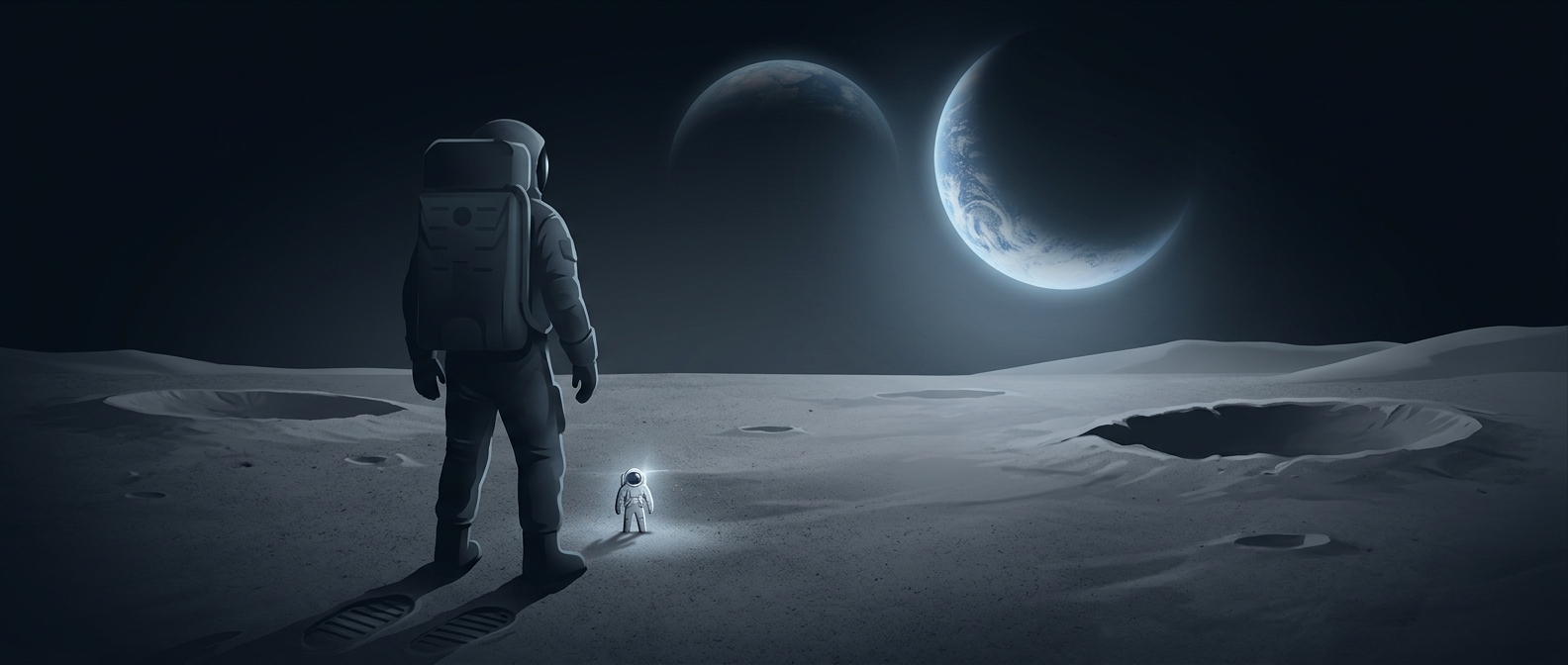
Why a tiny lunar throw travels so far
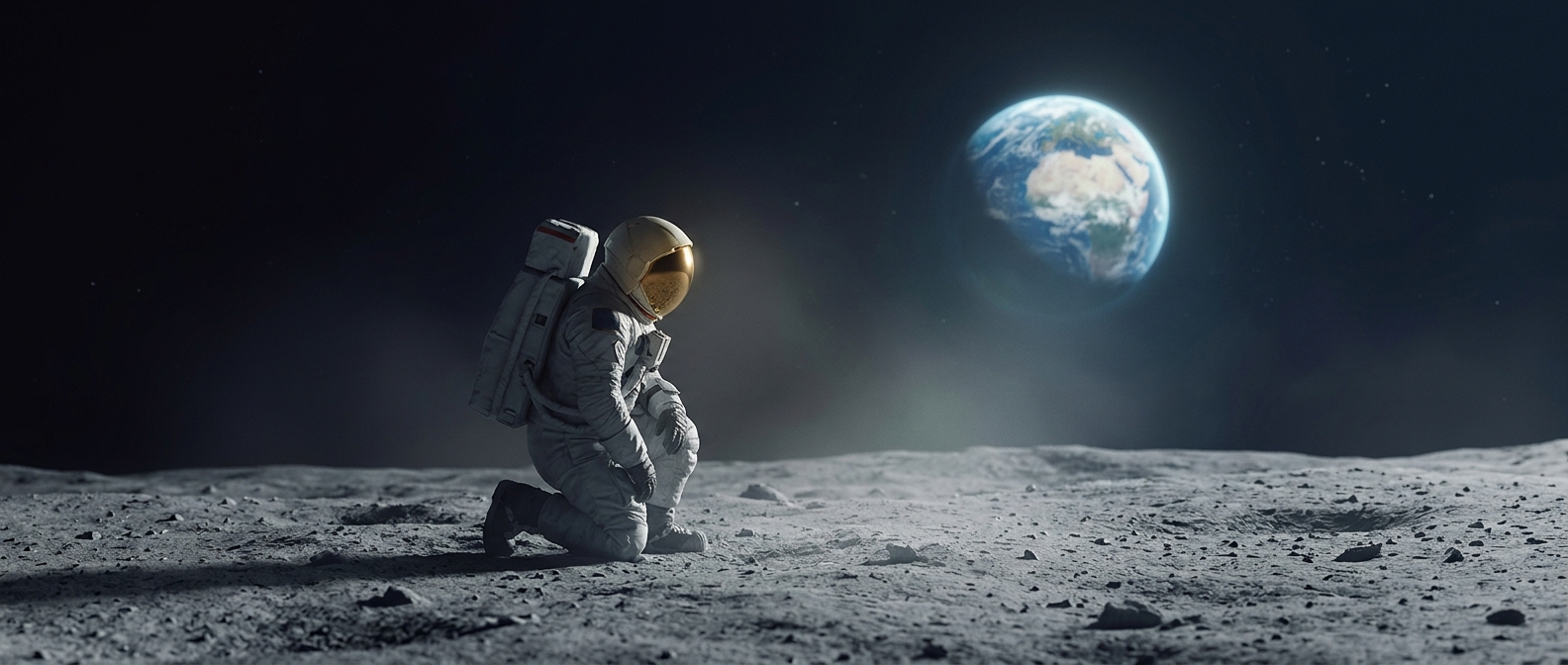
A tossed pin keeps moving forward while lunar gravity pulls it downward. Those two motions combine: the pin advances across the ground as it gradually loses height, tracing an arc. On Earth, air resistance steadily steals some of its forward speed. The Moon has virtually no atmosphere, so there is almost nothing to do that braking.
The weaker gravity matters too. Near the lunar surface, objects accelerate downward at roughly one-sixth the rate they do on Earth. For the same starting speed and launch angle, that slower fall gives the pin more time in the air—and therefore more distance to travel before it lands. Its mass does not make it fall more slowly; without significant air resistance, a pin and a heavier object accelerate downward at the same rate.
A clean arc, not a floating pin
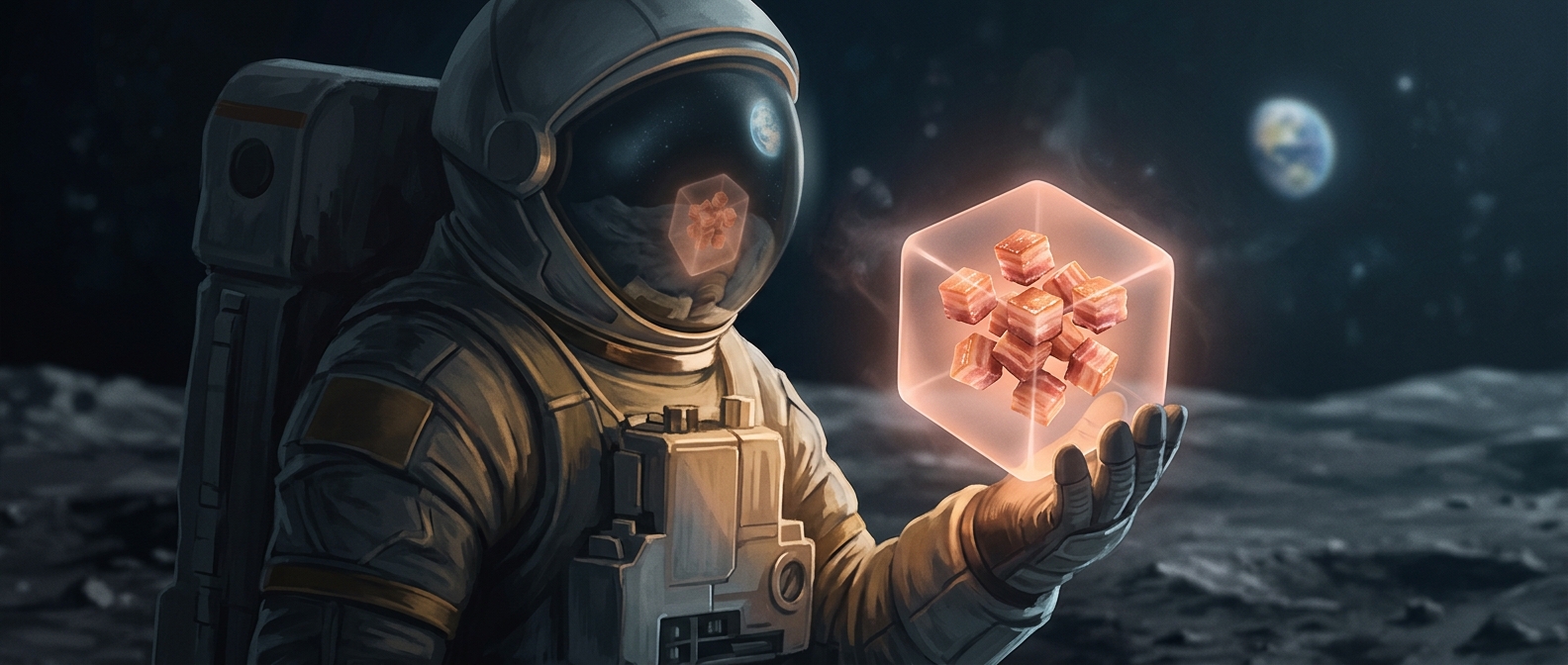
The combination can make an ordinary toss look unusually dramatic, but the pin is not gliding or hovering. Gravity is still bending its path toward the ground from the instant it leaves the astronaut’s hand. The flight lasts longer because the downward pull is weaker, while the lack of air means the forward motion is barely slowed.
That is why a small gesture can produce a long lunar encore: the Moon gives the pin more time to travel, and almost nothing in the air to take that motion away.