Why Armies Sent Balloons Up
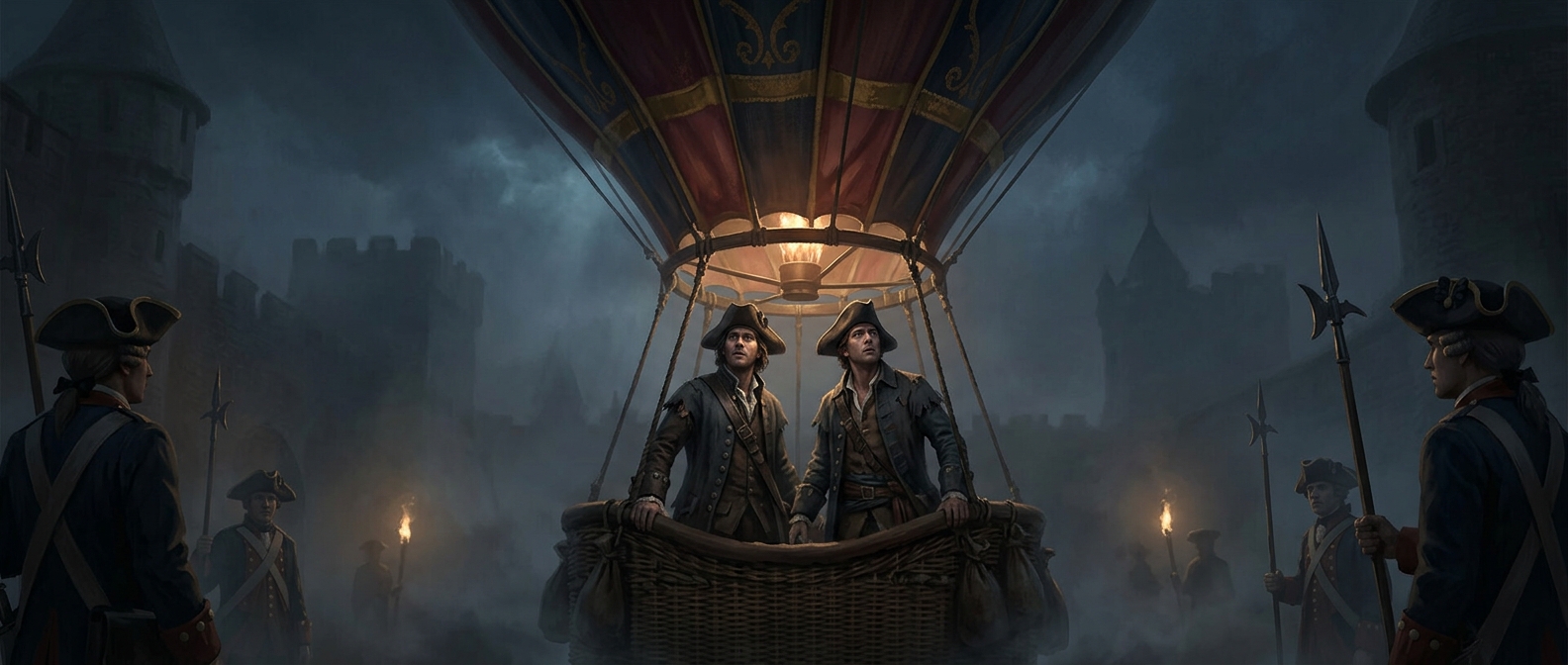
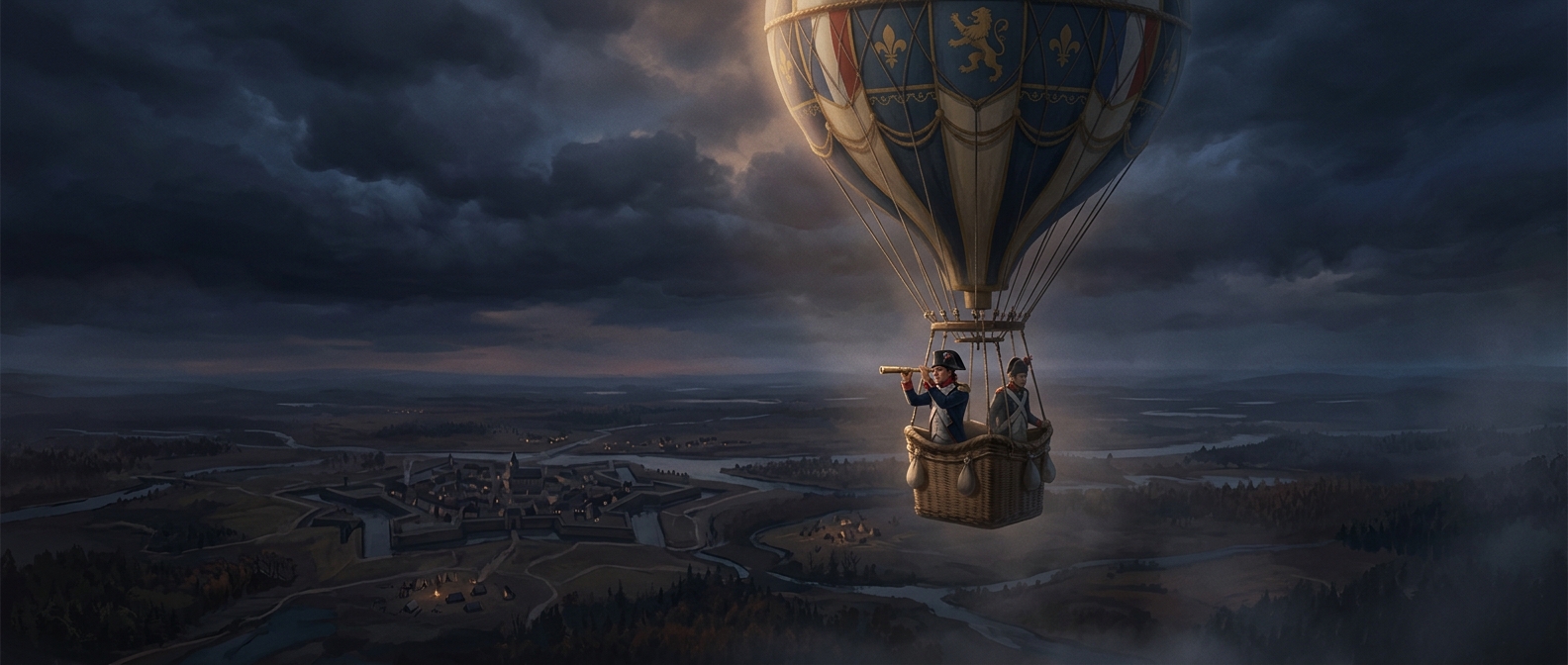
Before aircraft, a balloon offered commanders something rare: a view beyond the ridges, walls, and smoke that blocked sight from the ground. From above, an observer could look for troop columns, changing positions, or preparations hidden from soldiers at the front. During the French Revolutionary Wars, France used observation balloons, including at the Battle of Fleurus in 1794.
The balloon did not need to travel over enemy lines to be useful. Kept near the army, it could rise high enough to widen the observer’s view while remaining connected to a team below. The observer’s job was to turn that elevated view into information commanders could act on; the balloon itself was a lookout, not a weapon.
The Tether Was Both an Advantage and a Limitation
A rope helped keep the balloon near a chosen position and made it possible to haul it back down. But it also limited how far the observer could move, and wind could tug the balloon away from the best vantage point. A clear view from above was not the same as a complete picture: distance, weather, smoke, and the observer’s angle could all obscure what was happening.
The balloon’s height also made its position conspicuous. Enemy forces could see the unusual object and understand that someone was watching. So commanders gained a new kind of battlefield sight, but had to weigh it against the risk of putting an observer in an exposed, difficult-to-hide post.