The hard part was keeping the Flyer controllable
A wing can generate enough lift to leave the ground, but that alone does not make a useful airplane. In flight, a machine can tip, yaw, or pitch unexpectedly; the pilot needs a way to correct each motion before a small wobble becomes a crash. The Wright brothers’ crucial advance was a system for actively managing those movements.
To make the Flyer bank, the pilot moved a cradle with his hips. Cables from the cradle twisted the wings in opposite directions: one side gained more lift while the other gained less. This technique, called wing warping, rolled the aircraft toward a turn. A movable rudder helped point its nose in the same direction, while a front elevator let the pilot raise or lower the nose. Together, these controls gave the pilot ways to steer in three dimensions.
A turn had to be a coordinated maneuver
Banking without controlling the aircraft’s direction could send it skidding sideways. The Flyer’s rudder was linked to the wing-warping control, so the two adjustments worked together as the pilot leaned into a turn. The arrangement reflected a practical insight: flight control was not a matter of making one big correction, but of coordinating small ones to keep the machine balanced.
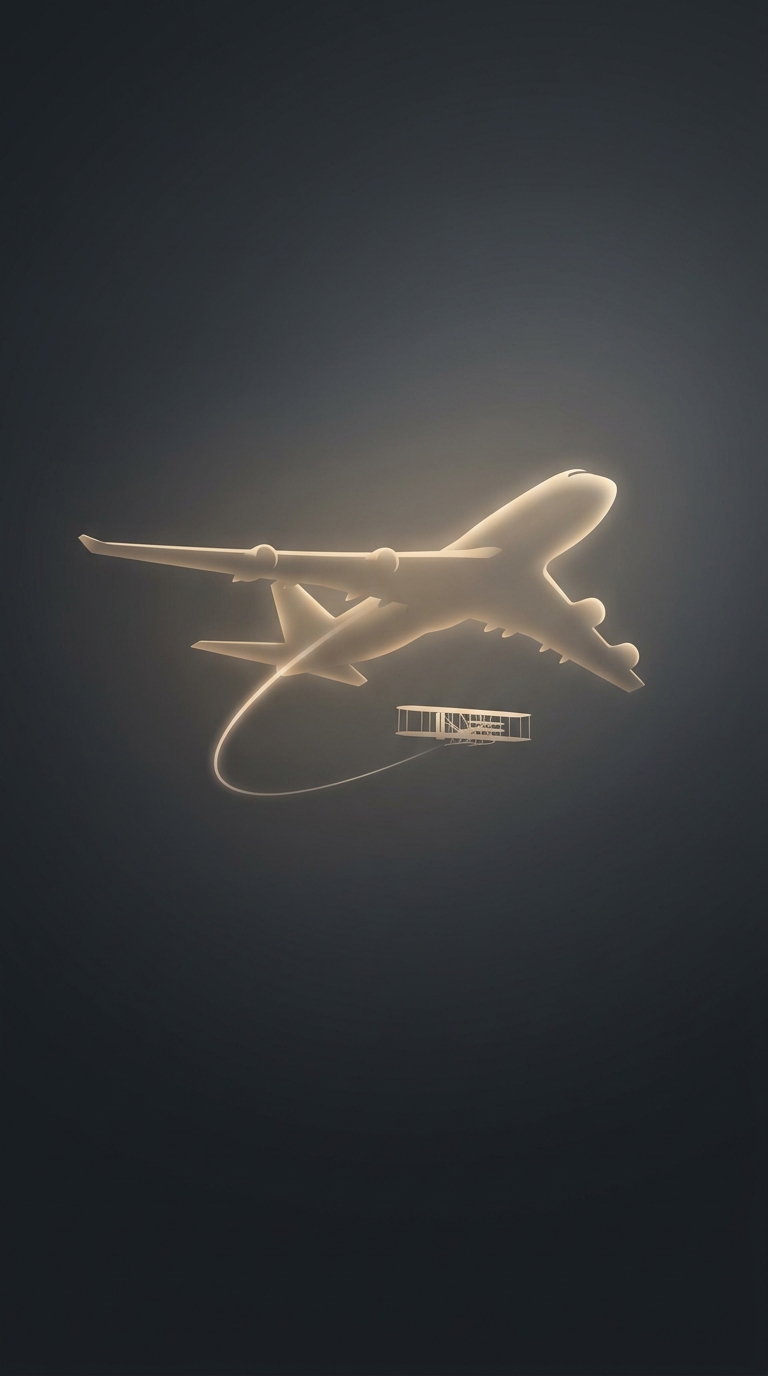
That insight mattered far beyond the first short hop. The Flyer’s flight lasted only seconds, but its control system helped make powered flight something a pilot could guide rather than merely endure. Modern aircraft use different hardware, yet pilots still manage the same basic motions—roll, yaw, and pitch. The Wrights’ achievement was not simply getting an airplane into the air; it was giving a person a way to keep it there and choose where it went.