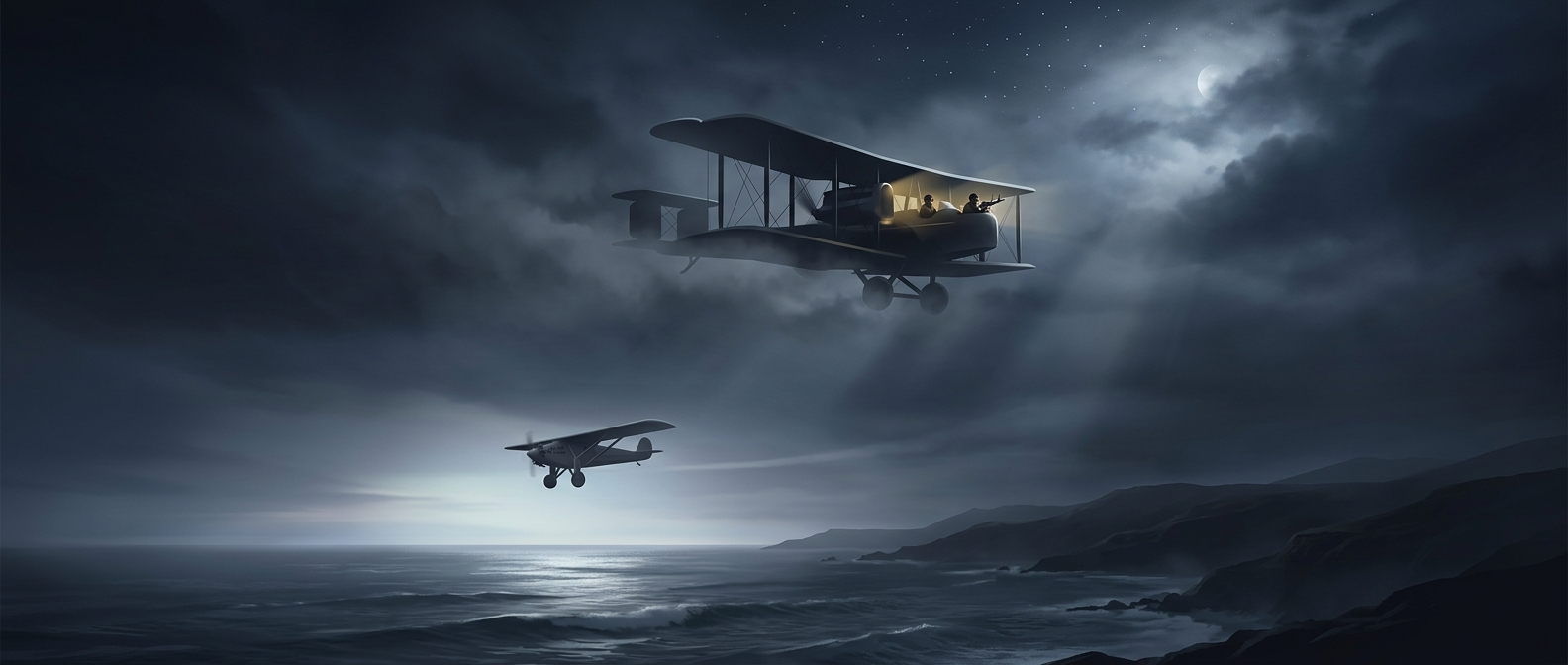
A Bomber Rebuilt for Distance
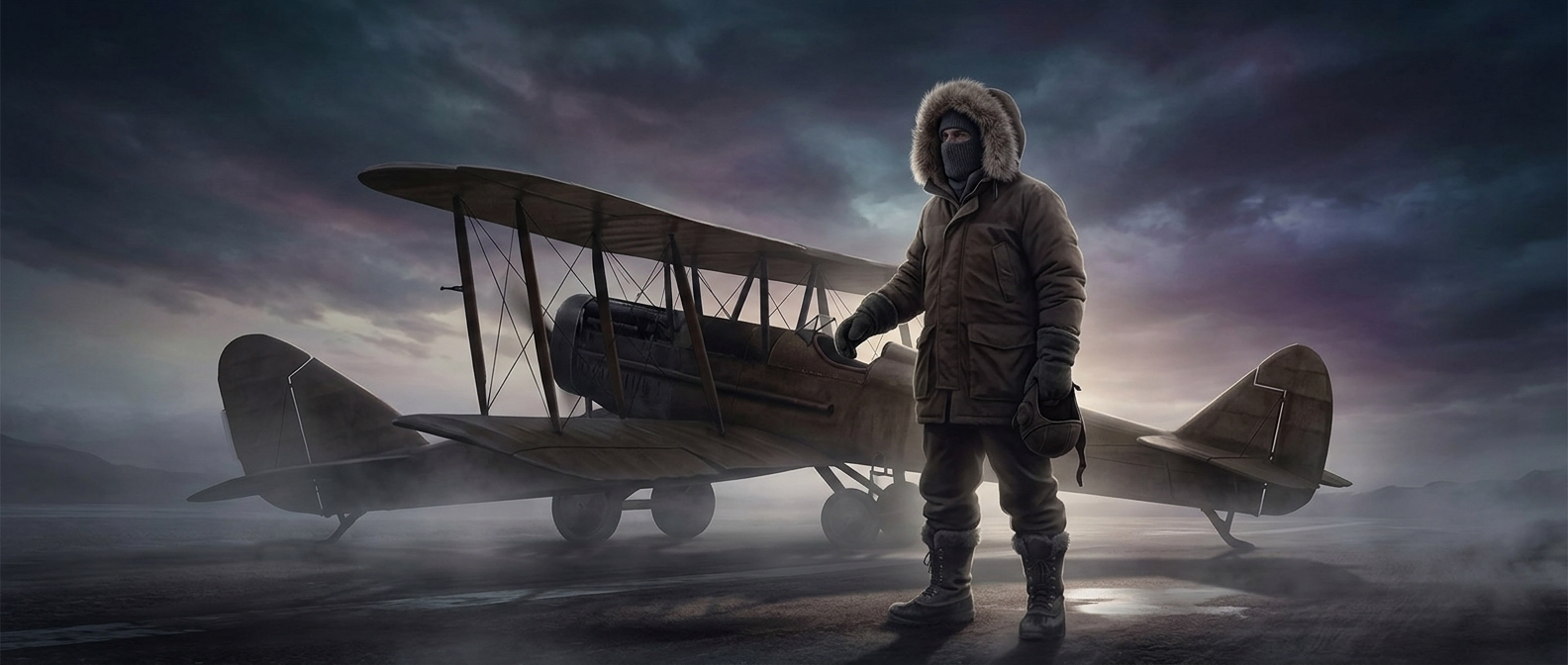
The aircraft was a Vickers Vimy, a twin-engine bomber whose design offered a useful starting point for an ocean crossing: room to carry fuel and two engines to keep the plane moving. But a wartime bomber was not ready to fly from one continent to another. Alcock and Brown had to adapt it for the journey, balancing the weight of extra fuel against the need to keep the aircraft controllable and its engines supplied with fuel throughout the flight.
That tradeoff shaped the whole crossing. More fuel meant greater range, but also more weight for the engines to lift. The crew could not simply follow a visible route across the water, either. With no landmarks below, Brown had to help establish the plane’s position using navigation instruments and calculations, while Alcock kept the aircraft on course through changing conditions.
The Landing Was Part of the Risk
A long-range flight required more than enough fuel to reach Ireland; the crew also needed a place where the aircraft could come down. Their destination was not a prepared airfield. The Vimy struck the ground in boggy terrain near Clifden, damaging the aircraft, but the soft ground helped absorb the impact. The men emerged uninjured.
The flight showed that an aircraft originally built for war could be adapted to connect continents—but it also exposed how narrow the margin could be. A machine carrying enough fuel for the crossing still had to find a workable landing place at the far end. In this case, the plane was damaged on arrival, yet the crew had completed the journey alive.