Why the First Balloon Passengers Were Animals
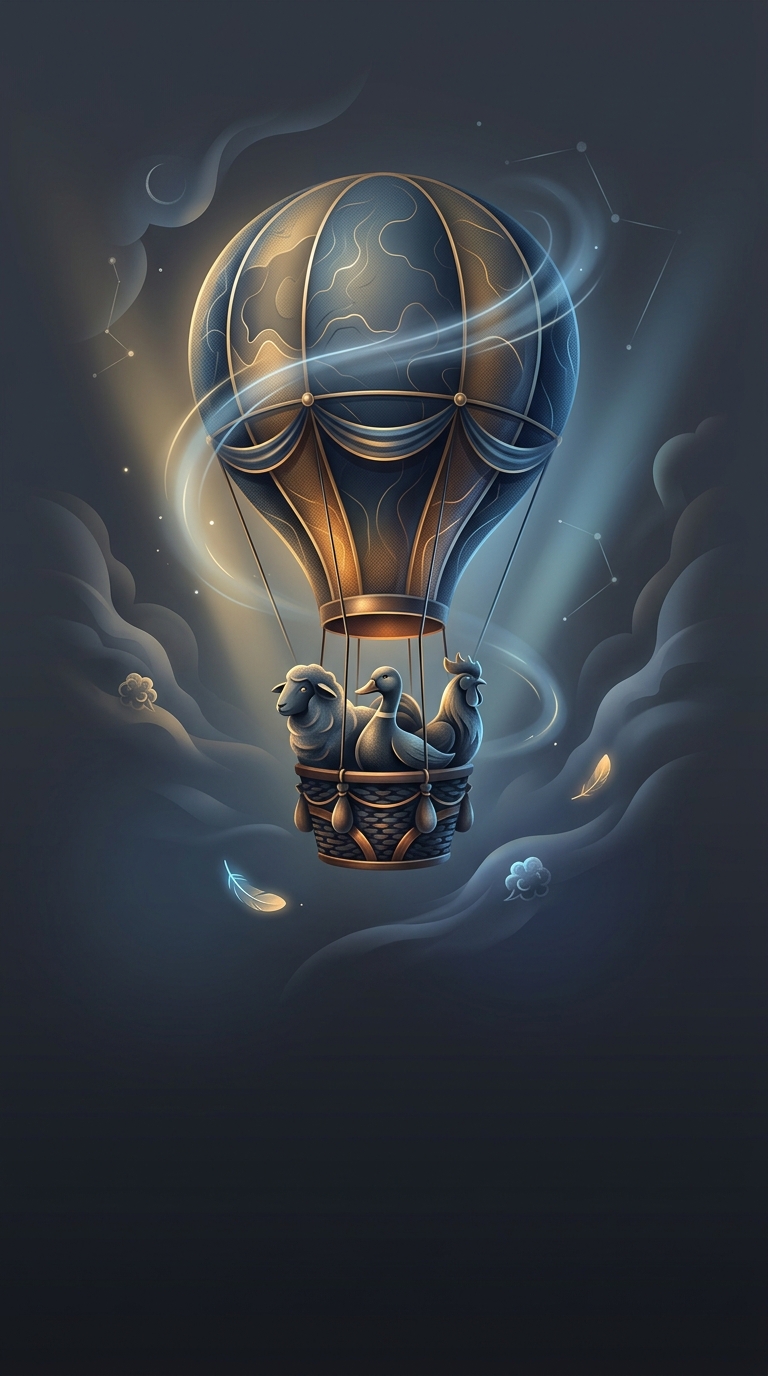
A balloon could rise impressively and still be dangerous to whatever it carried. In 1783, French balloon pioneers needed to learn whether the unfamiliar ride and the air at altitude would harm living passengers before risking a person. So, for a public trial at Versailles, they sent up a sheep, a duck, and a rooster.
The sheep was chosen as a rough stand-in for a human: it was a land animal of comparable general size, rather than a creature naturally suited to flight. The birds offered contrasts. A duck was accustomed to flying, while a rooster was not; their condition after the flight could help observers judge whether the journey itself had caused obvious harm. This was a practical test, not a precise medical experiment.
What the Flight Could—and Couldn’t—Prove
The Montgolfier brothers’ balloon rose because heated air inside its envelope was lighter than the cooler air outside. As it climbed, the animals rode in a basket beneath the balloon, exposed to the motion and changing conditions of flight. The craft later came back down with its passengers alive, providing a reassuring first sign that a balloon trip could be survived.
But one short flight could not establish that every height, duration, or balloon design was safe. Nor could three animals answer every question about how a human body would respond. The test reduced uncertainty enough to make the next step seem more plausible; it did not eliminate the risk.
From Animal Trial to Human Flight
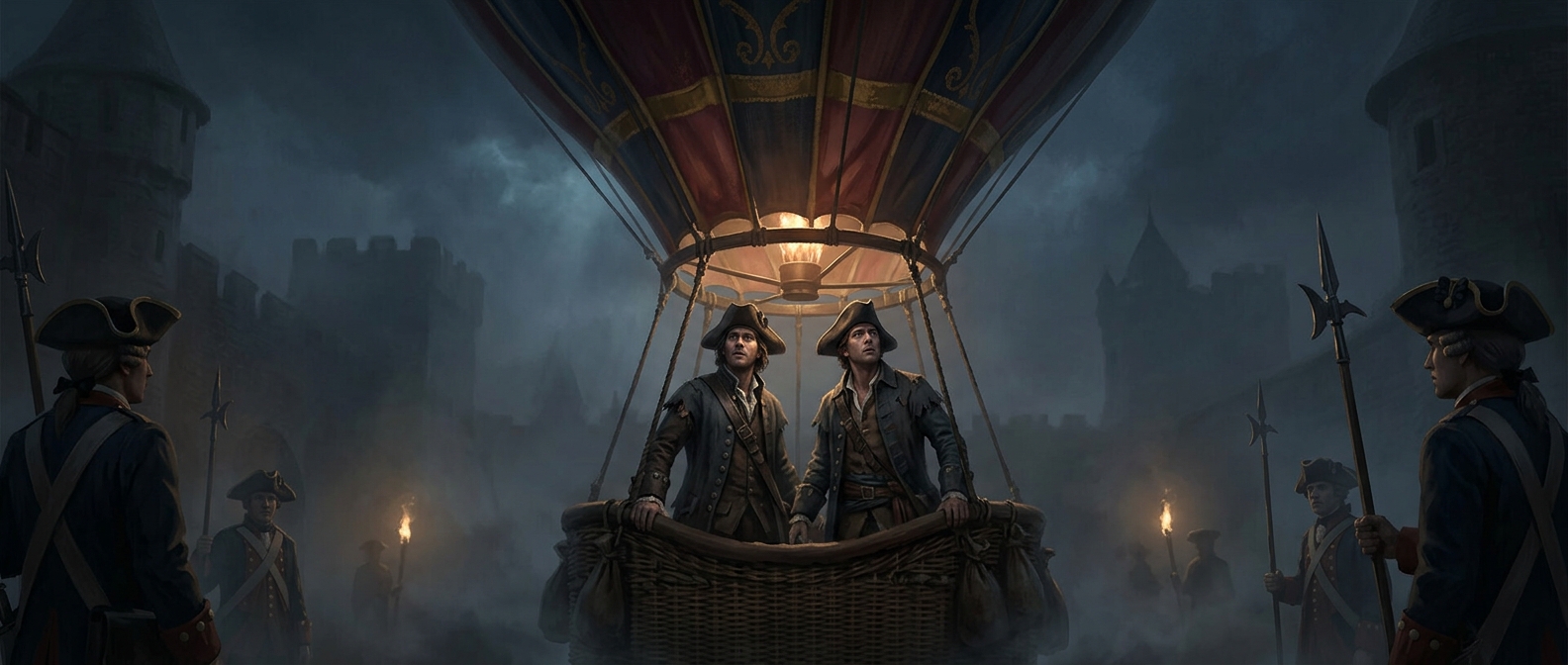
The animal flight took place on September 19, 1783. Roughly two months later, on November 21, Pilâtre de Rozier and the Marquis d’Arlandes made the first free flight by humans in a Montgolfier balloon. The animals’ trip had helped turn ballooning from a spectacle into a testable transport idea: before asking people to trust the basket, its inventors had first sent up a small crew that could survive the landing without writing a review.