From seawater to a controlled oxygen supply
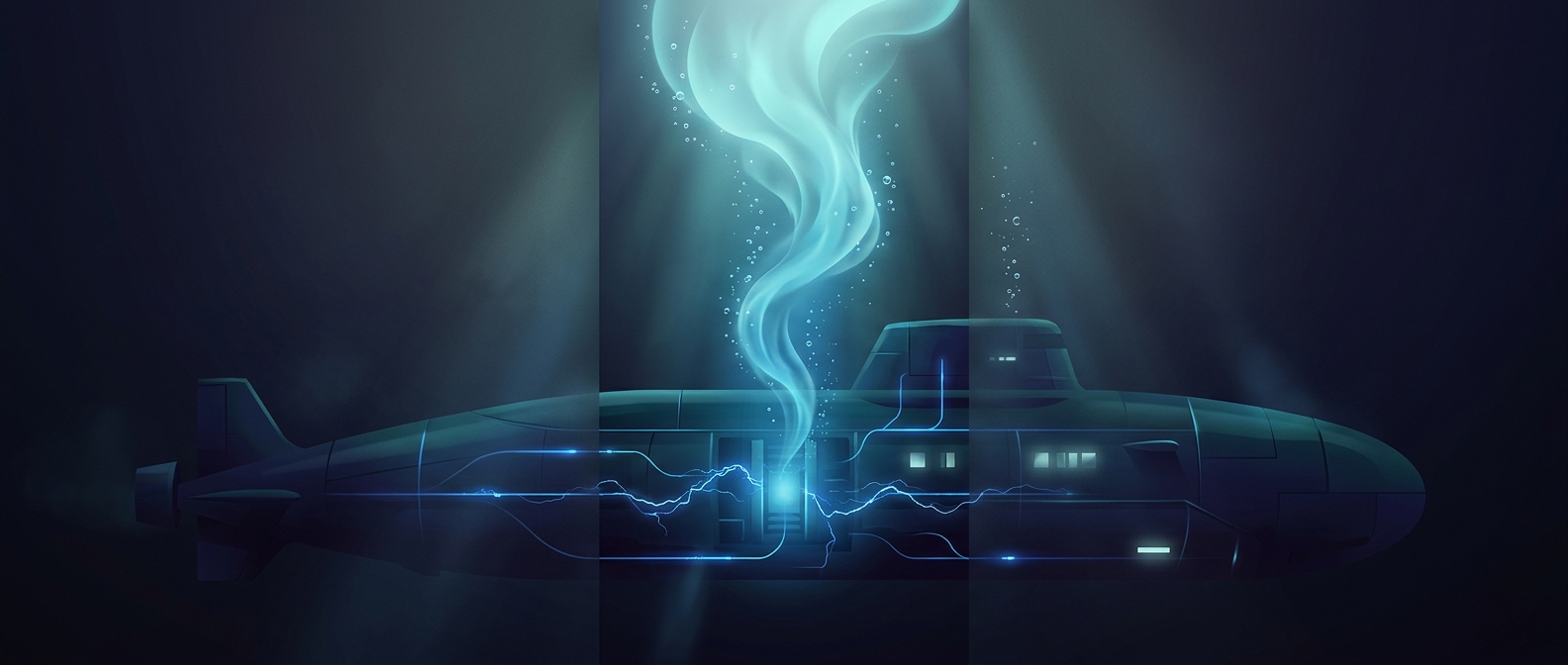
A submarine cannot simply run salty ocean water through an electrolyzer. Salt and other dissolved substances can interfere with the equipment and create unwanted chemical products. Instead, the boat first makes or uses purified fresh water, then feeds it to an electrolyzer—a device that uses electricity to split water molecules into oxygen and hydrogen.
The oxygen is metered into the submarine’s air. That control matters: the goal is not to fill the boat with pure oxygen, but to keep the cabin atmosphere within a safe, breathable range. The hydrogen produced in the process is kept out of the living spaces and handled separately, typically discharged overboard.
Why oxygen is only half the job
Crew members consume oxygen and exhale carbon dioxide. If the carbon dioxide were allowed to build up, adding more oxygen would not make the air safe. Scrubbers pass cabin air through materials that capture carbon dioxide, while oxygen generation replaces what people have used.
These systems work together as a continuous life-support loop: water and electricity supply oxygen, and air-cleaning equipment removes a harmful byproduct of breathing. The submarine must also monitor the atmosphere and adjust the oxygen supply rather than treating oxygen production as a set-and-forget process.
The constraint is power and balance
Making oxygen underwater lets a submarine remain submerged without relying solely on stored oxygen, but electrolysis takes electrical power, and the resulting gases must be managed safely. The practical achievement is not just splitting water—it is maintaining a stable cabin atmosphere, molecule by molecule, while the crew and machinery continually change it.