A sleeping whale can be hard to spot from a moving ferry
Sperm whales do not always sleep deep underwater. During rest, they can remain close to the surface and move very little. That creates a dangerous mismatch: a whale may be near a busy route but give a bridge crew little visible warning, while a ferry continues forward with substantial momentum.
A collision is not just a question of whether a lookout sees the animal. The crew also needs enough time and room to react. At ferry speed, even a brief delay between spotting a whale and changing course can matter.
Different tools look in different places
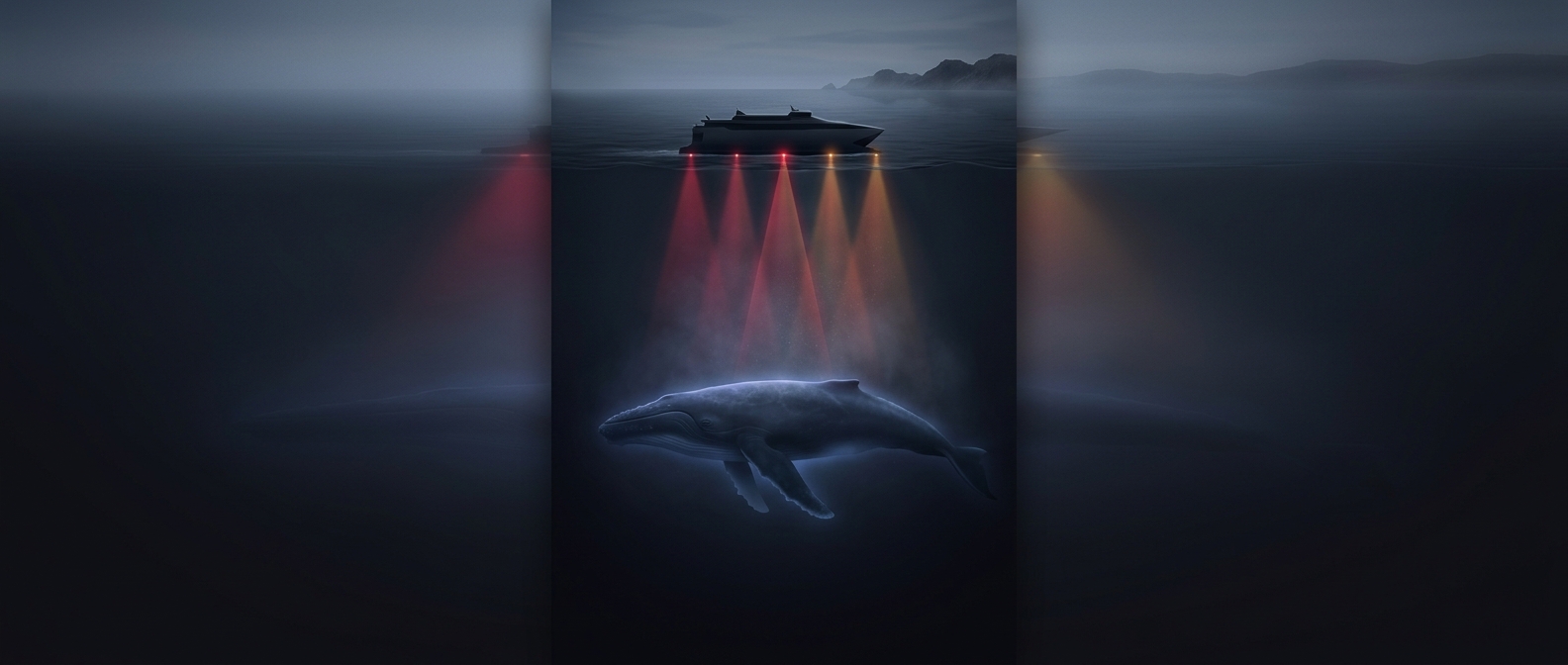
The safeguards described around the Canary Islands combine detection with time to respond. Sonar uses sound underwater to reveal objects below the vessel; thermal cameras look for heat patterns at the surface, including in darkness. Each can add information that ordinary visual observation may miss, but neither makes a whale impossible to overlook. Sea conditions, the animal’s position, and the vessel’s movement all affect what can be detected.
Speed limits provide another layer. A slower ferry covers less distance while the crew assesses a possible sighting and acts, and a lower-speed impact would generally be less forceful. The point is not to rely on one device to solve the problem, but to give people more chances to notice a whale and more time to respond.
That matters especially when the animal is resting: a whale that is barely moving may be precisely the one that is hardest to avoid.