Why a Submarine Needed a Living Gas Alarm
Inside an early submarine, dangerous air could build up where there was nowhere to escape. Carbon monoxide is especially treacherous: it has no color or smell, so a sailor could not reliably detect it by sight or scent. Other toxic gases posed different hazards, but the shared problem was the same—air that looked normal could still be unsafe.
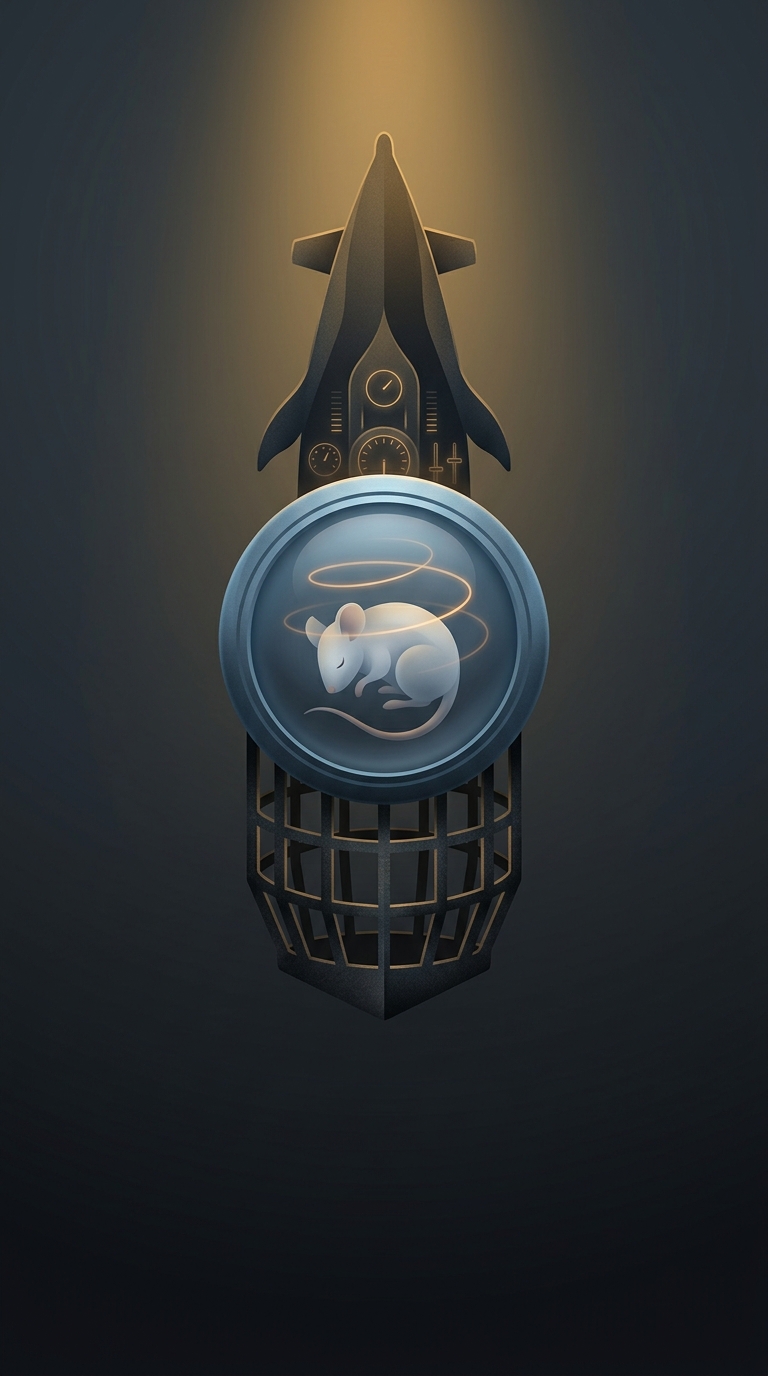
Electronic gas detectors were not always available or practical. A caged white mouse offered a crude alternative: it was a living organism exposed to the same cabin air as the crew. If the animal became unusually weak, unsteady, or distressed, sailors had a visible reason to suspect the atmosphere and investigate or take protective action.
A Warning, Not a Measuring Instrument
The mouse did not identify which gas was present or tell the crew its concentration. Its behavior was an indirect signal that something might be wrong, and interpreting that signal depended on people watching the cage. A mouse could also appear unwell for reasons unrelated to toxic air, so the method could not match a detector that measured a particular substance.
That limitation matters in a submarine, where air quality could change faster than a crew could diagnose it by feel. The animal supplied an early, imperfect clue—not a guarantee of safety. Its role was to make an invisible danger visible enough to prompt attention.
The system’s stark logic was also its cost: the crew learned about the air by watching a small animal experience it first.