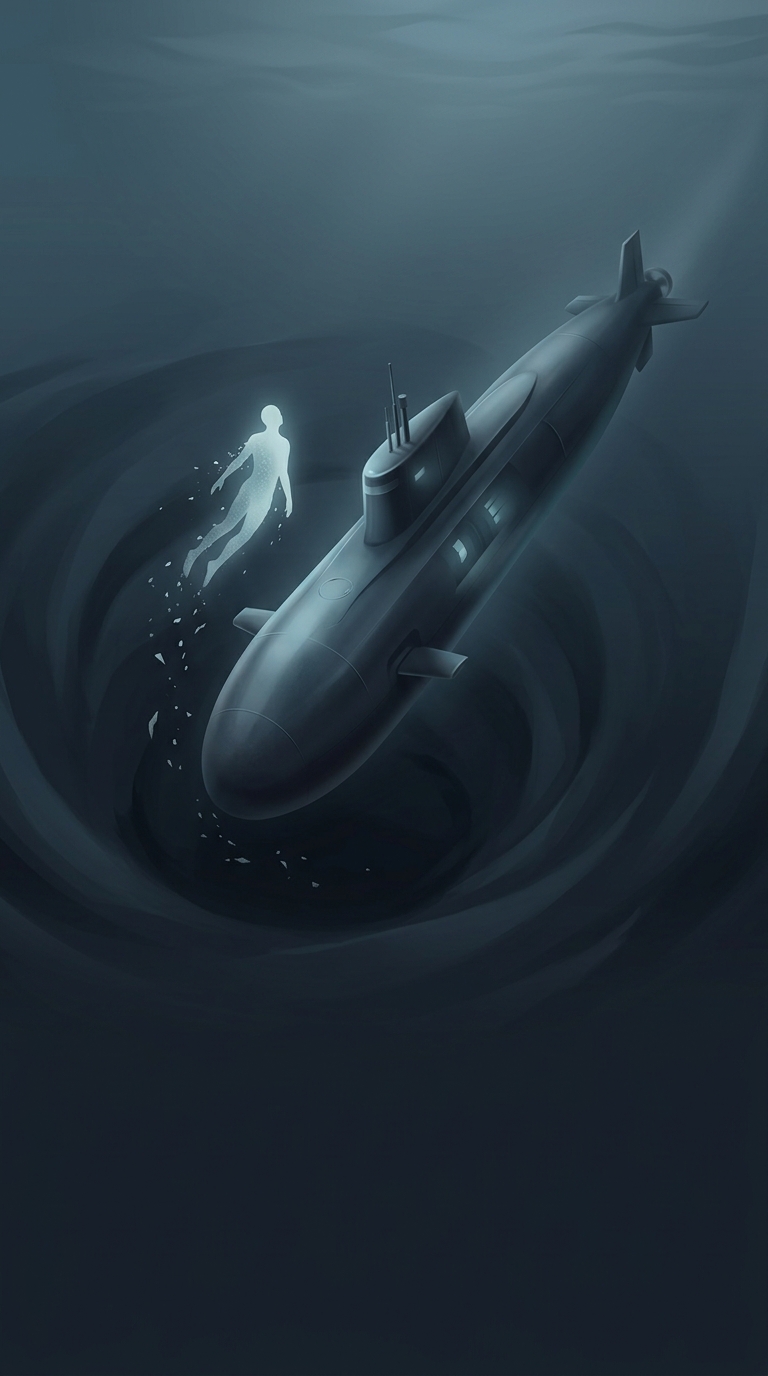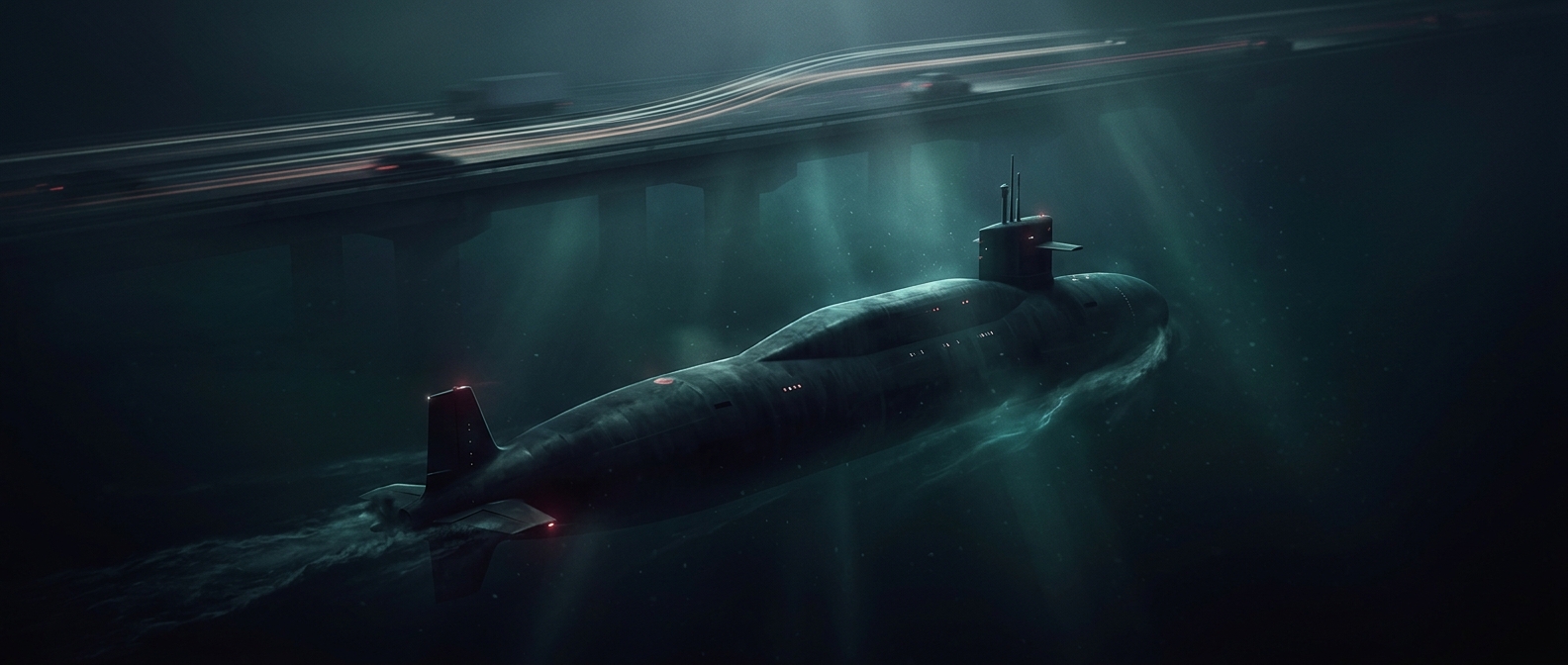
Why underwater speed gets loud
A submarine’s propeller pushes water backward to move the boat forward. As the blades turn faster, pressure can fall sharply on their surfaces. If it drops low enough, tiny pockets of water vapor form; they then collapse as pressure rises again. This process, called cavitation, makes noise that can travel through water and be picked up by sonar.
The propeller is not the only source of sound. Faster motion also makes water rush around the hull more noisily, while machinery may have to work harder. Together, those sounds can make a submarine easier to detect.
Speed is a tactical choice
A submarine can use high speed when it needs to reach an area quickly or maneuver under pressure. But speed can come at the cost of stealth, so crews may slow down when listening for other vessels or trying to avoid detection. The useful speed is therefore not always the maximum speed; it depends on what the submarine needs to do and how much noise it can risk making.
That tradeoff shapes submarine operations: moving slowly can preserve the advantage of being hard to hear, while moving quickly can spend that advantage to save time or gain position.