Camouflage for a narrow window of light
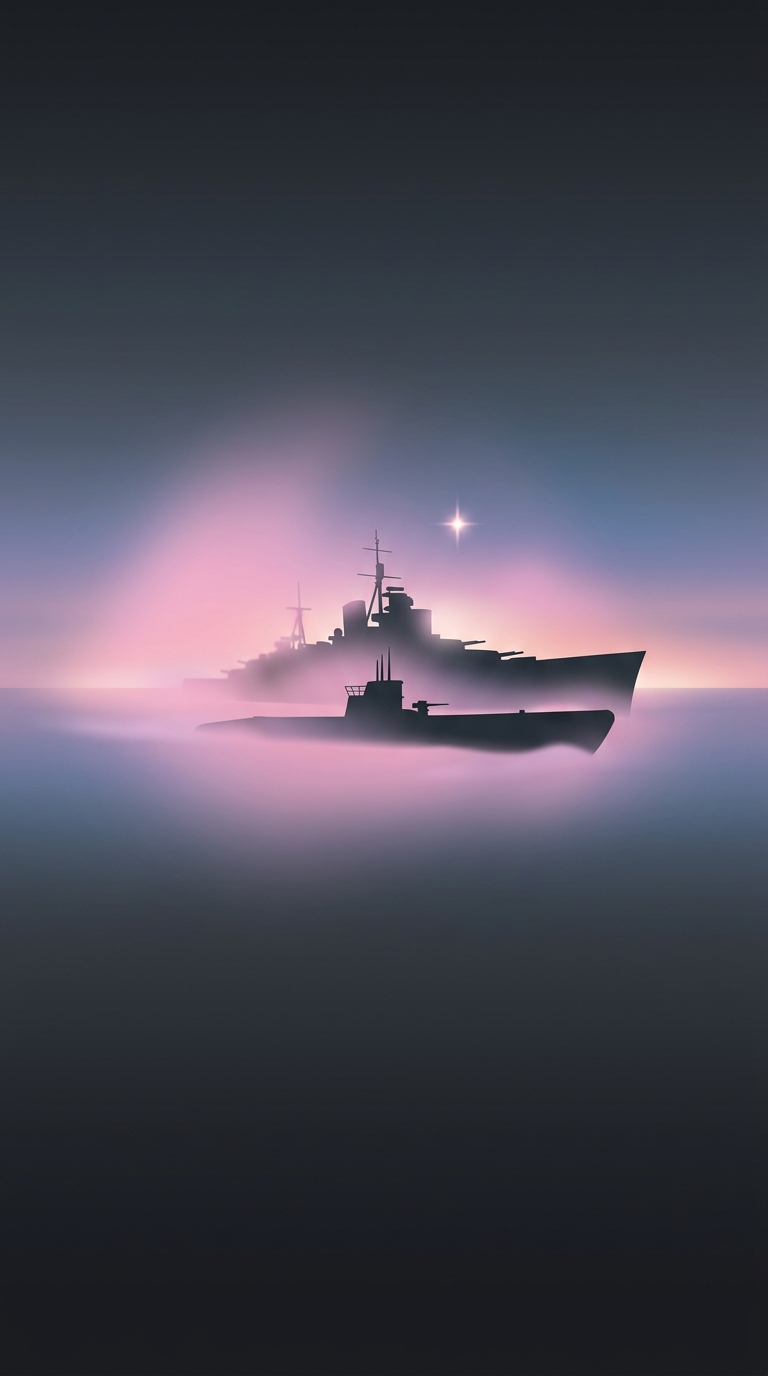
Mountbatten Pink was an attempt to reduce a ship’s contrast with its surroundings at the moments when ordinary colors could stand out. Near dawn and dusk, sunlight travels through more of the atmosphere, which scatters much of the blue light and leaves the sky warmer in tone. A pinkish hull could therefore blend more closely with the horizon’s changing colors than a dark gray one might.
The goal was not to make a ship disappear. It was to make its outline harder to pick out against the sky, especially for an observer looking across open water. That mattered because a ship’s silhouette—its long hull, masts, or conning tower—can be easier to recognize than its surface details.
A compromise, not an all-day disguise
Camouflage depends on what lies behind the target and how it is lit. As the sky brightened, clouded over, or shifted from warm sunset colors to daylight, pink could become conspicuous rather than helpful. The same paint could also look different from different distances and viewing angles.
That made Mountbatten Pink a situational solution, not a universal replacement for naval gray. Its logic was simple: if a ship was most exposed during low-light hours, matching the color of the horizon at those hours might buy time before it was spotted. The striking tradeoff is that the ship was painted not to match the sea, but the brief, rosy band of sky where its outline was most likely to show.