The ferry turns a shared rush into a one-sided view
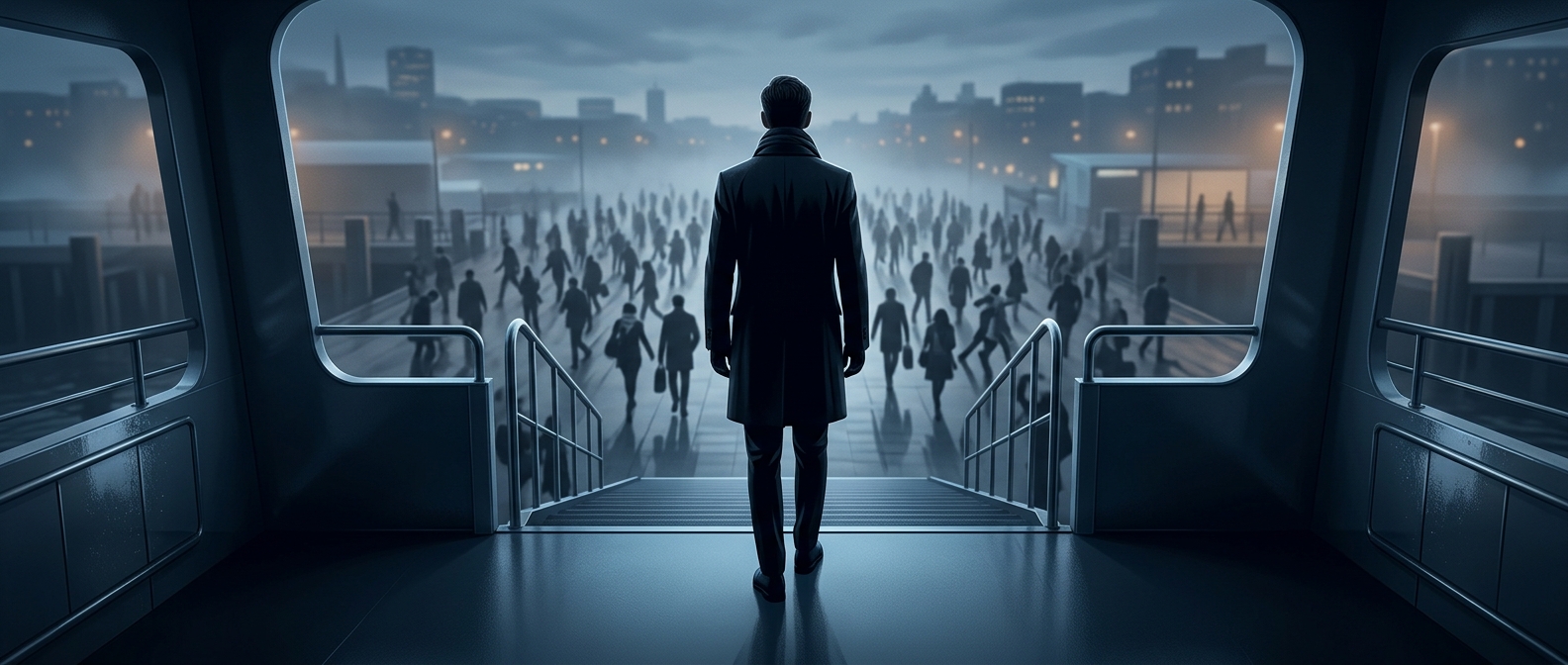
Before boarding, the whole line is part of the same problem: everyone is trying to get aboard before the ferry leaves. Once you make it onto the deck, your own urgency abruptly disappears. The people still coming up the ramp remain visible, but the pressure that made you hurry is no longer yours to feel.
That shift changes the comparison. You remember your own effort—the quick walk, the last-minute dash, the relief of making it. For the stragglers, you see only the delay. Because you know the circumstances behind your actions but usually cannot see theirs, it is easy to read your own speed as competence and their slower progress as a personal failing.
Relief can look like superiority
There is also a small reward in having crossed from uncertainty to safety. While you were racing the clock, you could still miss the boat; now you can relax. Watching others approach the same deadline lets that relief turn into a fleeting sense that you handled things better, even if the difference came down to luck, a shorter walk, or an obstacle you never noticed.
The ferry makes this contrast unusually visible: one group is aboard and waiting, while another is still moving toward the ramp. A change in position can make the same shared scramble feel like proof of your own good judgment. By the time the boat pulls away, the people you judged may be safely aboard too—and the moment of superiority has nowhere to go.