How a fin pushes back against a roll
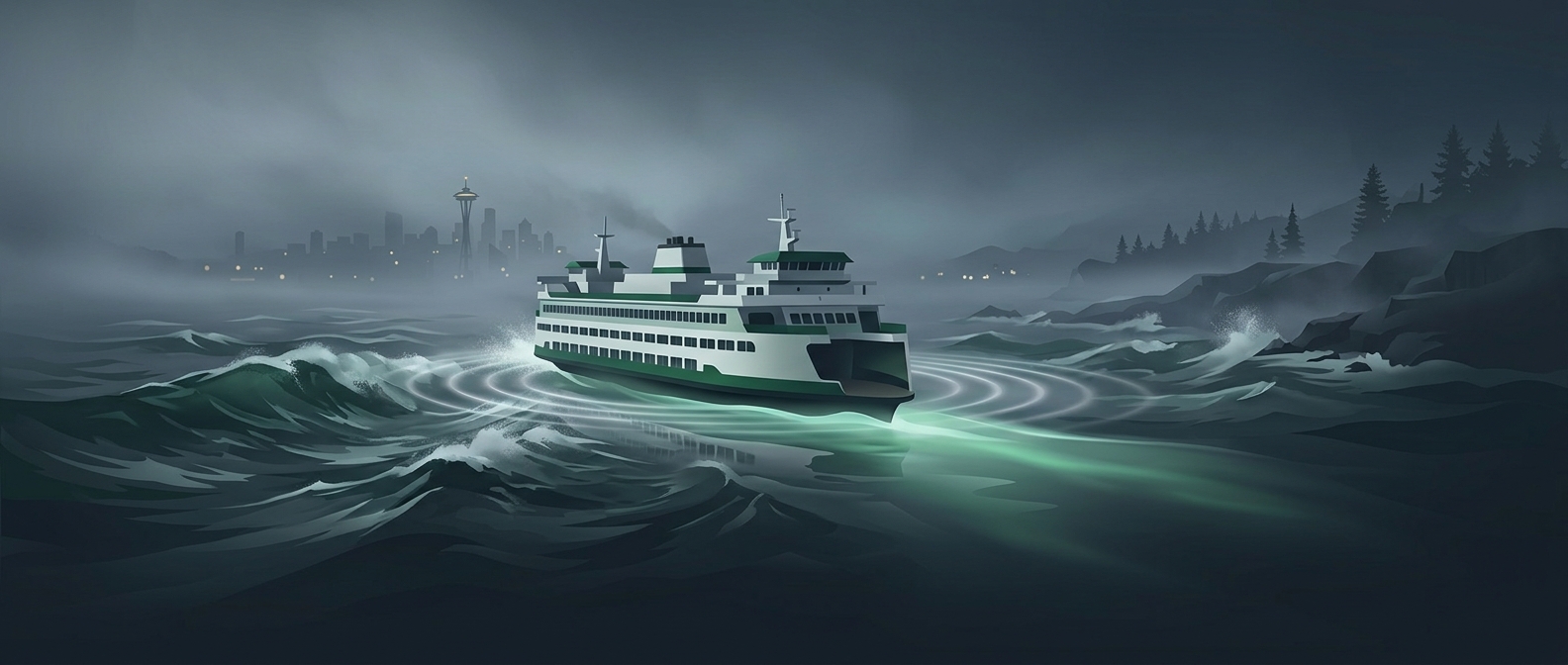
A ferry rolls when waves lift one side of its hull more than the other. A stabilizer fin projects below the waterline and turns through the water as the ship moves forward. That flow creates lift—a sideways force, like the force on an airplane wing. The fin is angled so the force tends to oppose the ship’s roll rather than add to it.
On many ships, sensors and controls adjust the fins as the vessel moves, changing their angle to respond to the motion. The fins do not hold the ferry perfectly level; they reduce the size and speed of the rolling motion.
Why speed and sea state matter
The fins need water flowing past them to generate much of their force. At cruising speed they can work effectively, but their help diminishes when a vessel slows or stops. They also address rolling more directly than the other motions waves create: a ferry can still rise, fall, pitch, or be jolted by a particularly steep wave.
Stabilization has a tradeoff. Fins create drag, so the ship’s design and controls must balance a steadier ride against the extra resistance. Some vessels can retract their fins when they are not useful or when protection is needed in port.
A calmer crossing, not a calm sea
Reducing roll can make it easier for passengers to walk, rest, and eat, and can limit the sideways motion that contributes to seasickness. But stabilizers do not tame the Irish Sea; they manage one part of the ferry’s movement while the hull continues to meet the waves. The practical difference is that a rough crossing may feel less like the floor is constantly tilting beneath you.