Why a ferry can carry a deck full of cars
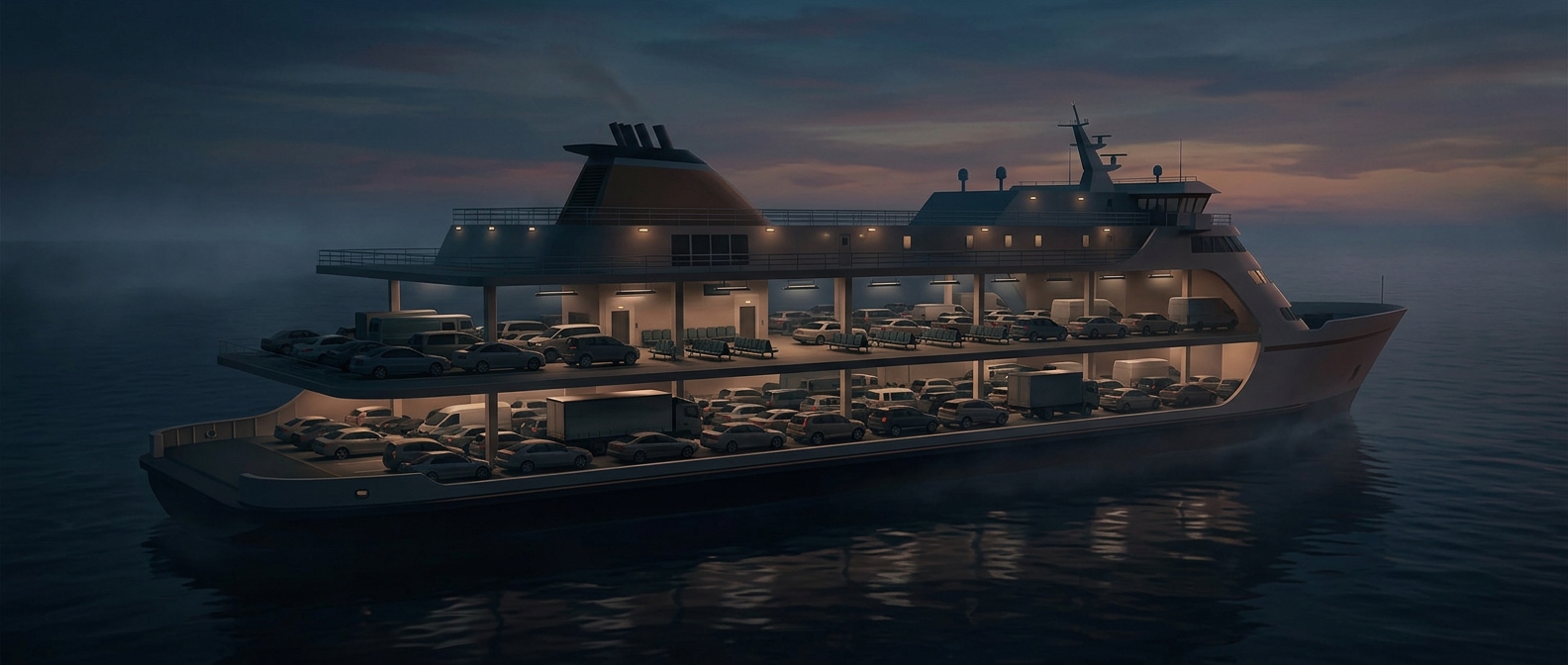
A car ferry is built around a simple tradeoff: instead of lifting each vehicle into a separate container, it lets drivers roll aboard and uses the ship’s own deck as the cargo space. A ramp links the shore to the vessel, while a broad, mostly open vehicle deck makes it possible to load many cars quickly and in an orderly flow.
That open layout has to work at both ends of the trip. The ferry needs clear lanes for vehicles to enter, park, and leave without blocking one another. Crew members direct drivers into assigned spaces, and the ship’s design accounts for the weight and placement of the load. Cars are secured so they cannot shift as the vessel rocks or changes speed.
The deck is part of the engineering
A car is heavy, and a ship responds to weight distribution. If too much cargo is concentrated on one side or in one area, it can affect the vessel’s balance. Loading plans therefore help distribute vehicles across the deck; securing them limits movement that could alter that balance during the crossing.
The ramp is another key piece. It must meet the shore or terminal at a usable angle as water levels and the ferry’s position change. At sea, the ramp is closed and the vehicle deck becomes an enclosed working space, protected from the weather on many ferries.
Faster loading, tighter limits
Letting cars drive aboard saves the time and equipment that would be needed to hoist them individually. But the convenience depends on careful sequencing: vehicles must be parked close enough to use the deck efficiently, yet positioned so they can be secured and unloaded safely. The result is a vessel that functions as both transport and temporary parking structure—one whose parking arrangement has to remain safe while the ground beneath it moves.