Making a wide river a workable crossing
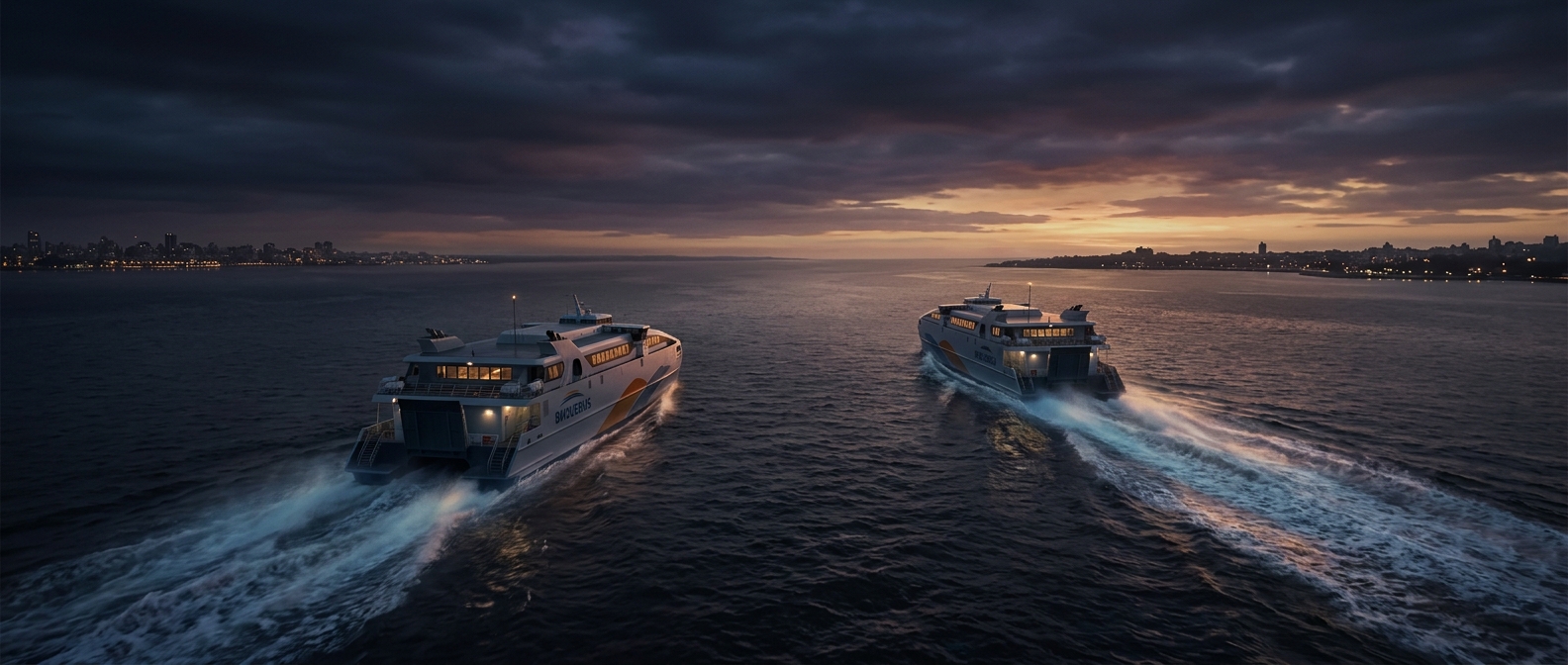
The Río de la Plata is an estuary: a broad waterway where rivers meet the Atlantic. Its scale can make the crossing feel more like an open-water voyage than a short river ride. For Buquebus, speed changes what that distance means. A ferry can connect cities on opposite shores in a few hours rather than making passengers travel far around the water by land.
Why hull shape matters as much as power
An engine supplies thrust, but the hull determines how the boat meets the water. At higher speeds, a vessel must push aside water rapidly, and resistance can rise steeply. A hull built for fast travel is shaped to reduce that resistance and keep the vessel moving efficiently; powerful engines then provide the force needed to sustain the pace.
That design involves a tradeoff. More speed requires more power, while conditions such as wind and waves can affect how comfortably and predictably a ferry can travel. The crossing is therefore not just a matter of accelerating across a large stretch of water: the vessel has to balance speed with the demands of the estuary.
The shortcut is also a piece of infrastructure
A fast ferry turns the Río de la Plata from a barrier into a direct route. Its value lies not only in how quickly it moves, but in letting passengers cross between Argentina and Uruguay without detouring around the water—making a very broad estuary part of an everyday transport connection.