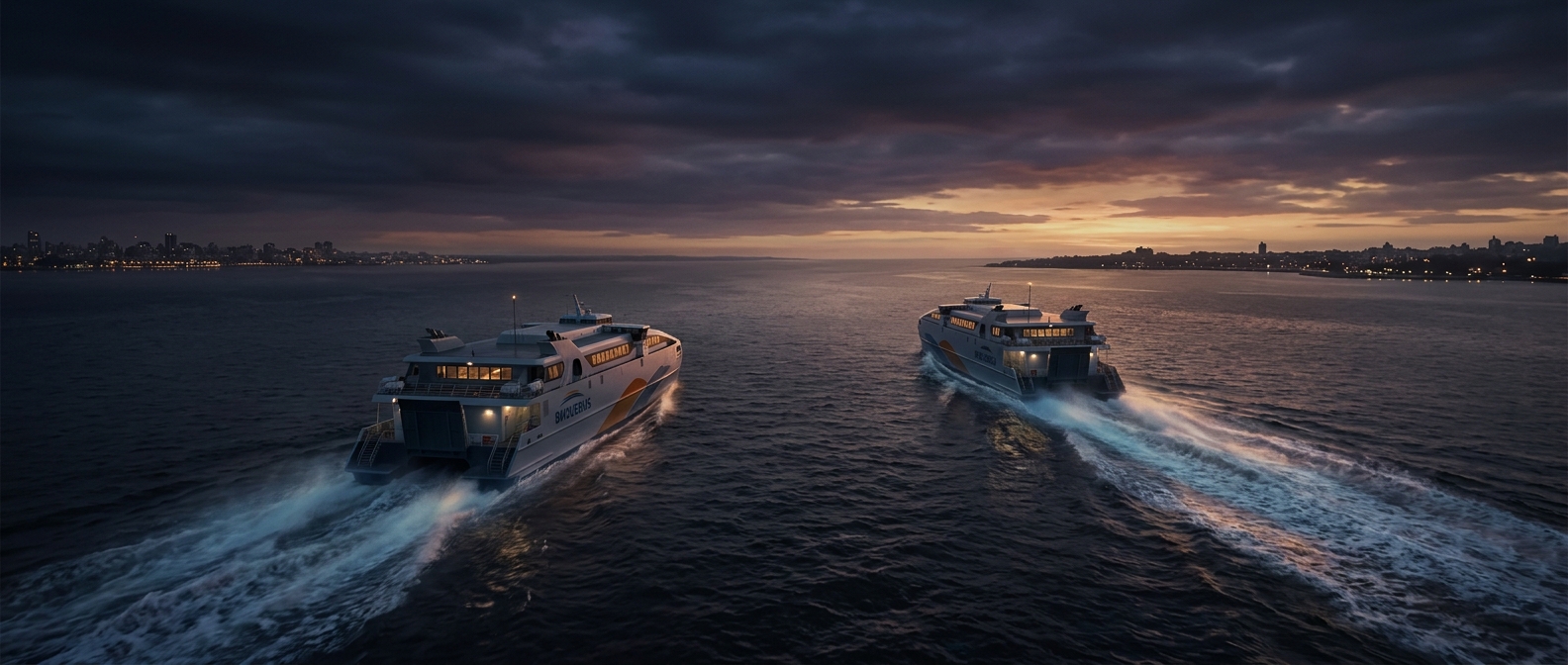
A harbor crossing changes the route
Halifax and Dartmouth sit on opposite sides of Halifax Harbour. A road trip between them has to follow the road network to a crossing; a ferry can travel across the water in a nearly direct line between its terminals. That difference turns the harbor from a barrier into a corridor for people making a regular cross-town trip.
The shortcut is especially useful for passengers whose destination is near a terminal. They can board on one side, cross, and continue on foot or connect to transit on the other. The ferry therefore links neighborhoods as well as shores: its usefulness depends on where the docks sit and how easily passengers can get to and from them.
Water routes have their own constraints
A ferry does not replace every road journey. Cars, freight, and passengers bound for places away from the terminals may still be better served by road. A transit boat also depends on a workable schedule, terminal access, and conditions on the water. Those limits shape what the crossing can do, but they do not erase its central advantage: it avoids sending every passenger around the harbor by land.
That makes the ferry more than a scenic ride. It is a piece of transit infrastructure that uses the harbor itself as the shortest link between two parts of the city.