Why a Crossing Is Planned, Not Improvised
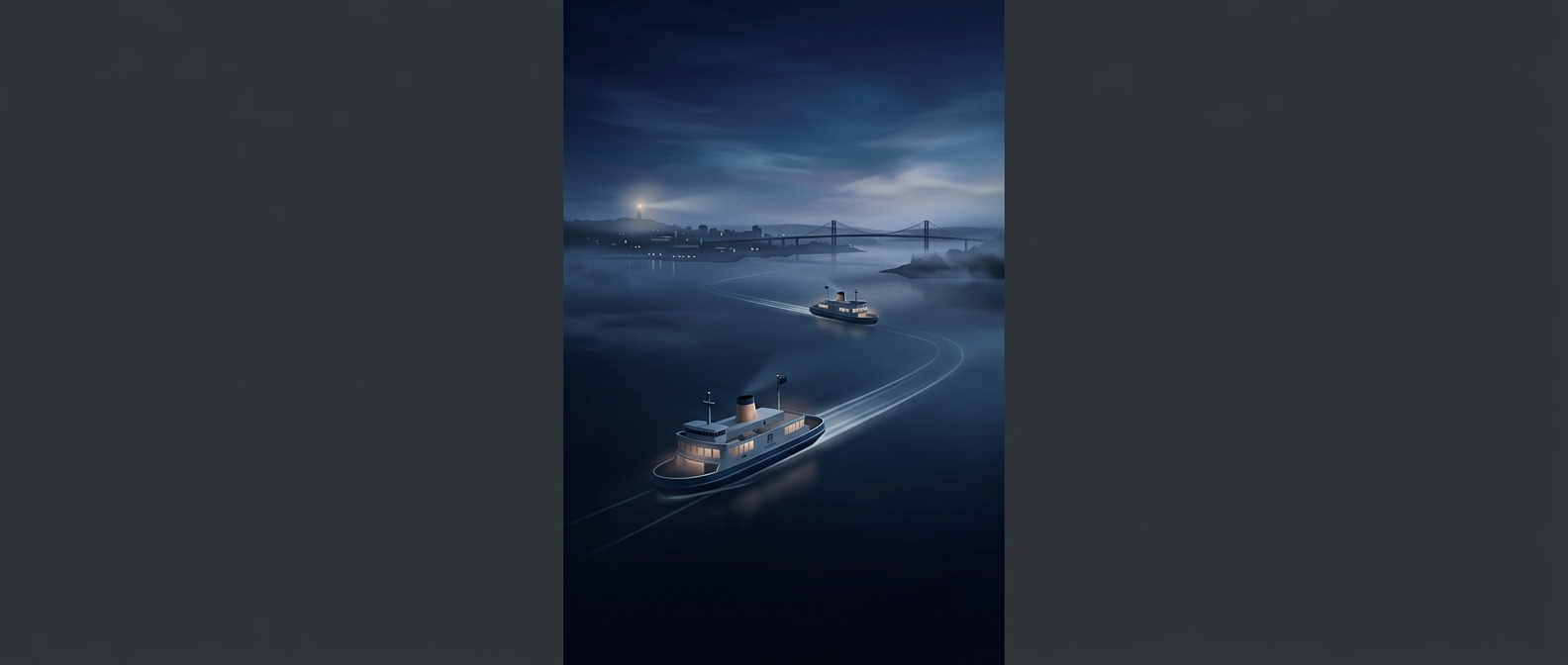
The Channel’s traffic lanes organize much of the through-traffic: ships generally travel in defined directions, like vehicles using separate sides of a road. A ferry making a shore-to-shore crossing must pass through that stream rather than simply follow it. Where practicable, crossing vessels do so at a near-right angle, making their movement easier for ships in the lanes to recognize and reducing the time they spend crossing each lane.
That geometry does not give the ferry an automatic gap. The bridge team—the officers navigating from the vessel’s bridge—must judge the movement of several ships at once, including how quickly each is approaching and whether its course is changing. Radar can show targets in poor visibility; AIS, a system that exchanges ships’ identity and movement data, can help identify them. Neither replaces a lookout or the crew’s judgment.
The Cost of Getting the Timing Wrong
Large ships cannot turn or stop as quickly as a car. A ferry may have more room to maneuver, but it still has to account for its own speed, turning room, and the traffic around it. The crew therefore aims to cross behind or ahead of passing ships with enough separation, adjusting the ferry’s course or speed when needed. If the picture is unclear, waiting can be safer than forcing a crossing.
This makes a routine ferry passage a negotiation in motion: the ferry must be predictable, while the ships in the lanes continue on courses that may leave little room for sudden changes. For passengers, the crossing can look like a straight line between ports. On the bridge, it is a timed passage through moving traffic, where a small change in speed can create the space needed to cross safely.