The harbor changes the shape of the trip
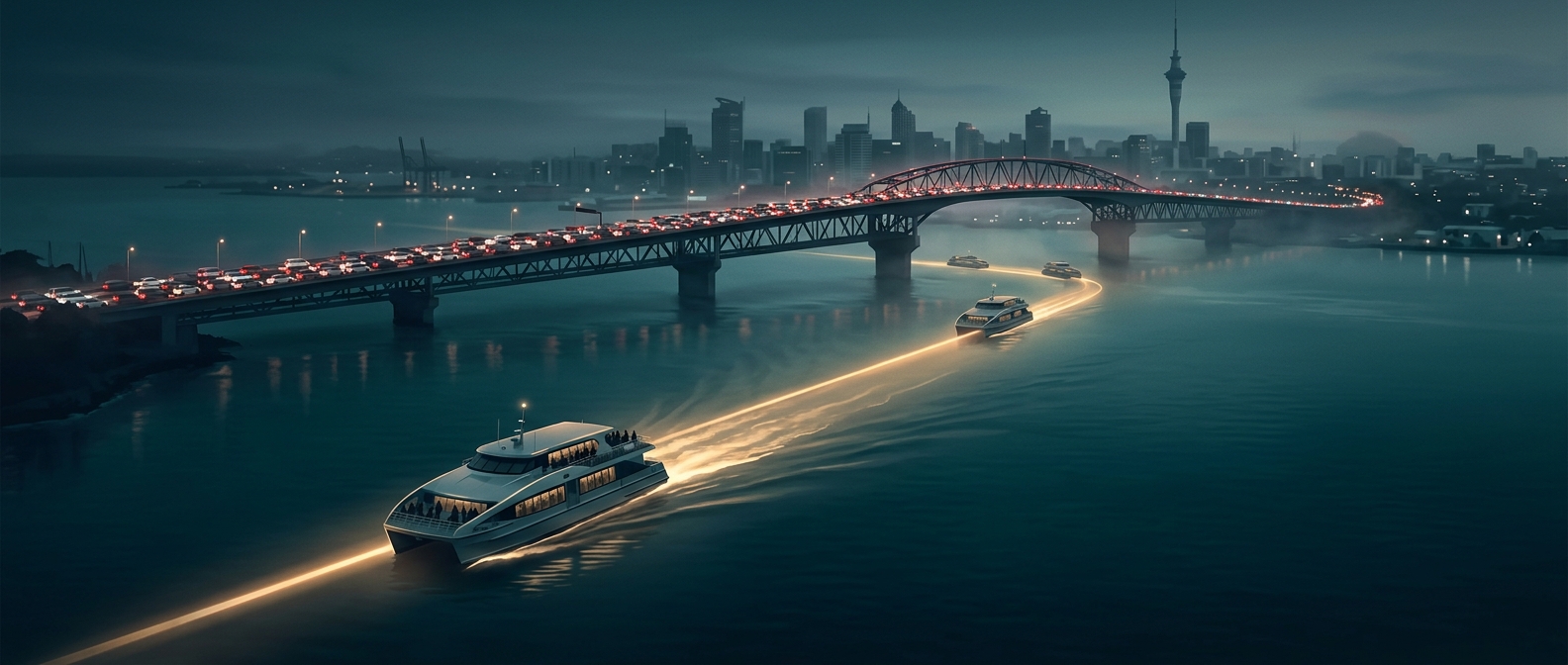
Auckland’s Waitematā Harbour separates the central city from communities on the North Shore. For many road journeys between them, the Auckland Harbour Bridge is the direct crossing. When traffic builds up there, a ferry can take a different line: straight across the water rather than along the road network toward the bridge.
That shortcut is useful because water offers a fairly direct corridor through a city whose streets funnel into a limited number of crossings. The ferry does not need to share bridge lanes or wait in the same vehicle queues.
A faster crossing still needs a whole journey
The boat’s crossing time is only one part of a commuter’s trip. A traveler also has to reach a ferry terminal, fit the sailing schedule, and get from the landing point to work or another destination. Ferries are most practical when those ends of the trip are easy to reach on foot, by transit, or by bike.
They also cannot replace every car journey: boats carry a limited number of passengers, and a service is useful only where its route and timetable match people’s needs. So the harbor route is an alternative to a particular bottleneck, not a way to remove road congestion altogether.
A different route around the queue
For commuters whose homes and destinations line up with a ferry service, the water can turn a bridge-bound trip into a direct crossing. The striking part is not simply that a boat avoids traffic; it is that Auckland’s harbor, usually treated as an obstacle between neighborhoods, can function as part of the city’s transport network.