How a river current can move a ferry sideways
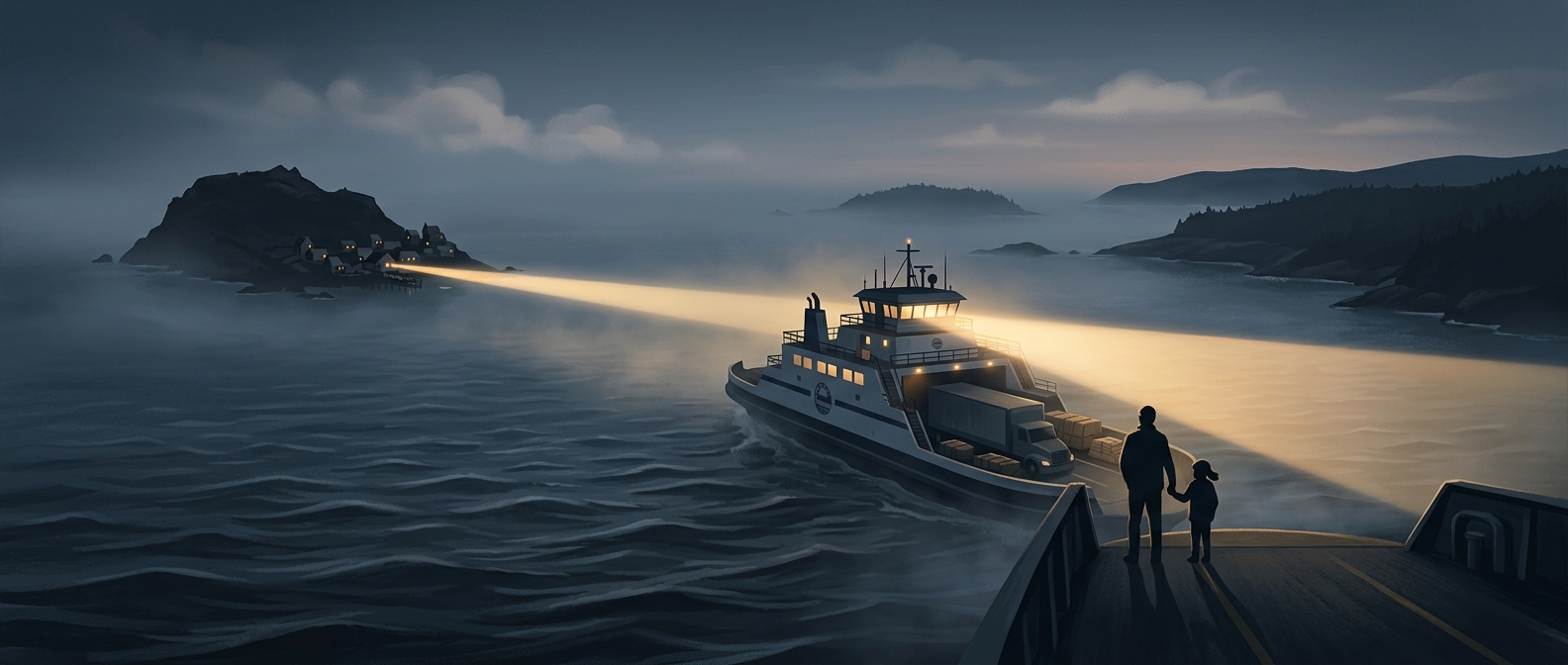
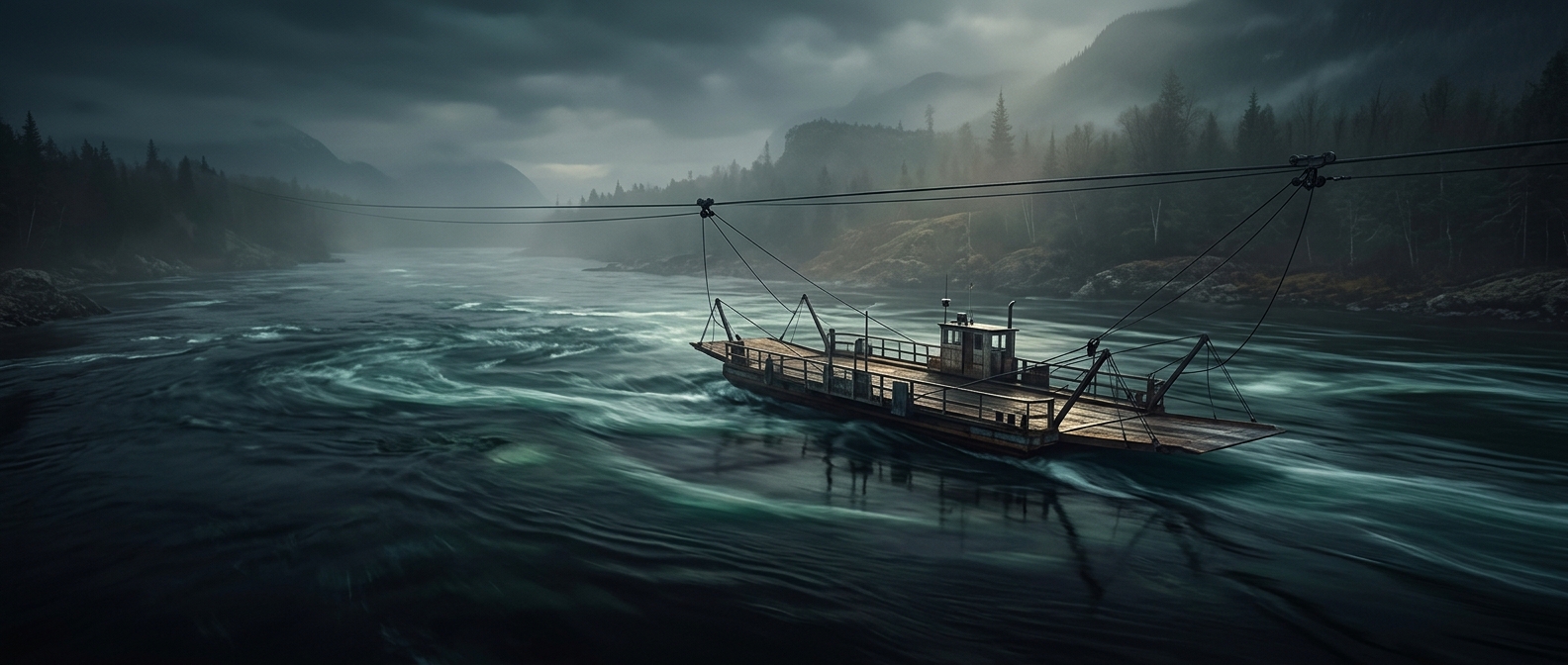
The ferry does not need a motor to cross. Its hull is turned at an angle to the current, so the flowing water presses against one side of the boat. That force has two parts: one pushes downstream, while the other pushes the ferry across the river.
The crew changes the boat’s angle to control how much of the current’s push goes toward the opposite bank. Point it more into the flow and the water can drive it across; change the angle and the ferry’s sideways progress changes too.
The cable turns the push into a crossing
Without a restraint, the current would carry the ferry downstream. A cable attached to the boat and secured to an anchor holds it within reach of its crossing route. As the water pushes, tension in the cable counters the downstream pull, while the hull’s angle lets the ferry swing across rather than simply drift away.
This arrangement is sometimes called a reaction ferry: the moving water supplies the force, and the cable provides the fixed point the boat needs to use that force. The cable is not an engine or a track that pulls the ferry across; it keeps the current’s push from becoming an uncontrolled downstream ride.
The result is a small but clever tradeoff: the river does the work, while the cable limits where that work can take the boat. Its route and pace depend on the current and the ferry’s angle—so the same flow that threatens to sweep the boat away is also what carries it to the other bank.