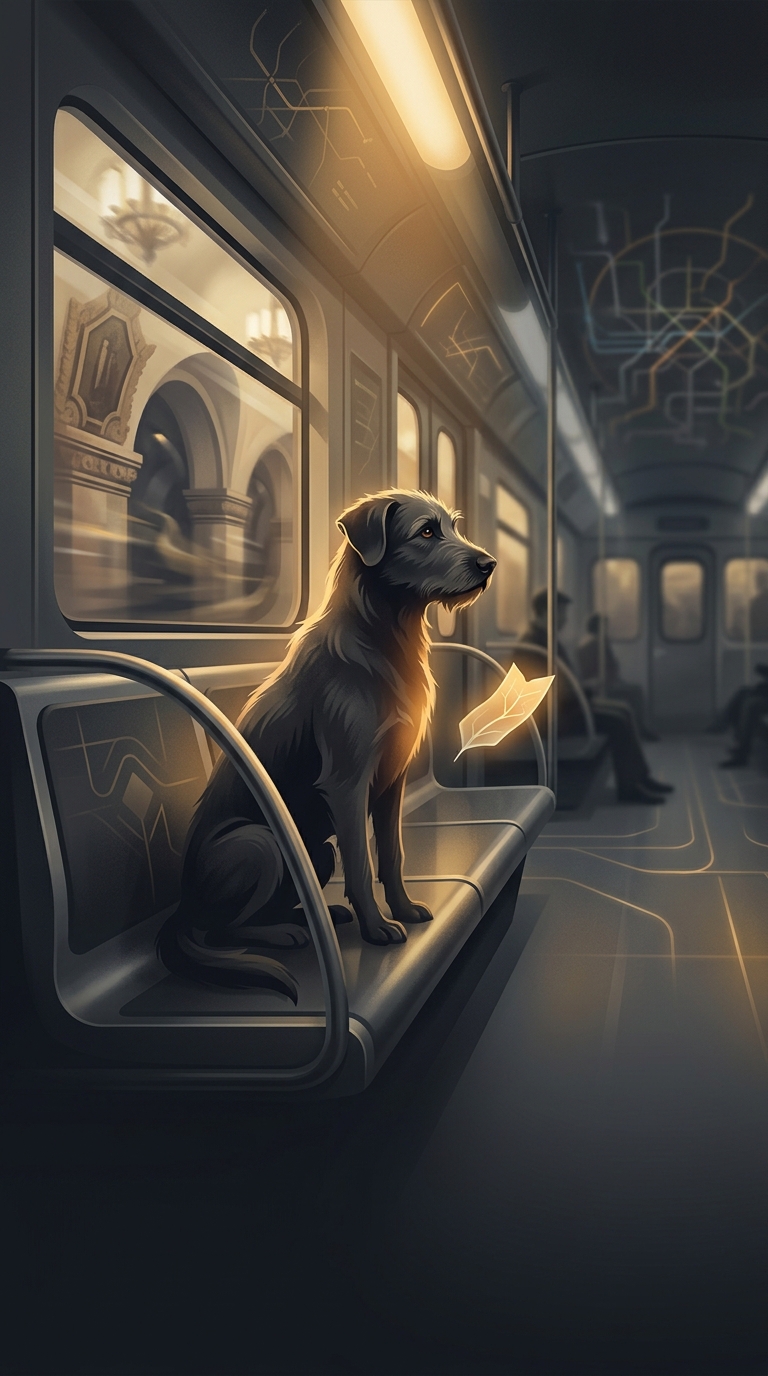
How a Dog Learns the Metro’s Rhythm
A subway ride is a sequence of decisions: enter the station, wait for a train, board before the doors close, get off at the right stop. A dog that repeatedly travels the same route can learn those steps through familiar cues, much as it learns the pattern of a daily walk.
The cues are not a printed map. They may include the station’s layout, the sounds and movement around a platform, and the flow of passengers at a familiar stop. Once aboard, the dog has to cope with a crowded, noisy space and recognize when the usual journey is ending. Repetition turns an intimidating maze into a route with recognizable landmarks.
Why Make the Trip?
For a stray, the city center can offer a richer supply of discarded food than a quieter neighborhood. The train links those foraging areas without requiring the dog to cover the distance on foot. In effect, the animal exchanges time spent walking for a ride through the city’s busiest corridors.
That does not mean the dogs plan journeys like human commuters or follow a timetable. Their advantage is practical learning: a reliable route, a destination associated with food, and enough familiarity to navigate the ride. The same crowded system that carries millions of people can therefore become part of a stray dog’s daily search for its next meal.