How a Fan Could Move a Subway Car
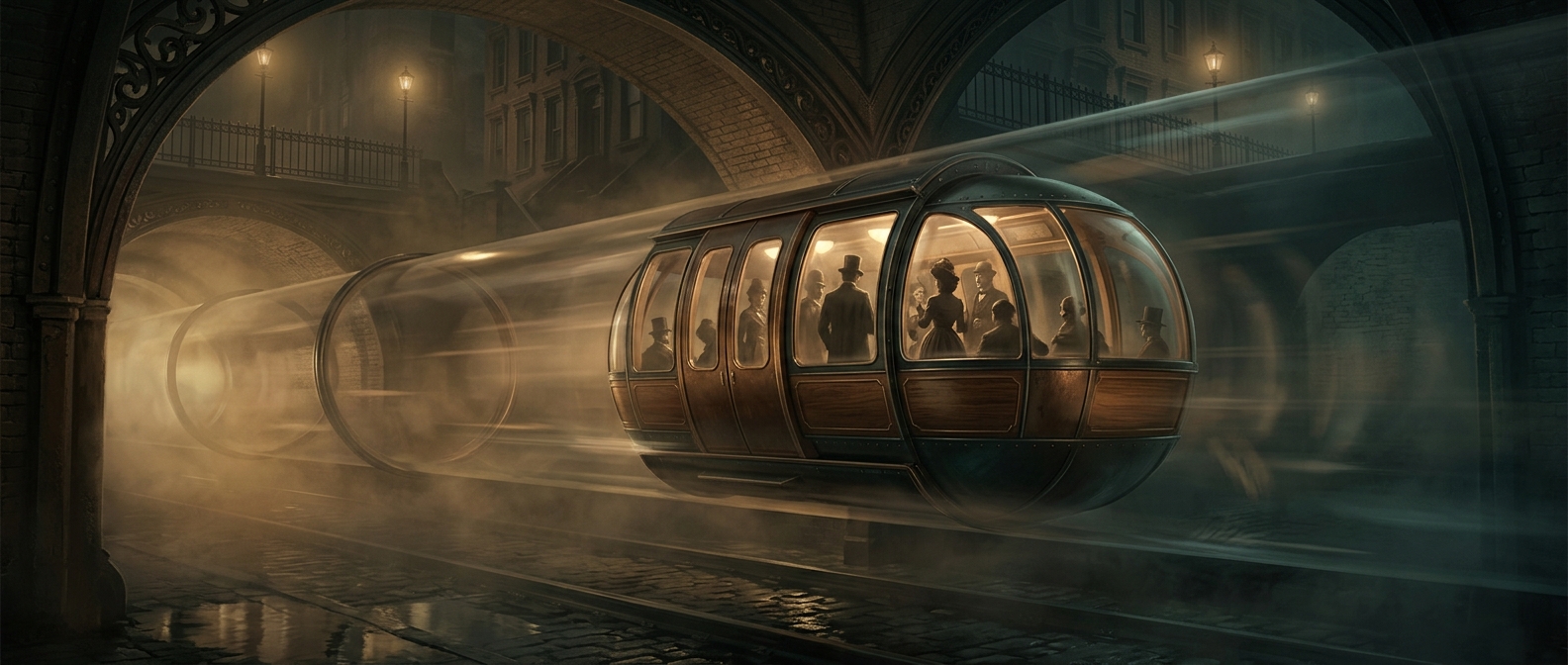
Beach’s system used air itself as the train’s motive force. A large fan pressurized the space behind the passenger car, pushing it along a close-fitting tunnel beneath Broadway. To bring the car back, the fan ran in reverse: removing air from the tunnel created a pressure difference that pulled the car toward the station.
The key idea was to make the tunnel act like a giant pneumatic tube. Unlike a conventional railway, the line did not need a locomotive to haul the car. But it still depended on substantial machinery at the tunnel’s end, and the route was only a short demonstration—not a ready-made network for carrying crowds across the city.
A Working Demonstration, Not a Growing Railway
That distinction mattered. A block-long line could show that air pressure could move passengers underground, but expanding it would require money, more construction, and permission to build beneath busy streets. Beach’s project faced political obstacles and lacked the funding to grow into a larger system, so the experiment did not become Broadway’s permanent transport solution.
Its lasting significance is the engineering tradeoff it made visible: removing the locomotive did not remove the infrastructure. It shifted the work to a powerful fan and a sealed passage. The striking part was not just that a gust of air could carry a car—it was that the entire tunnel had to be designed as part of the machine.