How Paris’s Rubber-Tired Metro Stays on Track
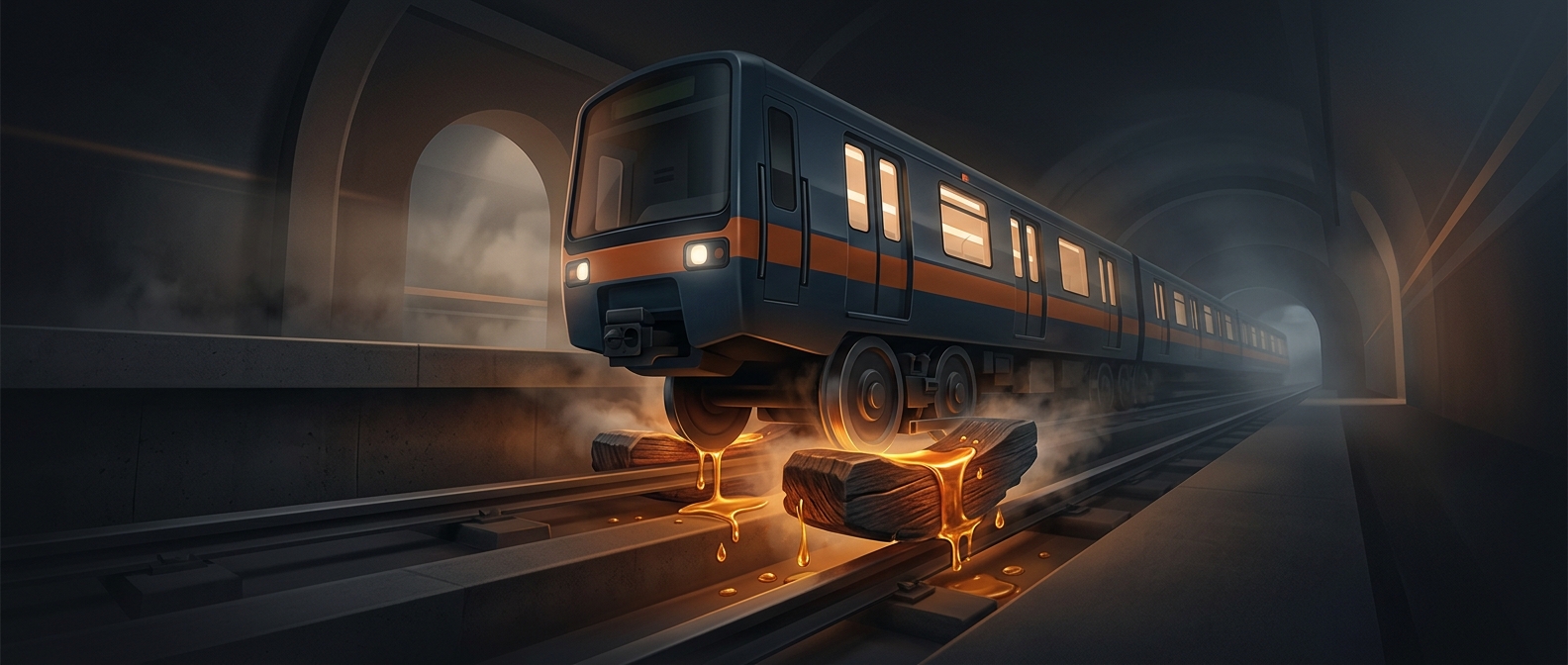
On a rubber-tired Paris Metro line, the car’s weight is carried by rubber tires rolling on dedicated concrete paths beside the familiar steel rails. The tires provide the everyday rolling contact; the rails remain part of the system, but they are not the main running surface.
That arrangement solves a practical problem: a tire can grip a surface more firmly than a steel wheel gripping steel. Better grip helps a train accelerate and brake, and it is especially useful on steep sections where a conventional steel-wheel train may have less traction. The tire-and-concrete contact also tends to produce less rolling noise.
A second set of wheels provides guidance
The rubber tires do not steer the train by themselves. Smaller horizontal guide wheels run against vertical guide rails along the track, keeping each car centered through curves and preventing it from wandering off its path. Steel wheels are also fitted to the train. They can support and guide it if the rubber tires lose pressure, and they provide a backup running surface.
The result is a layered system: rubber tires do the routine work of carrying and moving the train, while guide wheels and steel rails help control its position and provide a safety fallback. It is not a case of simply swapping steel wheels for rubber ones; the track and train are designed to work together.
The tradeoff is built into the track
Rubber-tired trains need extra running surfaces and guidance equipment, so the infrastructure is more involved than a pair of rails alone. In return, the stronger grip makes steep gradients and frequent starts and stops easier to manage, while reducing some of the noise passengers hear from rolling contact.
That is why the familiar steel rails remain visible even when they are not doing most of the rolling: they are part of the guidance and backup system that lets the rubber tires take the lead.