The wheel well crowds the rear door
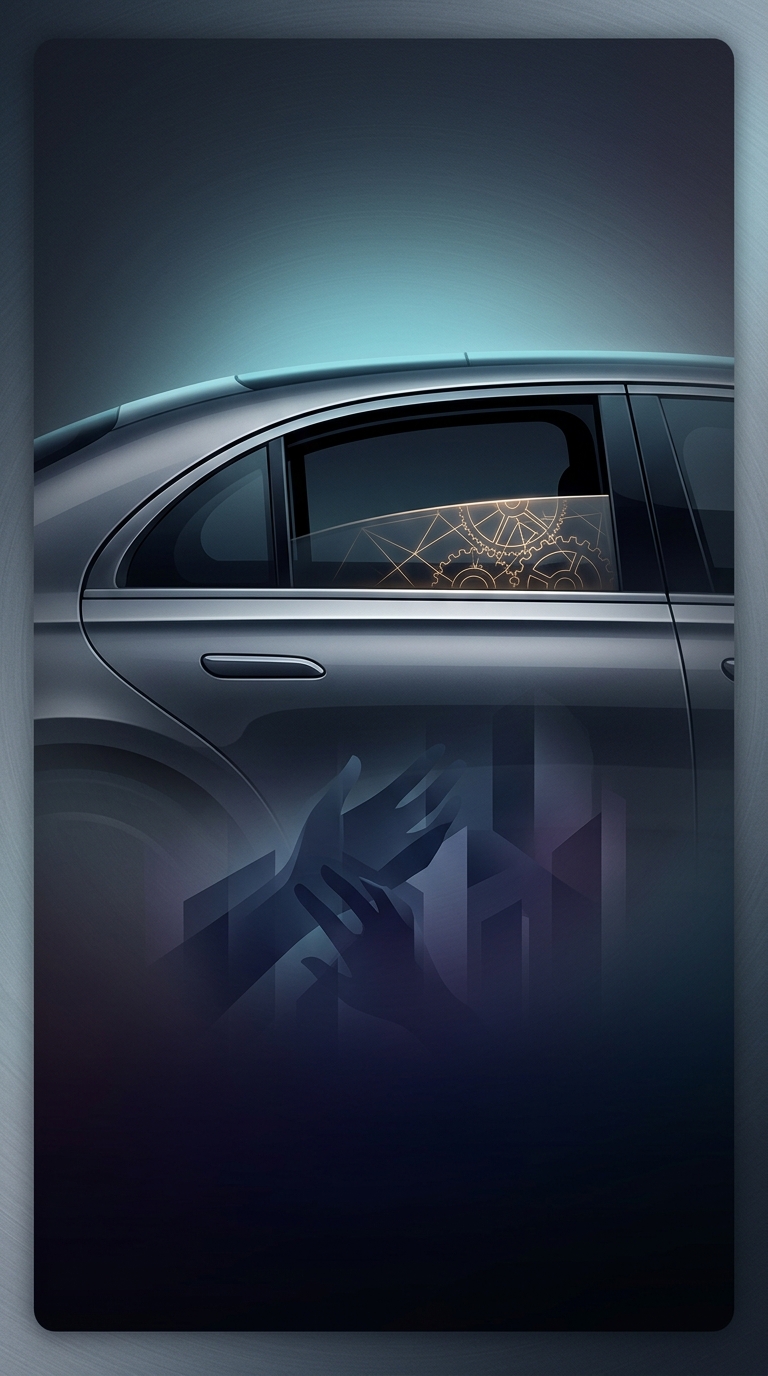
A car window does not disappear into empty space when it rolls down. Its glass slides into a cavity inside the door, alongside the window regulator—the mechanism that moves it—and other hardware. In many four-door cars, the rear door is short enough that the glass would need to travel into space occupied by the rear wheel arch if it were to retract completely.
Designers can shape the glass and door to work around that intrusion, but the available space is tight. The rear door also has to accommodate its latch, wiring, and structural parts. The result is often a window that stops with a strip of glass still visible above the door.
A packaging tradeoff, not a dedicated child lock
The exact limit depends on the car’s layout. A sloping window, a compact rear door, or the position of the wheel arch can all affect how far the glass travels. The regulator can be designed to stop it before the glass meets a physical obstruction. Some cars do allow the rear windows to descend fully; others sacrifice that travel to make the door fit the body and its components.
That partial opening may happen to restrict the size of the gap, but it is generally a consequence of packaging rather than a separate child-safety feature. Child-safety locks and window-lock controls are distinct systems: they limit access to door handles or window switches, not the glass’s physical travel.
So the next time a rear window stops early, the reason may be hiding below the door panel: the wheel arch and the hardware sharing that narrow space.