Why the handrail edges ahead
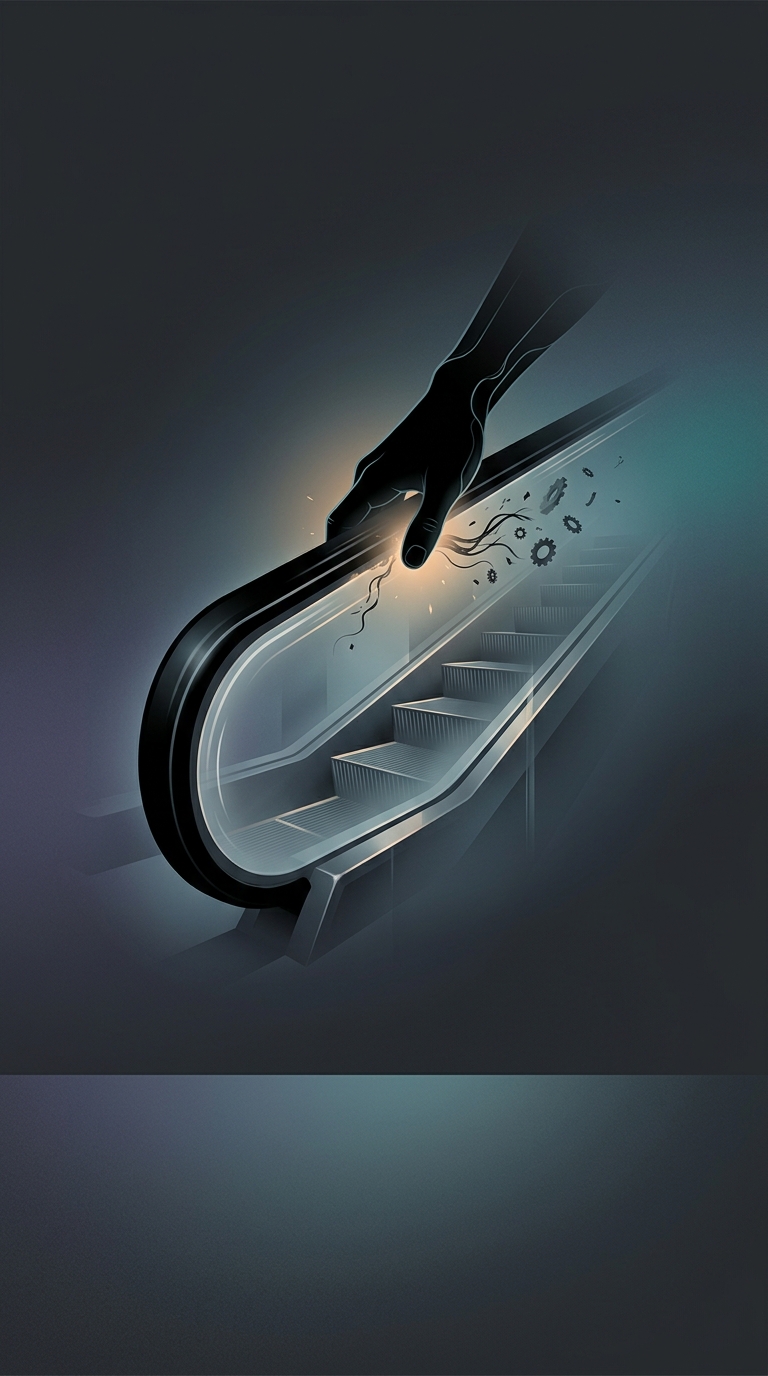
An escalator’s steps and handrail travel in separate loops. The steps are linked by a chain driven by the escalator’s main machinery; the rubber handrail is pulled along by its own drive wheels and rollers. Because the loops use different parts, they can drift slightly out of sync as components wear or operating conditions change.
Technicians therefore set the handrail to run just a little faster than the steps. That small margin helps keep it from falling behind in everyday use. If it moved more slowly, a rider gripping it could feel their hand being drawn backward relative to their feet—a disorienting mismatch on a moving staircase.
A compromise, not a second speed
The goal is still for hand and feet to move together closely enough to feel natural. The handrail’s lead is deliberately slight: a larger difference would pull a rider’s upper body forward and could make standing less comfortable. The escalator’s mechanisms and safety checks are designed to keep the two speeds near one another, even though they are not driven by one perfectly shared loop.
That tiny lead is a practical engineering cushion: it helps preserve the feeling of synchronization as the machine’s separate moving parts age and change.