Why the Dymaxion’s Rear Wheel Reversed the Usual Driving Feel
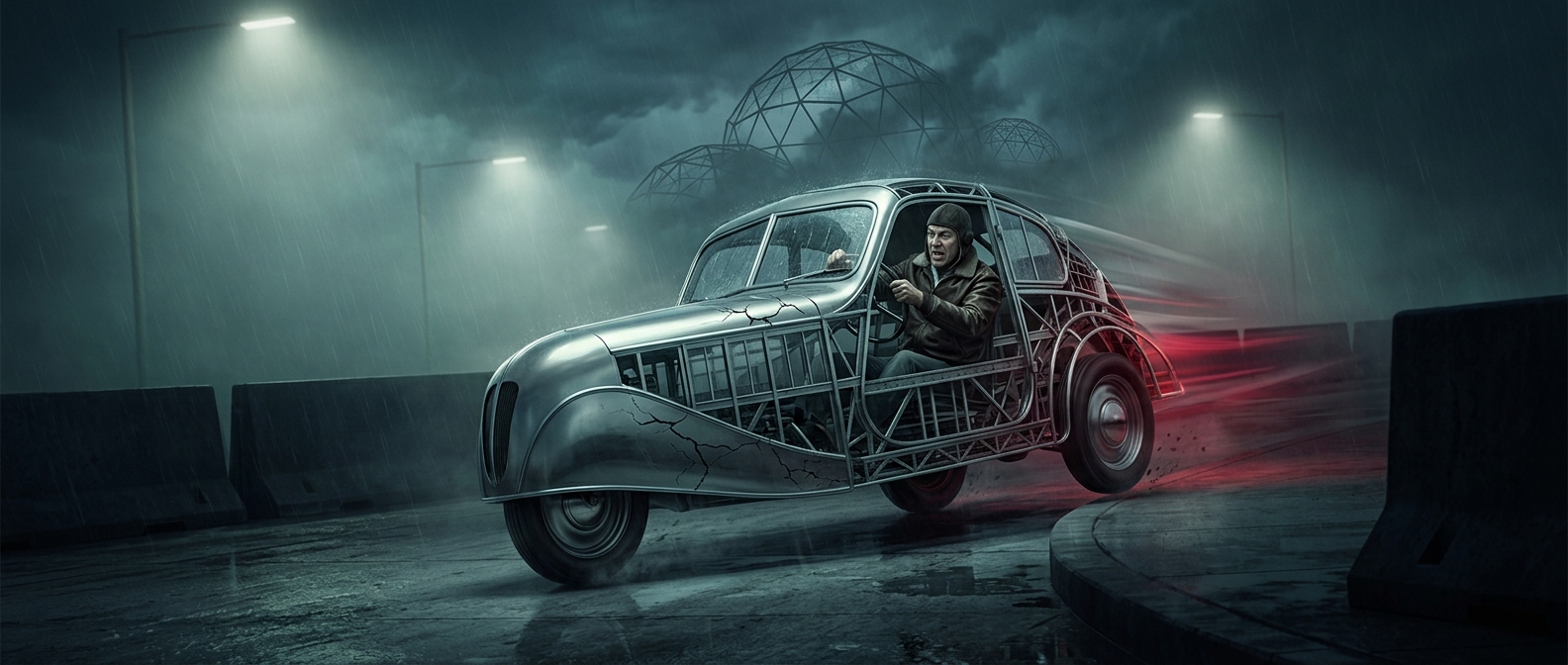
In an ordinary car, the front wheels turn and the rear wheels follow. The driver points the nose toward a turn, and the back of the car traces behind it. The Dymaxion reversed that arrangement: its lone rear wheel steered, while two wheels sat at the front.
That changed what a steering input did to the car’s long body. Instead of swinging the nose into a turn, the rear wheel redirected the back end, making the front sweep along a different path. Drivers accustomed to front-wheel steering could find the response startling: the car seemed to pivot from the wrong end.
A Tradeoff Hidden in the Shape
Rear-wheel steering can make a vehicle maneuver in a compact space, but it also asks the driver to learn a different relationship between the wheel and the vehicle’s movement. With the Dymaxion’s unusually long body, the front end’s broad sweep was especially important to anticipate. A turn that felt familiar in a conventional car could require a very different correction here.
The three-wheel layout added to the departure from convention. The Dymaxion was not simply a streamlined car with unusual styling; its basic geometry changed how a driver had to judge a turn. Its futuristic appearance invited people to imagine a new kind of transport, while its controls demanded that they set aside habits learned in ordinary cars. The gap between those two experiences helps explain why its shape could look effortless even as driving it felt unnerving.