How Volkswagen’s wartime project became a traveler’s bus
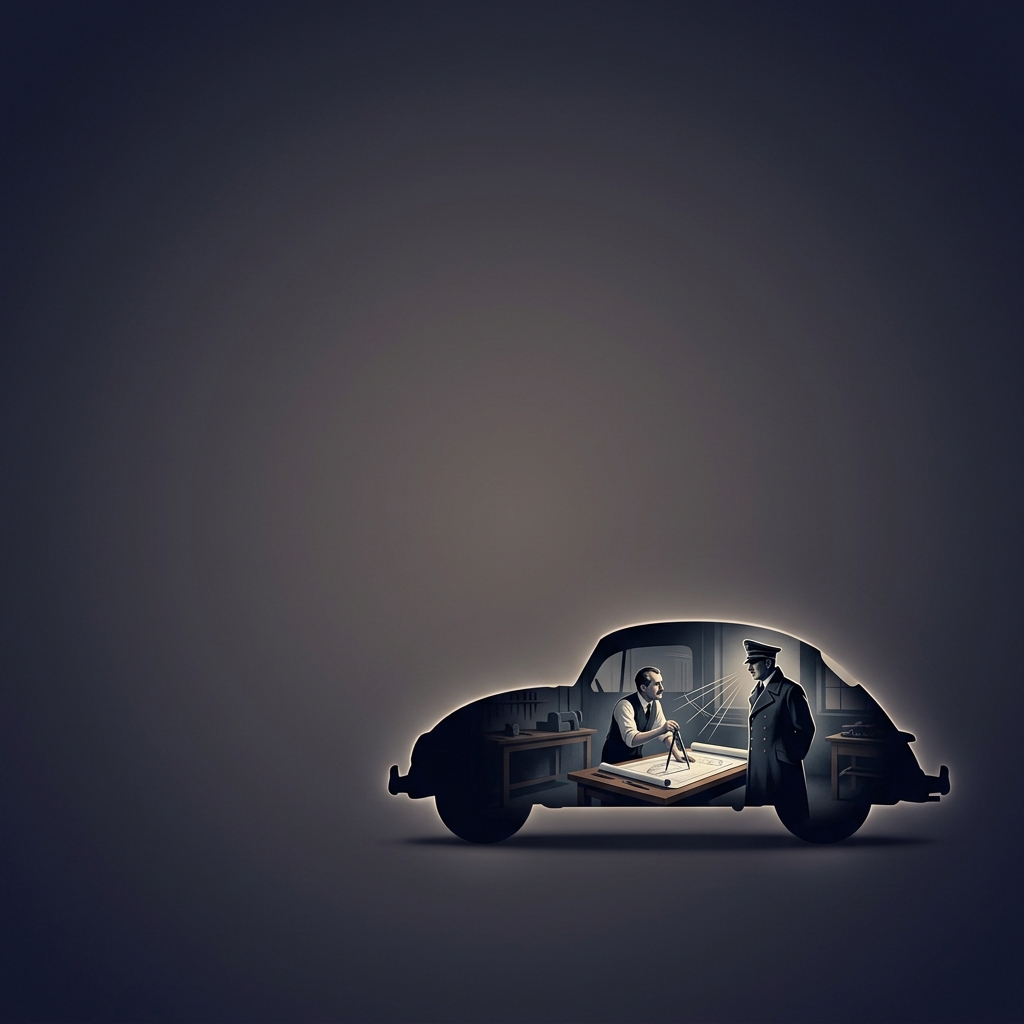
The Beetle began as a state-backed project in Nazi Germany: Adolf Hitler promoted an affordable “people’s car,” and engineer Ferdinand Porsche led its development. The factory built for the project was redirected toward wartime production before ordinary German families could buy the car in large numbers. After the war, British military authorities helped restart civilian production; Volkswagen then grew into a major carmaker.
The bus was a separate model, but it borrowed the Beetle’s mechanical layout. With its engine at the rear, the front could be used for the driver’s seat and a largely open cabin. That arrangement let a relatively compact vehicle carry people and camping gear without a long front hood taking up space. Its basic, air-cooled engine—cooled by moving air rather than liquid—also made the design mechanically straightforward.
Why young travelers made it their own
In the 1950s and ’60s, the Volkswagen Type 2, commonly called the Bus or Microbus, suited a kind of travel that emphasized company over speed. Its broad interior could hold friends, belongings, and, in some versions, sleeping space. The vehicle was therefore more than a cheap way to get from one place to another: it could serve as a shared room on the road.
That usefulness helped it find a home among young travelers and the counterculture. A broad, boxy body offered conspicuous space for painted flowers, slogans, and other personal designs. The cheerful decoration turned a practical van into a public expression of its owners’ values, while its capacity made group trips possible. Volkswagen had not designed a rolling peace mural; owners gave the vehicle that meaning, transforming a product tied to a dark political history into a moving emblem of a very different generation.