A Car That Put Electricity Between Engine and Wheels
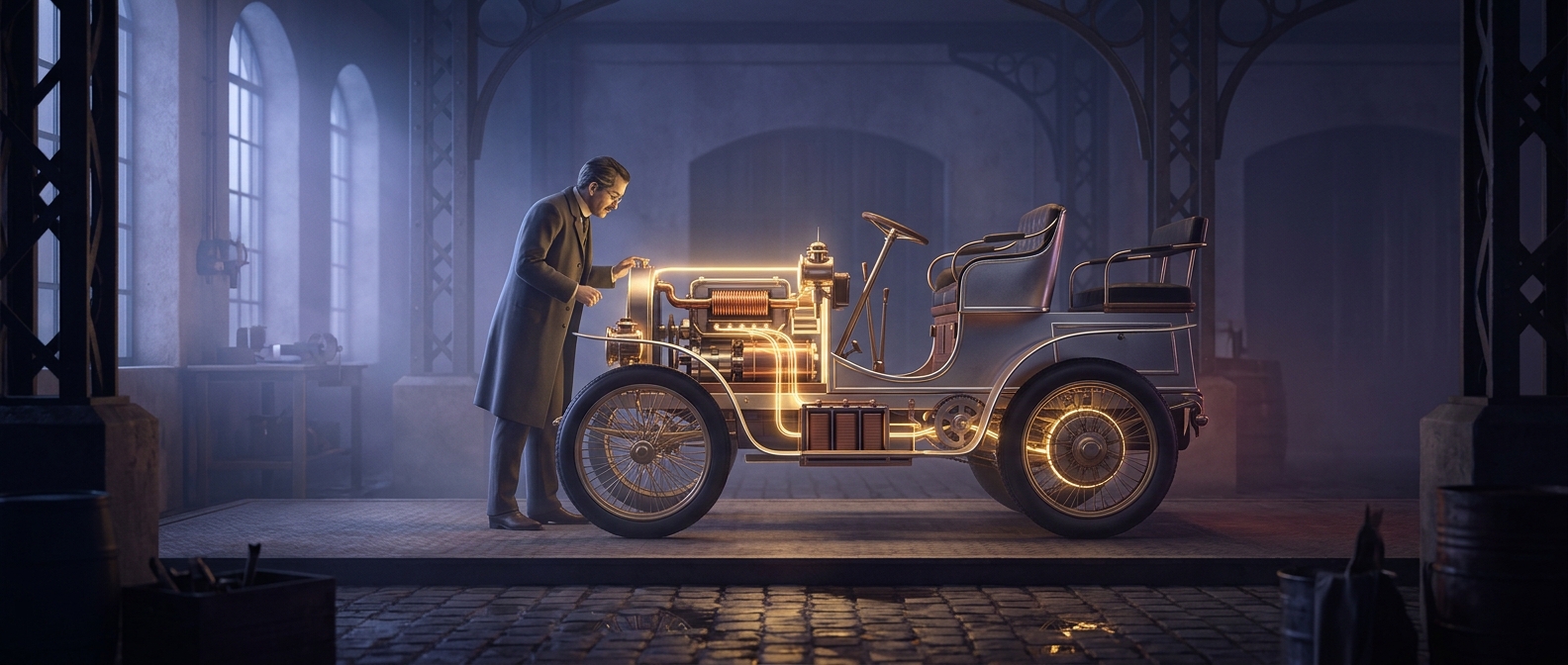
In 1899, Ferdinand Porsche built a hybrid around an unusual division of labor: a gasoline engine produced power, but it did not turn the wheels through a conventional gearbox and driveshaft. Instead, it ran a generator. Wires carried the resulting electricity to motors mounted at the wheels, and those motors propelled the car.
That arrangement is called a series hybrid. The engine supplies energy to an electrical system; the electric motors provide the turning force at the wheels. In Porsche’s design, the engine and wheels were mechanically disconnected, a choice that made electricity—not a chain of gears—the link between them.
Why Put a Generator in the Middle?
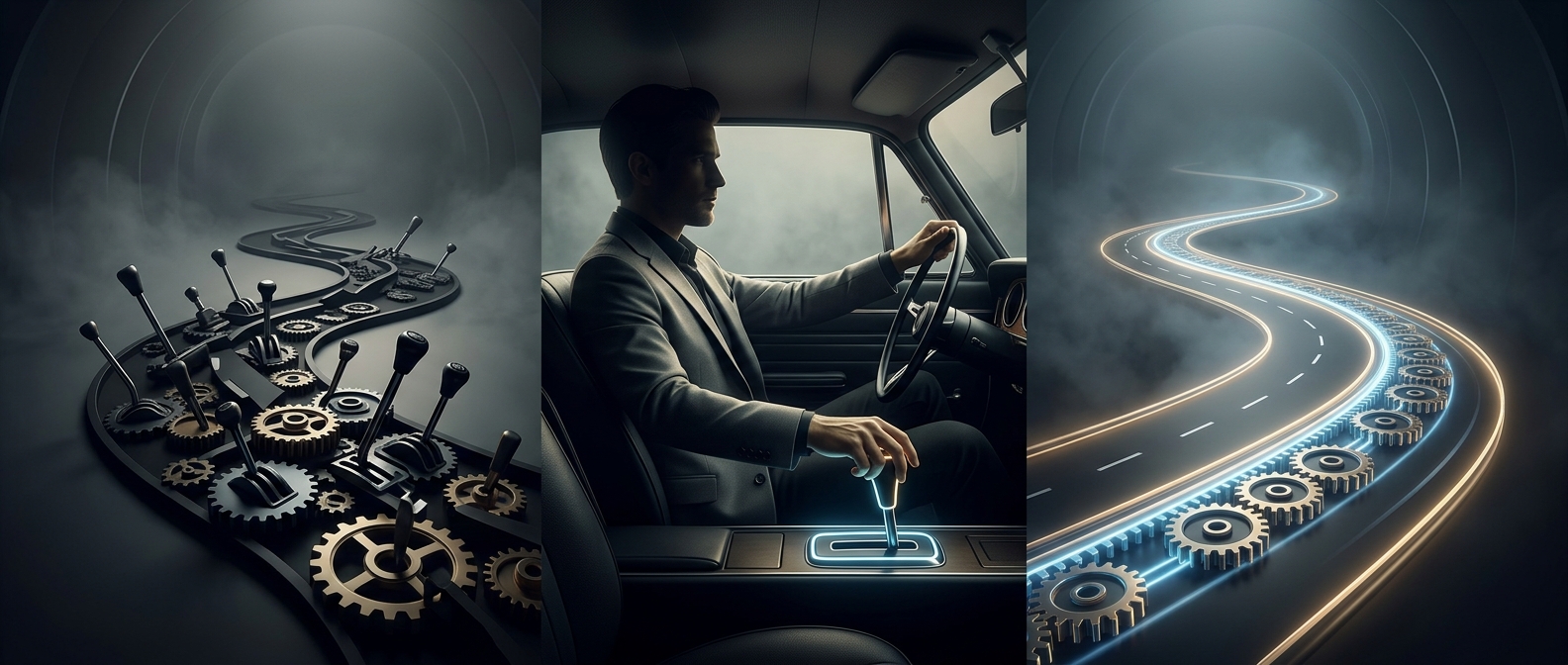
A mechanical drivetrain has to carry engine power through components such as a clutch, gearbox, and shafts, which must be arranged to suit the engine and the wheels. An electric drivetrain changes the problem: the engine can run a generator, while motors deliver power where traction is needed. That offers a different kind of layout flexibility, though it also requires heavy electrical equipment and additional conversion steps.
The design therefore addressed one engineering challenge by creating others. The generator and wheel motors had to be carried along with the engine, and the system depended on electrical machinery to move the car. It was not simply a gasoline car with a small electric boost; electricity formed the whole path from engine to wheels.
The Drivetrain Question Was Already There
Today, a series layout is one possible way to combine a combustion engine and electric propulsion. Porsche’s 1899 car shows that the basic design question—whether an engine should drive the wheels directly or generate electricity for motors—was being explored near the beginning of the automobile era.
That is the striking consequence of the early hybrid: the electric-drive idea did not arrive only after modern batteries. Engineers were already testing a car in which the engine made power in one place and electric motors turned the wheels in another.