The gearbox that shifts without a driver’s cue
An automatic transmission does more than replace a clutch pedal. It chooses among gear ratios—the relationship between engine speed and wheel speed—by sensing how fast the car is moving and how much power the driver is asking for. Press the accelerator harder, and the transmission can select a lower gear to give the wheels more turning force. Ease off or build speed, and it can shift to a higher gear so the engine does not have to spin as quickly.
Many conventional automatics make those changes with planetary gears: compact gear sets whose parts can be held still or allowed to rotate in different combinations. Hydraulic pressure, directed through valves, engages clutches and bands inside the transmission to select a ratio. In newer designs, electronic controls use sensors and software to decide when to shift, but the basic task is the same: change the connection between engine and wheels while the car is moving.
Why the converter matters
At a stop, the engine can keep running even though the wheels are not turning. The torque converter makes that possible by transmitting engine power through moving fluid rather than a rigid connection. It also lets the engine turn faster than the transmission input when the car starts moving, multiplying turning force for a moment as the vehicle pulls away.
That fluid connection has a cost: some energy is lost as heat, especially when the converter is slipping. Many automatics therefore use a lockup clutch at cruising speeds to connect the engine and transmission more directly. The result is a useful compromise: smooth starts and hands-off shifting in traffic, with less wasted power once the car is moving steadily.
A different job for the driver
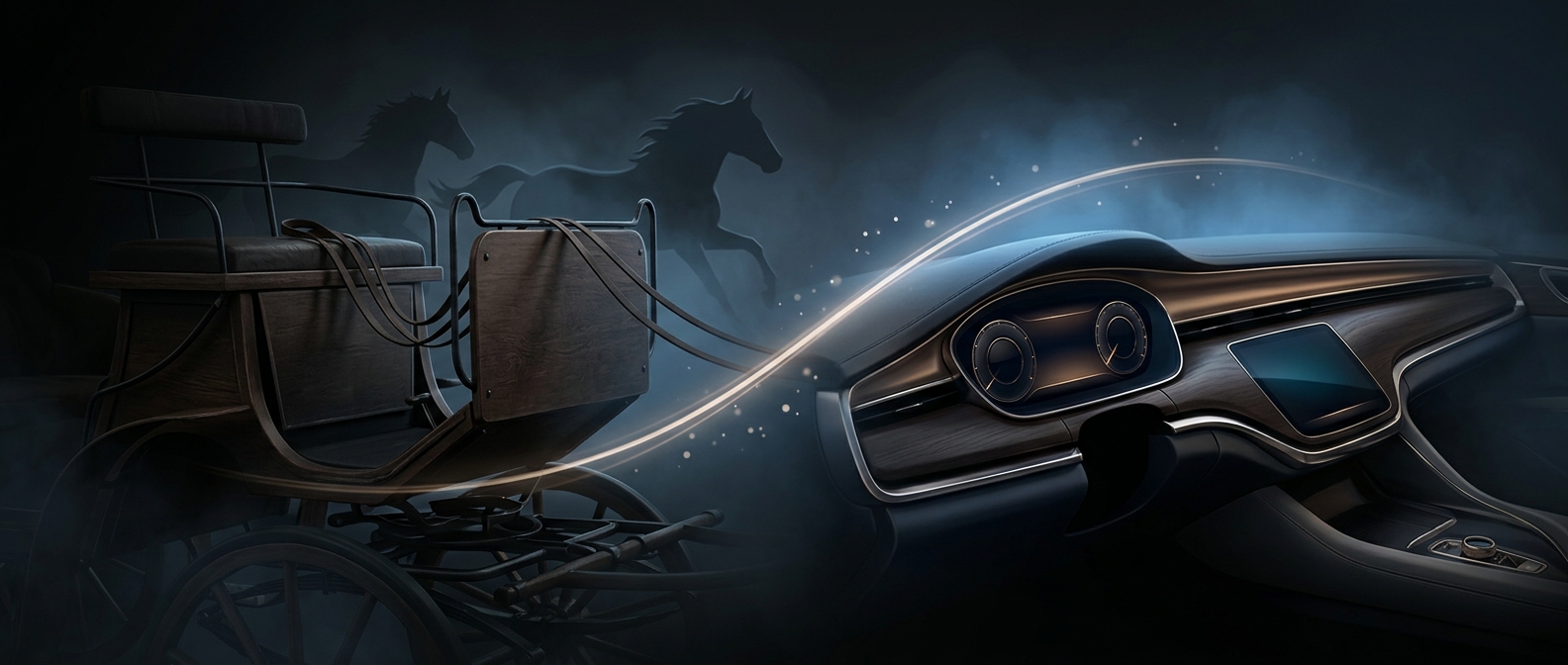
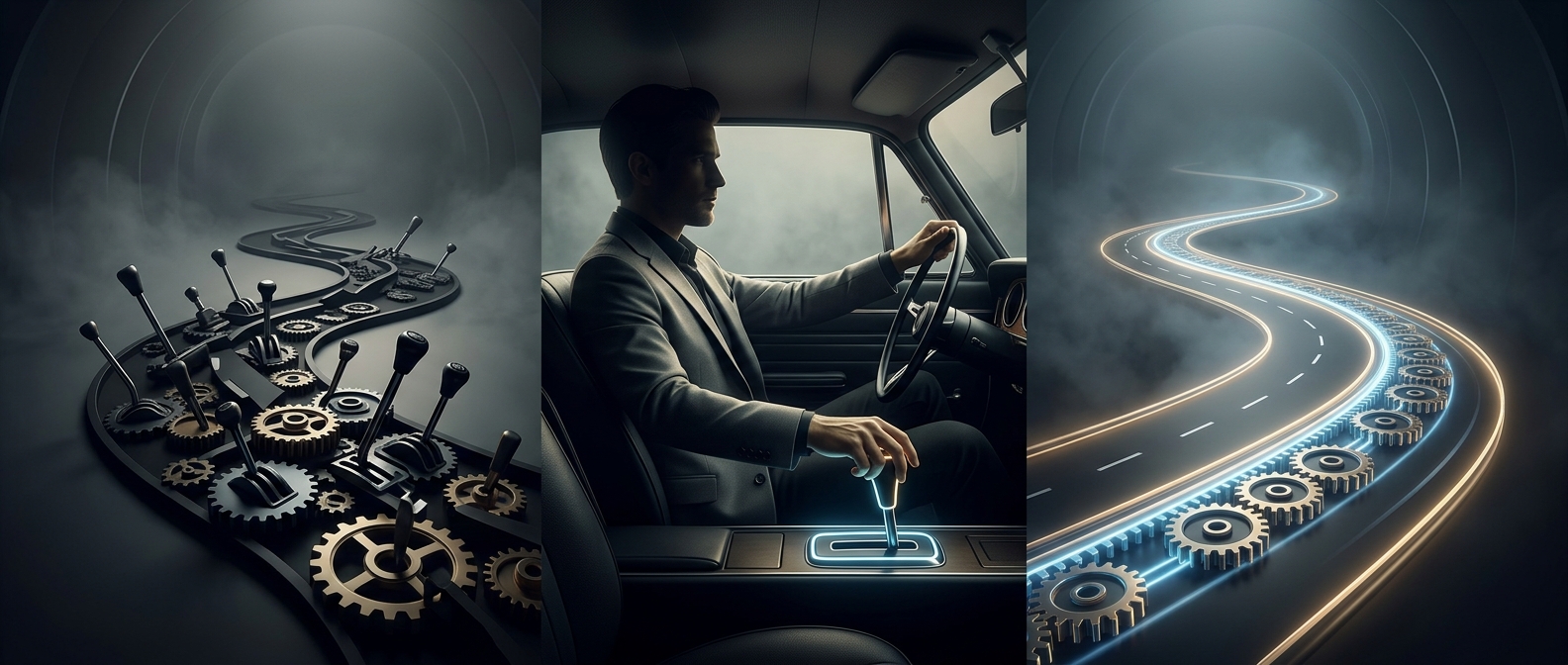
With the transmission managing gear changes, drivers can focus on steering, braking, and traffic rather than coordinating a clutch and shifter at every stop. That convenience reshaped everyday driving, particularly in stop-and-go conditions. It also moved the work of choosing a gear from the driver’s foot and hand into a system of gears, fluid pressure, and controls hidden beneath the car.