A getaway car had to do more than look fast
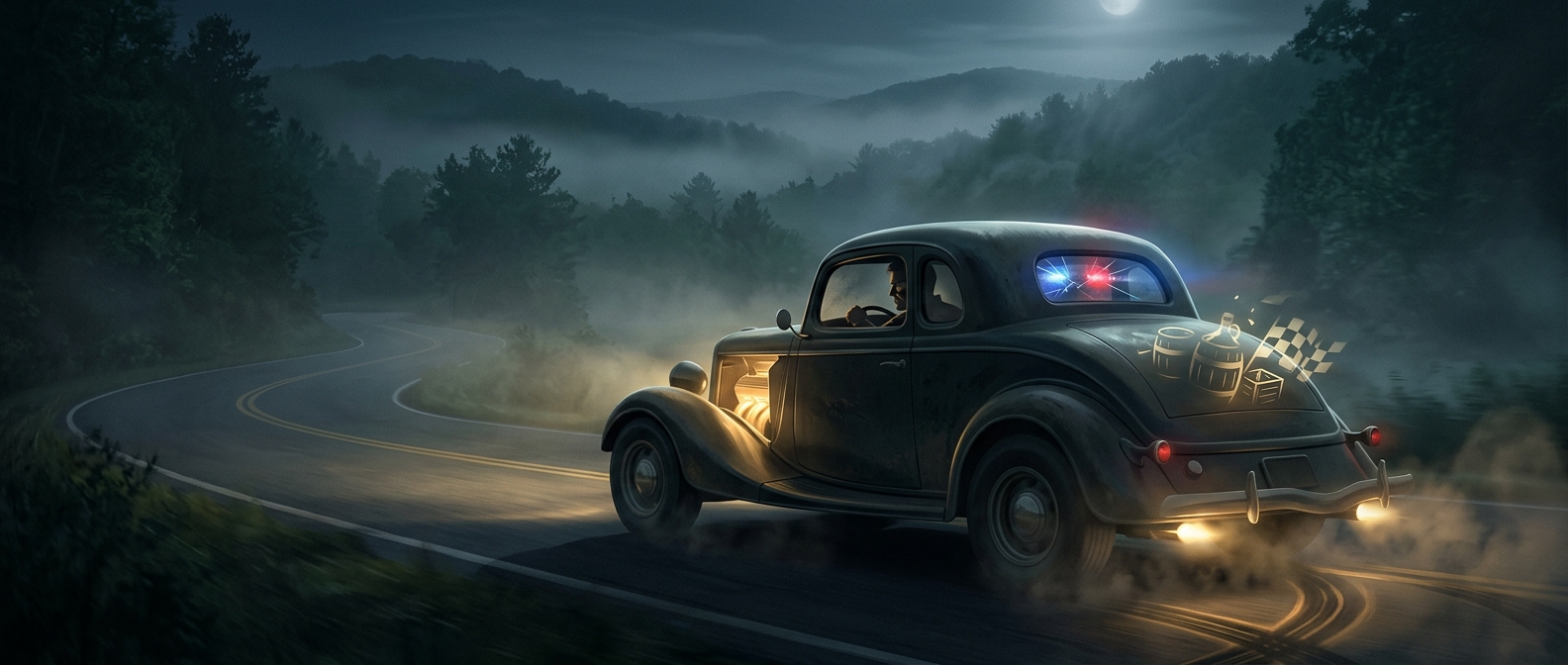
Bootleggers needed cars that could carry heavy loads over rough roads and still escape pursuit. That pushed them to improve ordinary vehicles rather than start with purpose-built racers. Stronger engines helped on straightaways; changes to suspension and tires could make a car more manageable on uneven roads and through sharp turns. The useful combination was power and control, not speed alone.
Because the cars were based on familiar road models, drivers could work on them with parts and mechanical skills they could obtain locally. Their racing machines grew out of practical experimentation: a modification that helped a driver deliver liquor safely might also help him beat another driver around a course.
From private rivalry to organized racing
The drivers’ contests gave those improvements a public test. On a track, competitors faced similar conditions, and a fast car had to prove itself against other fast cars—not just in a single escape. That turned informal bragging rights into a more repeatable sport, with drivers, rules, and events that could draw spectators.
When liquor became legal again, the need for those particular getaway cars faded, but the cars and the drivers’ skills remained. Organized stock-car racing carried that culture forward. Its early appeal was rooted in a recognizable contrast: machines built from everyday automobiles, altered by people who knew what speed and rough roads demanded.