A headlight color meant to identify a nation
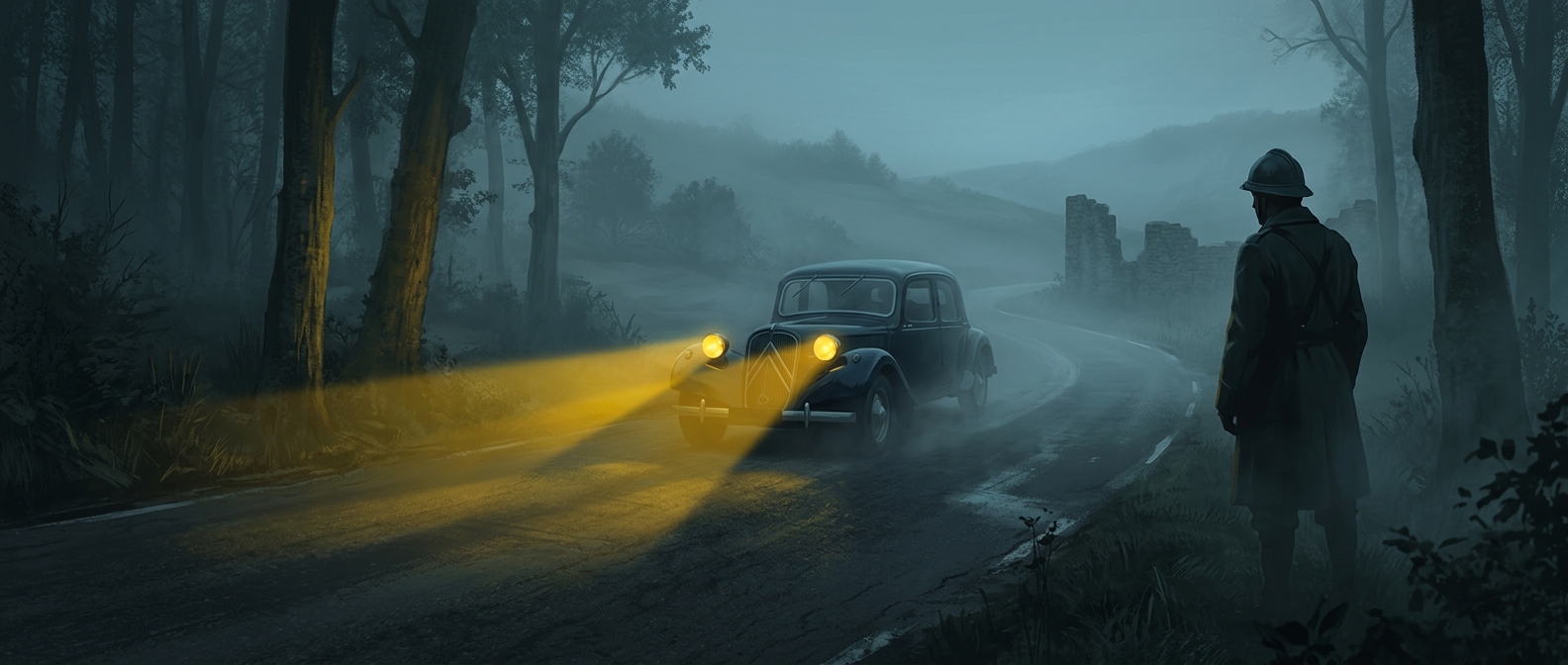
France’s yellow-headlight rule turned an ordinary vehicle feature into a wartime recognition signal. Adopted in 1936, it was intended to help French soldiers distinguish French vehicles from enemy convoys at night if Germany invaded. In darkness, a vehicle’s shape and markings could be hard to make out; the color of its beams offered another clue.
How the signal worked
The rule depended on uniformity: if French vehicles used yellow lights, soldiers could treat that color as a quick indication of which vehicles were French. Drivers could get the effect with yellow-tinted bulbs or filters over the lamps. The point was not simply to make headlights look different, but to make the difference consistent across vehicles.
That consistency also defined the rule’s limit. Headlight color could help with recognition, but it could not by itself prove who was behind the wheel or guarantee that a vehicle was friendly. It was one practical cue in a situation where identifying traffic at night could matter. A routine piece of car equipment had become part of France’s preparations for a possible invasion.