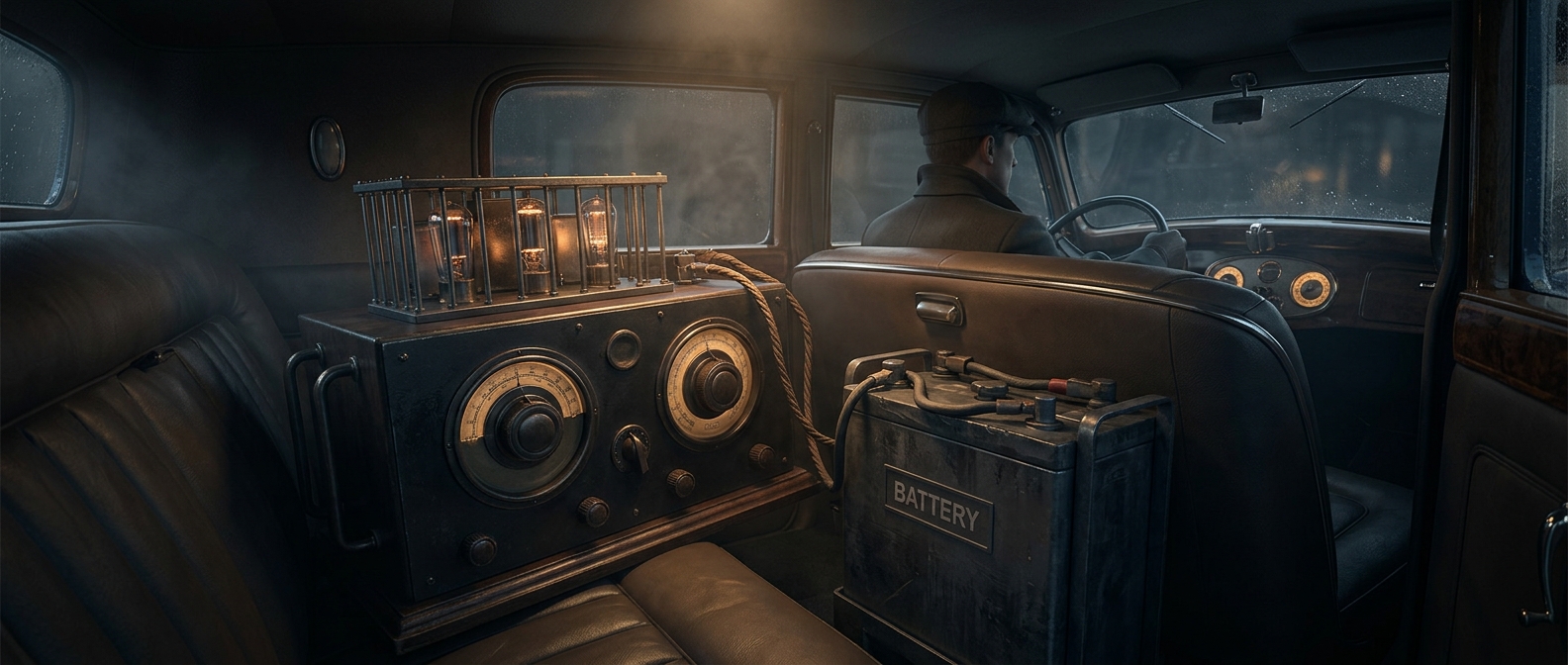
Why a Low-Voltage Car Couldn’t Run a Tube Radio
A car’s electrical system was built to start the engine and power basic equipment, not to provide every kind of electricity a radio needed. Vacuum tubes—the components that amplified radio signals—required a much higher voltage on one part, called the plate, than the car’s battery could deliver directly. They also needed electricity to heat an internal filament so the tube could operate.
A separate battery pack solved the voltage mismatch. By combining cells in series, the pack could provide the higher voltage the radio’s tubes required, while the car’s own system continued doing its usual jobs. The radio was effectively a small electrical system installed inside the larger one.
The Cost of Bringing the Radio Along
That arrangement made in-car listening possible before compact electronics could run on a car’s ordinary low-voltage supply. But it also meant extra hardware to fit into the vehicle—and another battery to keep charged or replace. The practical tradeoff was striking: an early car radio could offer entertainment on the road, but only by carrying its own source of power.