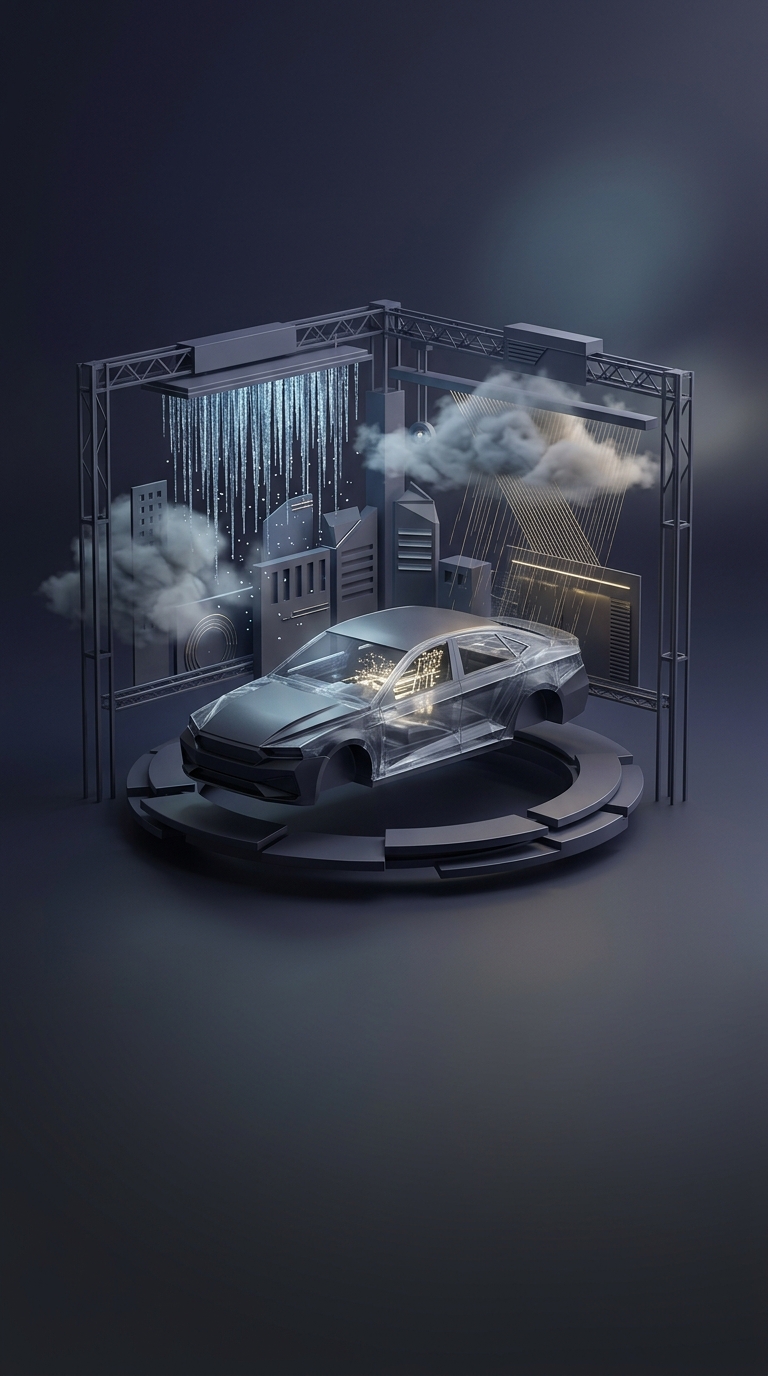
Why a car radio needed its own power system
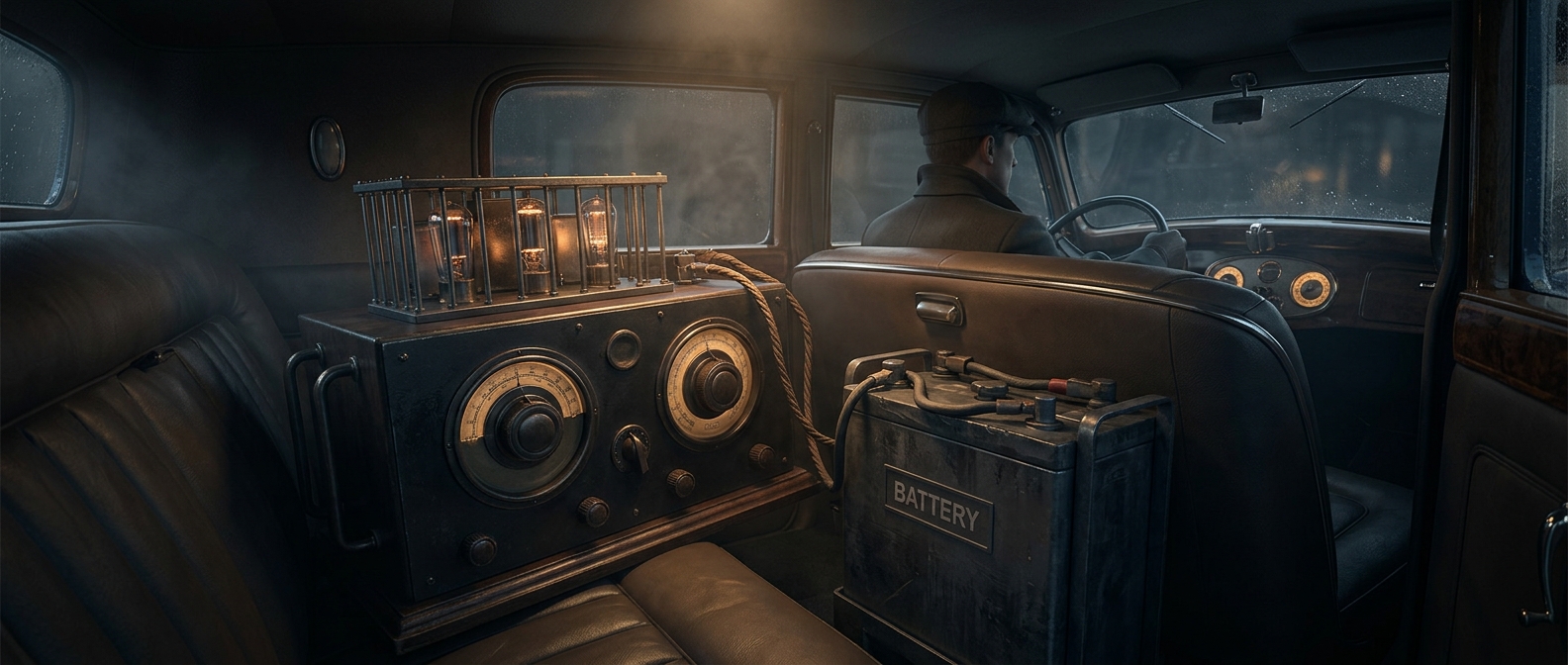
A car battery supplied low-voltage direct current: electricity flowing steadily in one direction. That was not enough for the vacuum tubes that amplified radio signals. Tubes also needed a much higher voltage across part of the circuit, as well as power to heat a tiny element inside each tube so it could operate.
The radio therefore needed a converter between the battery and the electronics. In a common design, a device called a vibrator rapidly switched the battery current on and off. A transformer used those pulses to raise the voltage, and other components turned it into the kind of current the tubes could use. Transformers and supporting parts took up space and added weight—hardware that a household radio could accommodate more easily than a dashboard could.
Packaging the living-room technology
The challenge was not simply to shrink a radio cabinet. The set had to work from the car’s electrical system and fit around the vehicle’s existing machinery, while its tubes and power components remained vulnerable to heat, vibration, and jolts. The result was a system with substantial hardware beyond the controls and speaker a driver might see.
That helps explain why the early car radio was a major purchase rather than a small accessory. Its price reflected the effort of adapting tube-based electronics to a moving vehicle, where the power source was weak by the radio’s standards and every component had to earn its space. The striking part is that the radio’s sound came from a compact listening point in the cabin, while much of the machinery making that sound possible was hidden elsewhere in the car.