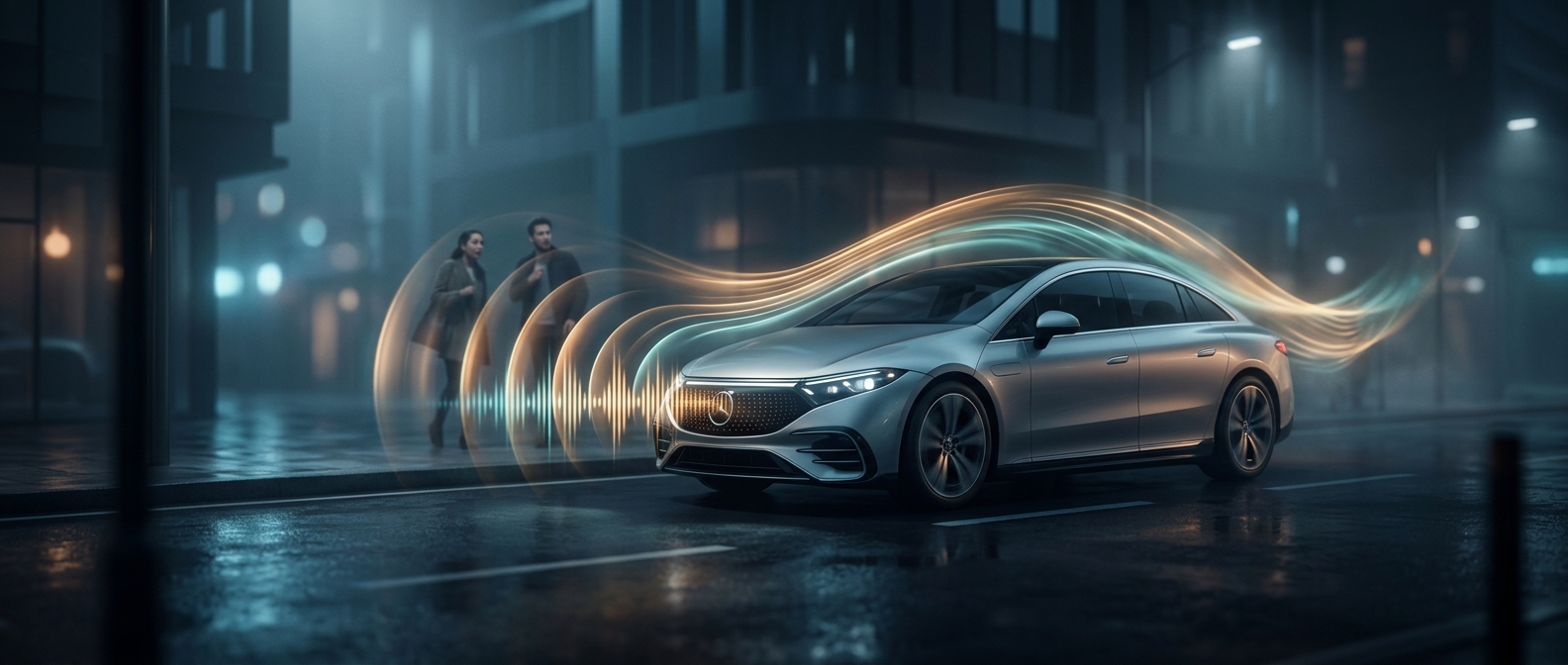
Why electric cars need a sound at walking speed
An electric motor can move a car with little more than a faint whir. At low speeds, tire noise and wind are also quiet, so someone stepping off a curb may hear no clear warning that a vehicle is approaching. The sound system is meant to fill that gap—not to imitate the full roar of a gasoline engine, but to make the car noticeable when ears may be the first warning.
A warning tuned to the situation
The system uses an external speaker to play a designed sound while the vehicle is moving slowly. As speed rises, tire and road noise become more prominent, making an added warning less necessary. The sound may change with speed so pedestrians can get a rough sense of whether the car is moving and how quickly.
Designers face a practical tradeoff: a sound must stand out in a busy street without becoming an unnecessary nuisance. A steady, recognizable cue can help, but it also has to be distinguishable from traffic noise and other alerts. That is why the result can resemble an engine without reproducing any particular engine note.
Making quiet motion legible
The artificial sound gives pedestrians information that a combustion engine once supplied as a side effect of propulsion. It is especially useful near crossings and parking areas, where a vehicle may be moving slowly and people are close by. In effect, the car adds a small amount of noise so its movement is harder to miss.