Why Fast Scenery Can Turn a Smooth Ride Queasy
A train can move steadily while the view outside races past. Your inner ear senses the motion of your body, while your eyes register the landscape sweeping across the window. When those signals do not agree, the brain may interpret the mismatch as a reason to feel unwell—a common trigger for motion sickness.
The effect can be especially noticeable when nearby objects fill much of the view. They cross the window quickly, creating strong visual motion even though the carriage itself feels calm. This is not the inner ear being “overwhelmed” by speed; it is the brain trying to reconcile different accounts of how the body is moving.
What an Optical Window Treatment Can Change
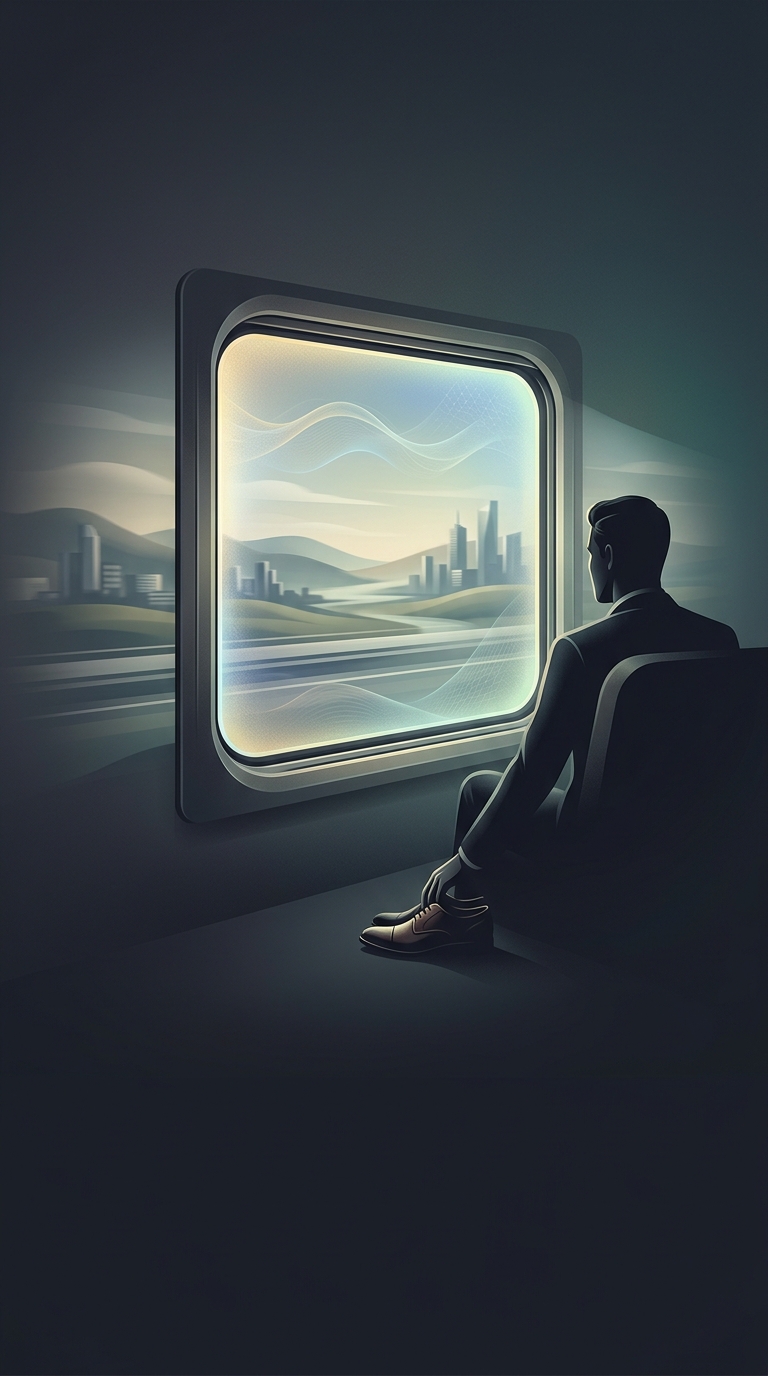
A motion-sickness-reducing window treatment aims to soften the visual rush. By modifying the light or detail reaching the eye, it can make the passing scene less sharp or intense. That gives the brain a less forceful signal of rapid movement to weigh against the steadier sensations inside the train.
It does not make the train travel more slowly, and it does not literally slow down visual perception. The intervention is in what the passenger sees: a gentler view can reduce the sensory disagreement that contributes to nausea. The goal is to preserve a usable window while making the outside motion less demanding to watch.
A Small Intervention in a Sensory Tradeoff
Any treatment has to balance comfort with a clear view. Make the scene too distorted and passengers lose the very view the window is meant to provide; leave it unchanged and the fast-moving landscape may remain uncomfortable for some riders. The useful idea is that a train’s ride quality is not only about how smoothly its wheels or magnetic systems move—it also depends on how the journey looks to the people inside.