The hovertrain traded wheel contact for air pressure
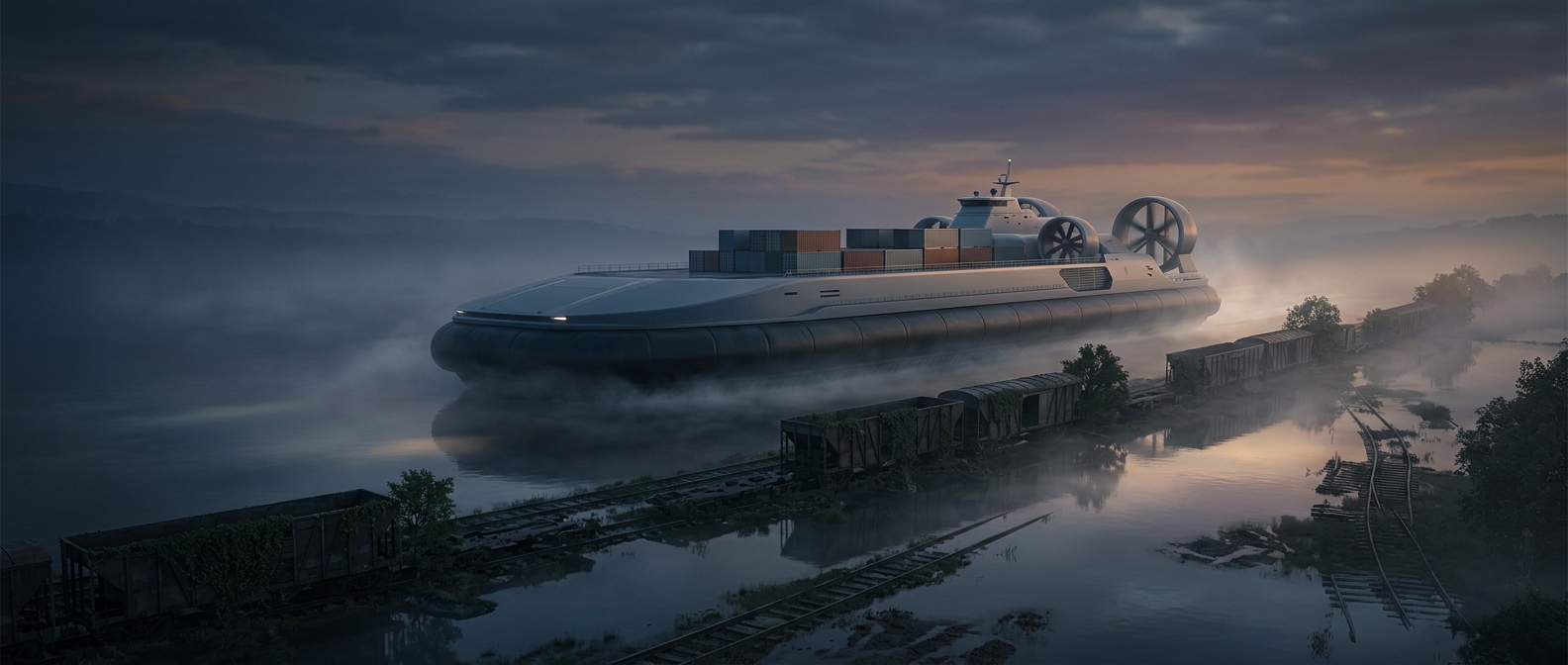
A rail vehicle normally carries its weight through wheels pressing on rails. At high speed, that contact brings vibration, wear, and mechanical limits. A hovertrain instead uses fans to force air into a narrow gap beneath the vehicle. The resulting pressure lifts it slightly above the guideway, so the vehicle can move without its wheels continuously rubbing against rails.
That lift does not, by itself, move the train forward. A separate propulsion system must push or pull it along, while the guideway keeps it aligned. The design therefore removes one source of resistance but adds equipment and energy demands: fans must keep the air cushion stable, and the vehicle still needs a way to accelerate, brake, and steer.
The track did not disappear
The guideway had to provide a consistent surface and geometry beneath the air cushion. Bumps, gaps, or changes in clearance could disturb the lift, so the supporting structure needed careful construction and maintenance. Unlike ordinary rail, the system could not simply rely on steel wheels following familiar tracks; its specialized guideway was part of the vehicle’s operating system.
That created the central tradeoff. Hovering could reduce friction at the point of support, but the benefit depended on a dedicated route and continuous power for lift. The train escaped the rails, but not the infrastructure: its “track” became a carefully engineered surface that had to work with the cushion of air.