Why Radar Needs Time to Build a Picture
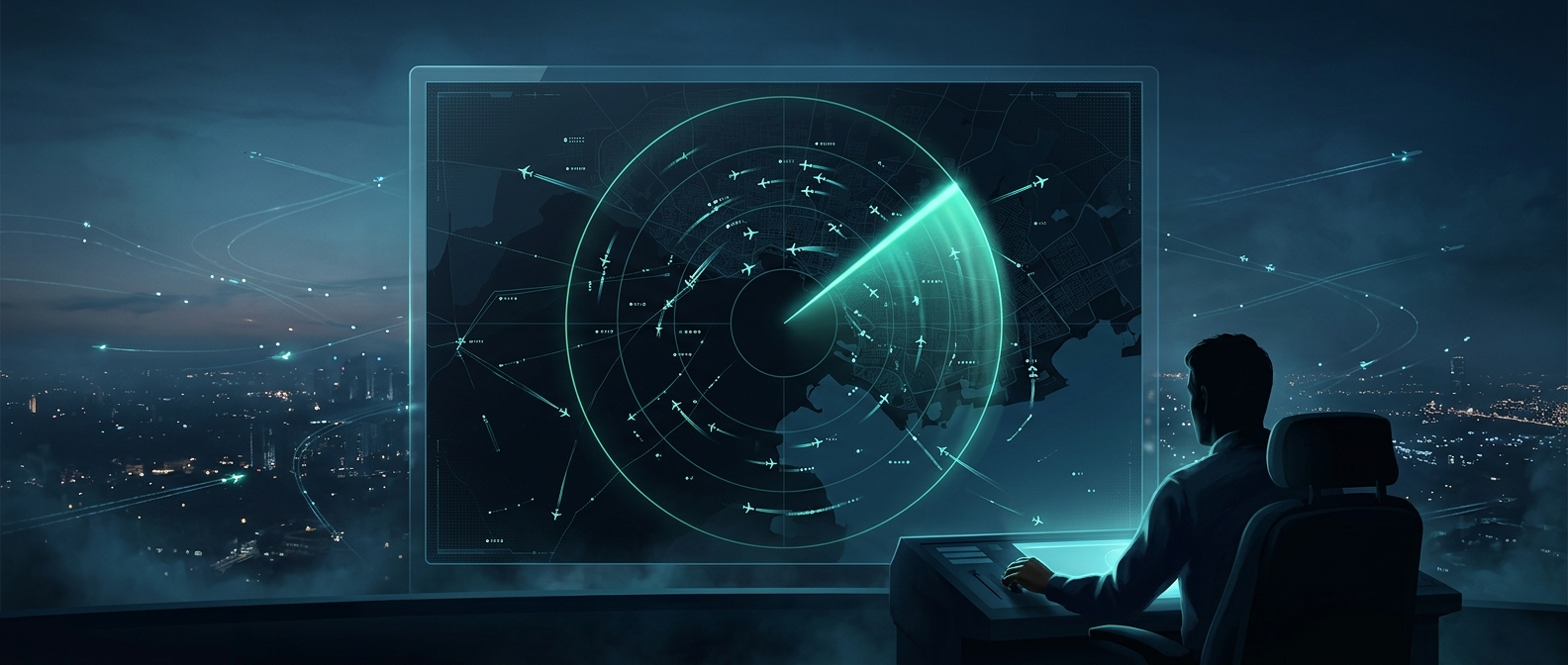
An air-traffic radar antenna must point in a direction to detect aircraft there. As it rotates, it samples the surrounding sky in sequence rather than observing every direction at once. A radar return’s delay indicates how far away an aircraft is; the antenna’s direction at that moment indicates its bearing. Together, those measurements locate a target on the controller’s display.
That process takes a full rotation, so the display refreshes in steps. Between sweeps, aircraft continue moving. The screen is therefore a record of recent measurements, not a continuous view of the sky.
From Returns to Tracks
A radar system can receive an echo reflected from an aircraft, or it can use a transponder—a radio device aboard the aircraft that replies to radar signals with identifying information and, when equipped, altitude. Air-traffic systems may combine these reports with other surveillance data, then match successive detections to maintain a track.
That track helps make the gaps between updates usable: controllers can see an aircraft’s recent path and judge where it is likely to be next. But the information still arrives in intervals. When traffic is moving quickly or several aircraft are close together, a controller must make decisions from the latest position reports while accounting for the movement that has happened since the antenna last looked that way.